

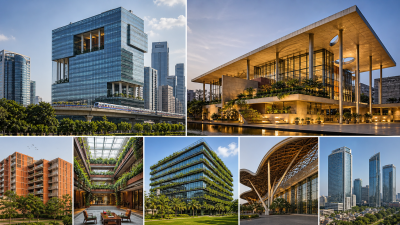
Contemporary architecture in India marks the transition from the austerity of the Post-Independence Modernist era to a pluralistic, technology-driven, and globally-aligned aesthetic. Since the economic liberalization of 1991, Indian architecture has been characterized by the use of high-tech materials like structural glass and steel, the rise of “Smart Cities,” and a renewed focus on “Green Building” and sustainable design. This period balances the “International Style” of corporate skyscrapers with “Neo-vernacular” attempts to integrate traditional Indian spatial concepts with modern urban requirements.
Key Characteristics of the Contemporary Era
Contemporary structures in India are defined by a departure from the “one-size-fits-all” approach of early Modernism, moving toward high-performance and expressive designs.
- High-Tech and Parametric Design: Use of computational algorithms to create complex, non-linear shapes, as seen in the facades of corporate headquarters and airports.
- Sustainability and LEED Ratings: A surge in “Green Buildings” that utilize solar energy, rainwater harvesting, and waste management to achieve Platinum or Gold LEED ratings.
- Glass Curtain Walls: The widespread use of structural glazing, particularly in IT parks and commercial hubs like Gurgaon, Bangalore, and Hyderabad.
- Vertical Urbanism: The rise of luxury residential skyscrapers to accommodate high-density urban populations in cities like Mumbai.
- Adaptive Reuse: The conversion of old industrial sites (like cotton mills in Mumbai) into modern commercial and cultural centers.
Major Contemporary Architectural Landmarks
Transport and Infrastructure
- T2 Terminal, Chhatrapati Shivaji International Airport (Mumbai): Designed by SOM (Skidmore, Owings & Merrill), it features a massive “canopy” inspired by the dancing white peacock. The interior uses “Jali” patterns to filter light, blending high-tech engineering with traditional motifs.
- Kempegowda International Airport Terminal 2 (Bangalore): Known as the “Terminal in a Garden,” it emphasizes the use of bamboo and indoor greenery to reflect Bangalore’s reputation as the Garden City.
- Atal Setu (Mumbai Trans Harbour Sealink): A feat of modern civil engineering that represents the “Infrastructure-as-Architecture” trend, focusing on connectivity and streamlined structural design.
Institutional and Corporate Excellence
- Infosys Campus (Mysore/Pune): These campuses often use “Neo-Classical” or “Futuristic” styles, such as the Greco-Roman designs in Mysore or the “Origami” and “Flying Saucer” shapes in Pune, to project a global corporate image.
- Cybertecture Egg (Mumbai): Designed by James Law, this egg-shaped building uses a diagrid system to reduce material consumption and optimize internal solar gain, representing the “Parametric” shift.
- The Lotus Temple (New Delhi): Though completed in 1986, it remains the precursor to contemporary “Expressionist” architecture in India, using 27 marble-clad petals to create a lotus-shaped Bahá’í House of Worship.
Public and Cultural Spaces
- Statue of Unity & Exhibition Gallery (Gujarat): Designed by Ram V. Sutar and Turner Construction, this project represents the pinnacle of contemporary monumentalism, utilizing high-grade structural steel and bronze cladding.
- National War Memorial (New Delhi): A contemporary landscape intervention that uses concentric circles (Chakras) to create a solemn, open-air commemorative space without the use of towering traditional monuments.
Sustainability and the “Green” Movement
India has emerged as one of the world’s leading markets for green buildings, with architects returning to “biophilic” designs.
- The ITC Green Centre (Gurgaon): One of the first large-scale corporate buildings in the world to receive the LEED Platinum rating.
- Suzlon One Earth (Pune): A 100% renewable energy-powered campus that uses “cylindrical” blocks and wind turbines, designed by Christopher Benninger.
- The Pearl Academy (Jaipur): Designed by Morphogenesis, this building uses traditional Rajasthani cooling techniques like “Baoris” (stepwells) and “Jalis” in a modern concrete and stone framework to eliminate the need for air conditioning in common areas.
Evolution of Schools of Thought
| Style | Key Philosophy | Example |
| High-Tech/Global | Focus on steel, glass, and digital design. | TCS House, Mumbai |
| Neo-Vernacular | Modern use of mud, bamboo, and local stone. | Hunnarshala, Kutch |
| Critical Regionalism | Modern tech adapted to local climate/culture. | IIM Udaipur (Doshi) |
| Parametricism | Complex, fluid, computer-generated forms. | Motera Stadium, Ahmedabad |
| Sustainable/Green | Focus on carbon footprint and energy cycles. | Godrej One, Mumbai |
Leading Contemporary Architects and Firms
- Morphogenesis (Manit and Sonali Rastogi): Known for “SOUL” (Sustainable, Optimized, Unique, Liveable) architecture, focusing on high-density sustainable urbanism.
- Hafeez Sorabji: A dominant figure in the commercial and residential skyscraper landscape, known for the “Hiranandani” style and sleek glass towers.
- Christopher Charles Benninger: Famous for his “Great Institutions” like IIT Hyderabad and Azim Premji University, which emphasize open spaces and climatic responsiveness.
- Sanjay Puri: Renowned for “Sculptural Architecture” that uses sharp angles and voids to manage heat and light in residential and office projects.
Smart Cities and Future Trends
The “Smart Cities Mission” launched by the Government of India is the current frontier of contemporary architecture.
- GIFT City (Gujarat): India’s first operational smart city, featuring district cooling systems, automated waste collection, and a “Utility Tunnel” that ensures no roads are dug up for repairs.
- Amaravati (Andhra Pradesh): Though under transition, its master plan (involving Norman Foster) represents the “City-as-a-Grid” concept with a heavy emphasis on green-blue (water and vegetation) corridors.
- 3D Printed Construction: The emergence of 3D-printed houses (like the one at IIT Madras) signals the next technological shift in contemporary Indian building methods.
Facts and Trivia for UPSC Aspirants
- GRIHA Rating: While LEED is international, GRIHA (Green Rating for Integrated Habitat Assessment) is India’s native rating system developed by TERI and MNRE.
- Bamboo Renaissance: Contemporary architects are increasingly using “Engineered Bamboo” as a replacement for steel in eco-friendly resorts and public pavilions.
- The Mumbai Skyline: Mumbai currently has the highest number of skyscrapers (above 150m) in India, largely built in the Post-2000 contemporary style.
- Digital Twin Technology: Modern projects like the new Parliament House (Central Vista) used “Digital Twins” and BIM (Building Information Modeling) for real-time construction monitoring.
- World’s Largest Office: The Surat Diamond Bourse, completed recently, surpassed the Pentagon as the world’s largest office building, featuring a series of interconnected contemporary glass and stone towers.