
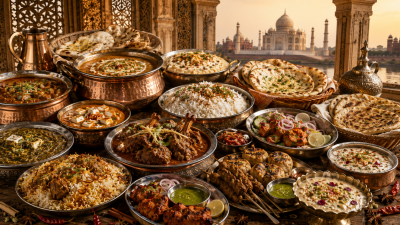
The North Indian culinary landscape is a profound synthesis of indigenous regional practices and centuries of trans-frontier influences. It is primarily characterized by the “Wheat-Dairy-Spice” complex, shaped by the fertile Indo-Gangetic plains and the historical Silk Road trade. This region encompasses the diverse traditions of Punjab, Kashmir, Uttar Pradesh (Awadh and Agra), Rajasthan, and Haryana, blending ancient Vedic foundations with Persian, Turkic, and Mughal refinements.
Geographic and Climatic Determinants
The culinary profile of North India is dictated by its distinct seasons and alluvial soil.
- Staple Grains: Unlike the rice-centric South, the North is the “Wheat Belt” of India. The cultivation of Godhuma (Wheat) and Yava (Barley) dates back to the Neolithic period.
- The Dairy Backbone: The abundance of cattle in the Gangetic plains led to the extensive use of milk, Paneer (cottage cheese), Ghee (clarified butter), and Dahi (curd) as primary fat and protein sources.
- Seasonal Eating: Winter diets focus on warming foods like millets (Bajra, Jowar), mustard greens (Sarson), and root vegetables, while summers emphasize cooling agents like Sattu (parched gram flour) and Aam Panna.
Key Regional Culinary Traditions
North Indian cuisine is not a monolith but a collection of distinct “Gharanas” or schools of cooking.
| Region | Primary Style | Iconic Ingredients | Key Preparations |
| Kashmir | Wazwan | Saffron, Dried Ginger, Fennel, Cockscomb flower (Mawal) | Rogan Josh, Gushtaba, Yakhni, Kahwa |
| Punjab | Tandoori & Dhaba | Mustard oil, Butter, Whole Urad Dal, Paneer | Sarson da Saag, Makki di Roti, Dal Makhani |
| Awadh (Lucknow) | Dum Pukht | Ittar (edible perfumes), Kewra, Saffron, Mutton | Galauti Kebab, Lucknawi Biryani, Nihari |
| Rajasthan | Marwari/Rajput | Ghee, Dried Berries (Ker Sangri), Red Chilies | Dal Baati Churma, Laal Maas, Ghevar |
| Braj (Mathura) | Satvik/Vaishnav | Milk solids (Khoya), Ghee, Sugar | Peda, Rabri, Kachori-Sabu |
The Tandoori Revolution and Baking Techniques
The introduction of the Tandoor (clay oven) revolutionized North Indian cooking. Originally a Central Asian tool, it was popularized in Punjab and later across Delhi.
- Leavened Breads: The North offers a vast repertoire of breads including Naan (leavened with yeast/curd), Kulcha, Sheermal (saffron-flavored), and Missi Roti (gram flour based).
- Dry Heat Cooking: This allowed for the development of the Kebab culture—ranging from the rustic Seekh Kebab to the sophisticated Shammi and Galauti kebabs.
The Science of Spices and Aromatics
North Indian cuisine utilizes “warming” spices to counter the extreme continental climate.
- Garam Masala: A signature blend of black pepper, cinnamon, cloves, cardamom, and mace.
- The Souring Agents: Unlike the South’s use of tamarind, the North uses Amchur (dried mango powder), Anardana (dried pomegranate seeds), and Dahi.
- Wazwan Aesthetics: The Kashmiri Wazwan is a 36-course meal where the Vasta Waza (master chef) uses specific techniques like pounding meat to a paste to create spongy Gushtaba (meatballs).
Evolution of Street Food Culture
The North Indian street food or “Chaat” culture is an integral part of its urban heritage, particularly in cities like Delhi, Lucknow, and Varanasi.
- Varanasi (Kashi): Known for its Satvik street food, focusing on milk-based sweets and savory Kachoris without the use of onion and garlic in religious precincts.
- Delhi: The “Chaat” capital, where the synthesis of Mughal and Punjabi flavors created the Aloo Tikki, Gol Gappa, and Dahi Bhalla.
- The Dhaba Culture: Originating along the Grand Trunk Road, Dhabas promoted the “Tandoori Chicken” and “Dal Tadka” culture, making Punjabi food the global face of Indian cuisine.
Fact Sheet for UPSC Prelims
- Nihari: A slow-cooked meat stew traditionally eaten as a breakfast (Nahar) item. It originated in the 18th century in Old Delhi.
- Rogan Josh: The name is derived from Rogan (oil/red color) and Josh (passion/heat). The red color comes from the Ratanjot herb or Kashmiri chilies, not tomatoes.
- Lakhnawi vs. Hyderabadi Biryani: The Northern (Awadhi) version is a Pukka Biryani where meat and rice are partially cooked separately before being layered and steamed (Dum), resulting in a more subtle, aromatic profile.
- The Sattu Factor: Highly popular in Bihar and Eastern UP, Sattu is often called the “Poor man’s protein” and is a GI-tagged heritage food of the region.
- Kashmir’s Noon Chai: A pink-colored salted tea made with green tea leaves, salt, and baking soda, reflecting the Central Asian influence on Himalayan diets.
Material Culture: Kitchenware and Utensils
- Degchi: A neckless cooking pot used for slow-cooking stews.
- Kadhai: A deep, circular cooking pot (similar to a wok) used for deep frying and sautéing.
- Patila: Large brass or copper vessels used for boiling rice and lentils in bulk.
- Sil-Batta: The traditional flat stone and muller used for grinding fresh spice pastes, essential for the texture of North Indian gravies.