
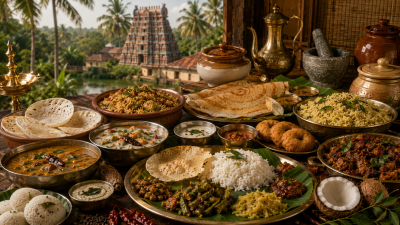
The culinary heritage of South India—comprising Andhra Pradesh, Telangana, Karnataka, Kerala, and Tamil Nadu—is fundamentally shaped by its tropical climate and extensive coastline. The region’s diet is predominantly Rice-based, supplemented by pulses, coconut, and a vast array of spices. Unlike the North, the South relies heavily on Tamarind and Kokum as souring agents and Coconut Oil or Sesame Oil as primary cooking media. The high humidity levels led to the development of sophisticated Fermentation techniques, which improve the shelf life and digestibility of food.
The Trinity of Ingredients: Rice, Coconut, and Tamarind
The “Rice-Lentil” complex forms the backbone of South Indian nutrition, providing a complete amino acid profile.
- Rice (Vrihi): Cultivated in the fertile deltas of the Kaveri, Krishna, and Godavari, rice is consumed in various forms—boiled, steamed (Idli), or fermented into batters (Dosa/Appam).
- Coconut: Every part of the coconut is utilized. The milk provides a base for stews (Olan/Ishtu), while the grated meat is used for “Thoran” or “Poriyal” (dry vegetable sautés).
- Souring Agents: Tamarind (Imli) is the soul of South Indian gravies. In Kerala and coastal Karnataka, Kodampuli (Gamboge) and Kokum are preferred for fish-based preparations due to their antiseptic properties.
Regional Culinary Profiles and Schools of Cooking
South India is home to several distinct “Gharanas” or culinary traditions, ranging from the fiery spices of the Deccan to the subtle, aromatic stews of the Malabar coast.
| Region | Primary Style | Key Characteristics | Iconic Dishes |
| Tamil Nadu | Chettinad | Use of sun-dried meats and freshly ground “Chettinad Masala” (16 spices). | Pepper Chicken, Paniyaram |
| Kerala | Mappila & Sadya | Blend of Arab influences and indigenous vegetarian temple food. | Malabar Biryani, Avial, Appam |
| Andhra/Telangana | Hyderabadi & Rayalaseema | Known for the highest heat levels; use of Guntur chilies and Gongura leaves. | Hyderabadi Biryani, Gongura Pachadi |
| Karnataka | Udupi & Karwar | Satvik vegetarian focus (Udupi) and coastal seafood (Karwar). | Bisi Bele Bath, Mysore Pak |
The Science of Fermentation and Steam Cooking
South Indian culinary heritage is a pioneer in “Biological Processing.”
- Fermentation: The process of soaking and grinding Urad Dal and Rice to create a batter. Natural wild yeast and lactobacillus fermentation enhance B-complex vitamins and protein bioavailability.
- Steam Cooking: Dishes like Idli, Puttu, and Kozhukkatta (sweet/savory dumplings) are steamed, preserving the nutrient profile and making them ideal for all age groups.
- Appam and Kallappam: These are fermented using Toddy (palm wine) or yeast, resulting in a unique lace-like texture and slightly acidic flavor.
Religious and Social Influence: The Temple and the Sadya
The Temple culture of South India has significantly preserved ancient culinary techniques through “Prasadam.”
- Udupi Cuisine: Originating from the Krishna Mutt in Udupi, this style follows strict Satvik principles, prohibiting the use of onion, garlic, and even certain “English” vegetables like potatoes or tomatoes in traditional offerings.
- The Kerala Sadya: A ceremonial vegetarian feast served on a banana leaf, consisting of up to 28 dishes. It follows a specific order of service—starting with salt and ending with Payasam (dessert).
- Tirupati Laddu: A GI-tagged Prasadam from the Venkateswara Temple, representing the massive scale of temple-managed culinary logistics.
Spices and Aromatics: The Malabar Legacy
Historically known as the “Spice Coast,” South India was the global epicenter for the trade of “Black Gold” (Black Pepper).
- The Curry Leaf (Kadi Patta): Indigenous to South India, it is the quintessential aromatic used in “Tadka” (tempering) alongside mustard seeds and dried red chilies.
- Spices: Cardamom, Cinnamon, and Cloves from the Western Ghats define the aromatic profile of both vegetarian and meat dishes.
- Coffee Culture: The Filter Coffee (Kaapi) tradition, especially in Tamil Nadu and Karnataka, involves the “Drip” method and the use of Chicory, serving as a cultural marker of the South.
Traditional Utensils and Material Culture
The South Indian kitchen utilizes specific materials to enhance food flavor and health benefits.
- Uruli: Large circular vessels made of bell metal (bronze) used for slow-cooking Payasam and large-scale stews.
- Kalchatti: Soapstone pots that retain heat for long durations, primarily used for making Rasam and Sambar.
- Ammikkallu: A traditional grinding stone used for making fresh coconut and spice chutneys, ensuring the oils are released without heating the ingredients.
Fact Sheet for UPSC Prelims
- GI Tags in South Indian Food: Hyderabadi Haleem, Palani Panchamirtham, Mysore Pak, Kovilpatti Kadalai Mittai, and Bandar Laddu.
- The “Sambar” Origin: Legend suggests it was named after the Maratha ruler Sambhaji, who attempted to make Dal in the Tanjore royal kitchen but used tamarind instead of kokum.
- Rasam: Derived from the Sanskrit Rasa (juice/essence); it was traditionally used as a medicinal soup for digestion and respiratory health.
- Banana Leaf Dining: Beyond tradition, eating on a banana leaf is ecological and healthy; the leaf contains polyphenols (antioxidants) that are released into the hot food.
- Parotta vs. Paratha: The South Indian Barotta (especially Malabar or Tuticorin style) is made of refined flour (Maida) and is layered and beaten to create a flaky texture, distinct from the North Indian whole-wheat Paratha.