
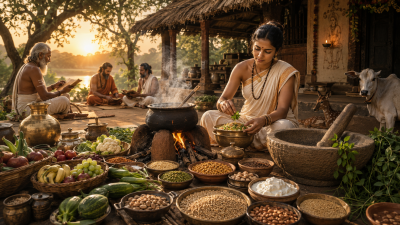
The Vedic culinary tradition is deeply rooted in the philosophy that food (Ahara) is the primary sustainer of life and a determinant of mental temperament. According to the Upanishads, “Annam Brahma” (Food is God), highlighting the sacred nature of sustenance. The diet was governed by the Guna theory found in the Bhagavad Gita and Samkhya philosophy.
- Sattvic Diet: Pure, wholesome, and lightly cooked foods (milk, honey, grains, fruits) believed to promote clarity, longevity, and spiritual growth.
- Rajasic Diet: Passion-inducing foods (spicy, salty, sour) that stimulate activity and restlessness, often associated with the Kshatriya (warrior) class.
- Tamasic Diet: Stale, processed, or heavy foods (meat, fermented items, garlic/onion) thought to induce lethargy and dullness.
Primary Staples and Agriculture in the Vedic Period
The Rig Vedic and Later Vedic periods saw a transition from pastoralism to settled agriculture, which significantly diversified the dietary basket.
| Category | Early Vedic (Rig Vedic) | Later Vedic (Samhitas & Brahmanas) |
| Primary Cereal | Yava (Barley) was the most prominent. | Vrihi (Rice) became the staple alongside Yava. |
| Pulses | Limited evidence; wild beans. | Masha (Urad), Mudga (Moong), Masura (Lentils). |
| Sweeteners | Madhu (Wild Honey). | Ikshu (Sugarcane) and Guda (Jaggery). |
| Vegetables | Roots, lotus stalks (Shaluka), and cucumbers. | Pumpkin, gourds, and leafy greens. |
The Role of Milk and Dairy (Panchamrita)
Cattle held central importance in the Vedic economy (Gau-dhana). Consequently, dairy products formed the backbone of the Vedic diet.
- Kshira (Milk): Consumed fresh or boiled; considered the most Sattvic substance.
- Dadni (Curd): Mentioned frequently in the Rig Veda; often mixed with barley meal to create Karambha.
- Ghrita (Ghee): Clarified butter was essential for both nutrition and ritualistic offerings (Yagya).
- Navanita: Fresh butter used for consumption and anointing.
Ritualistic Food and Sacrificial Diet
In Vedic culture, food was first offered to the deities as Havis before being consumed by humans.
- Purodasha: A sacrificial cake made of ground rice or barley, typically cooked on potsherds.
- Charu: A sweet dish made by boiling grains in milk or water; a precursor to modern Kheer or Payasam.
- Soma: A sacred, exhilarating drink extracted from the stalks of the Soma plant, celebrated in the 9th Mandala of the Rig Veda. Its botanical identity remains a subject of debate (possibly Ephedra).
- Sura: A fermented grain-based beverage, distinct from Soma, generally discouraged in priestly circles but common among the masses.
Culinary Techniques and Preparation Methods
Vedic cooking was sophisticated, utilizing various methods of heat application and processing.
- Methods: Boiling (Shrapana), roasting (Bhrajj), and frying in ghee.
- Spices: Use of Pippali (Long pepper), Saindhava Lavana (Rock salt), ginger, and turmeric. Black pepper (Maricha) gained prominence in later texts.
- Vessels: Utensils were made of wood (Chamasas), clay, and eventually metals like copper (Ayas) and bronze.
- Water Purification: The use of lotus leaves or specific herbs to flavor and purify drinking water was documented.
Dietary Ethics and Evolution of Vegetarianism
The Vedic period witnessed an evolving stance on meat consumption.
- Early Phase: Archaeological and textual evidence suggests the consumption of ox, goat, and sheep during specific rituals (Ashvamedha) and for guests (Goghna).
- Transition: The concept of Ahimsa (non-violence) gained traction toward the end of the Vedic period. The cow was increasingly referred to as Aghanya (one who should not be killed), leading to the eventual sanctification of cattle and a shift toward a lacto-vegetarian diet.
- Hospitality: The “Atithi Devo Bhava” sentiment ensured that the best food was reserved for guests, students, and ascetics.
Significant Terms for UPSC Prelims
- Apupa: A fried cake made of rice or barley flour mixed with ghee and honey (precursor to Malpua).
- Saktu: Flour of parched grains, often barley; a portable food for travelers.
- Odana: Boiled rice, frequently flavored with milk, pulses, or meat (Mamsodana).
- Tila-Odana: Rice cooked with sesame seeds, often used in ritualistic contexts.
- Godhuma: Mentioned in the Later Vedic texts, marking the introduction of wheat.