

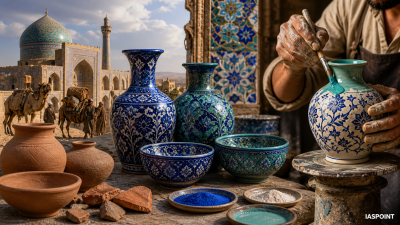
The arrival of Islamic influence in the 12th century CE introduced a revolutionary technique to the Indian ceramic tradition: Glazing. Unlike the indigenous tradition which primarily focused on unglazed terracotta and polished slips, Medieval pottery incorporated the use of silicate-based glazes. This period saw the synthesis of Persian, Central Asian, and indigenous Indian styles, leading to the birth of highly durable and aesthetic “Blue Pottery” and other glazed variants.
The Introduction of the Glazing Technique
Glazing involves applying a layer of glass-like substance to the surface of the pottery, which, when fired at high temperatures, fuses with the body to create a waterproof and glossy finish.
- Persian Influence: The technique of “Faience” or “Quartz-frit” pottery was brought to India by Muslim invaders and craftsmen from Persia (Iran).
- Shift in Material: Traditional Indian pottery used alluvial clay; however, the new glazed tradition often utilized a paste made of ground quartz, green glass, gum, and fuller’s earth (Multani Mittti).
- Kiln Technology: The introduction of more sophisticated kilns allowed for the high-temperature firing (above 900°C) necessary for the vitrification of glazes.
Regional Varieties and Centers of Excellence
The Medieval period saw the emergence of specific geographic hubs known for distinct styles of glazed pottery.
| Center | Style / Characteristics | Notable Features |
| Khurja (UP) | Khurja Pottery | Known for floral patterns in sky blue and white; evolved during the Tughlaq period. |
| Multan (Pakistan) | Blue and White Ware | Heavily influenced by Timurid tiles; used extensively in tomb architecture. |
| Jaipur (Rajasthan) | Jaipur Blue Pottery | Unique “No-clay” pottery made from quartz and glass; popularized later under Sawai Ram Singh II. |
| Chunar (UP) | Glazed Brown Ware | Known for a distinct deep brown or yellowish glaze. |
| Nizamabad (UP) | Black Pottery | High-sheen black pottery with silver-colored foil or zinc-amalgam work (Bidri-style influence). |
Technological and Aesthetic Innovations
The Blue and White Tradition
Inspired by Chinese porcelain but executed with Persian techniques, the “Blue and White” style became the hallmark of the Sultanate and Mughal periods.
- Cobalt Oxide: Used to achieve various shades of blue.
- Copper Oxide: Used to produce turquoise and green hues.
- Motifs: Shifted from human figures (common in earlier Indian styles) to complex Arabesque designs, geometric patterns, and calligraphy, adhering to Islamic artistic sensibilities.
Architectural Ceramics
A significant portion of glazed pottery during this era was produced in the form of Kashi or Chini tiles.
- Tile Mosaics: Used to decorate the exteriors of mosques, tombs, and palaces (e.g., the tombs of Multan and the Man Singh Palace at Gwalior).
- Gwalior Influence: The Chitra Mandir at Gwalior Fort (15th century) is a rare example of pre-Mughal glazed tiles depicting ducks, elephants, and tigers in vibrant yellow and green glazes.
Socio-Economic Impact of Glazed Pottery
The introduction of glazed pottery altered the culinary and social landscape of Medieval India.
- Hygiene and Utility: Glazed vessels were non-porous, making them easier to clean and ideal for storing liquids like vinegar, oil, and wine without seepage.
- Commercial Commodity: Glazed tiles and luxury vessels became significant items of trade, transported across the Silk Road and Indian Ocean maritime routes.
- Royal Patronage: Mughal Emperors, particularly Akbar and Jahangir, encouraged the migration of Persian potters, leading to the establishment of royal workshops (Karkhanas).
Comparison: Indigenous Terracotta vs. Medieval Glazed Pottery
| Feature | Indigenous Terracotta | Medieval Glazed Pottery |
| Base Material | Plastic Alluvial Clay | Quartz-frit / Clay mixed with Glass |
| Surface | Porous, often unglazed | Non-porous, Vitrified (Glassy) |
| Decoration | Painting post-firing or incised | Under-glaze or Over-glaze painting |
| Durability | Fragile, breaks easily | Highly durable and resistant to acids |
| Firing Temp | Low to Medium (600°C – 800°C) | High (900°C – 1200°C) |
360° Facts for UPSC Prelims
- The “No-Clay” Myth: Jaipur Blue Pottery is famous for being the only major pottery tradition in the world that does not use clay. It uses a mix of quartz stone powder, powdered glass, Borax, and water.
- Sultanate Legacy: The earliest evidence of glazed tiles in India is found at the tomb of Rukn-i-Alam in Multan (14th century).
- Bidri Influence: The black pottery of Nizamabad mimics the expensive Bidriware (metalwork) of the Deccan, providing a more affordable “ceramic version” for the common people.
- Persistence of Tradition: While glazed pottery was prestigious, unglazed red ware remained the primary vessel for the Hindu population due to ritual purity laws (Shaucha), which often viewed porous clay as “one-time use” for certain ceremonies.
- Khurja’s Title: Khurja is often referred to as the “Ceramic City of India,” with its glazed pottery tradition dating back over 600 years to the soldiers of Timur’s army who settled there.