
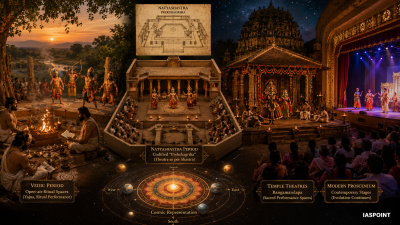
The evolution of the Indian theatre stage is a journey from the open-air ritual spaces of the Vedic period to the highly codified “Prekshagriha” described in the Natyashastra, and finally to the regional temple theatres and modern proscenium stages. In Indian tradition, the stage is not merely a platform but a sacred space (Rangamandapa) representing the cosmos.
The Natyashastra Model: The Prekshagriha
Sage Bharata’s Natyashastra (c. 200 BCE – 200 CE) provides the earliest and most detailed architectural blueprint for theatre construction. It classifies playhouses based on shape and size to ensure perfect acoustics and visibility without modern amplification.
Classification by Shape and Size
The treatise describes three primary shapes for the theatre building (Prekshagriha):
- Vikrishta (Rectangular): Considered the ideal shape for most dramatic performances.
- Chaturasra (Square): Generally preferred for dance-heavy performances or smaller gatherings.
- Tryasra (Triangular): A specialized form for specific types of plays.
These shapes were further categorized into three sizes: Jyestha (Large – 108 cubits), Madhyama (Medium – 64 cubits), and Avarastha (Small – 32 cubits). The Madhyama Vikrishta (Medium Rectangular) was recommended as the best for human actors because the voice and facial expressions remained clear to the audience.
Structural Components of the Classical Stage
A classical Sanskrit stage was divided into distinct functional zones, each with ritualistic and technical significance.
- Ranga-pitha: The main front stage where the primary action and dialogue took place.
- Ranga-shirsha: The rear stage, slightly elevated or distinct from the pitha, often used for secondary actions or entries.
- Nepathya-griha: The tiring room or backstage located behind the Ranga-shirsha, where actors dressed and applied makeup.
- Mattavarani: Two side-verandas or wings equipped with four pillars each, flanking the main stage to provide extra space for movement.
- Yavanika: The curtain used to conceal the backstage. The term is often debated for Greek (Yavana) etymological links, though its usage in India was unique.
Archaeological Milestones: The Cave Theatres
Before the construction of free-standing wooden or stone theatres, ancient Indians utilized natural and rock-cut spaces for performances.
- Sitabenga and Jogimara Caves: Located in the Ramgarh Hills of Chhattisgarh, these date back to the 3rd Century BCE. Sitabenga is considered one of the oldest amphitheatres in the world, featuring a semi-circular seating arrangement cut into the rock and holes for wooden poles to support a stage curtain.
- Udayagiri and Khandagiri (Odisha): Inscriptions of King Kharavela (Hathigumpha) suggest that the king built open-air theatres and organized Samajas (assemblies) for music and dance.
Regional and Temple Theatre Architecture
With the decline of classical Sanskrit drama, theatre moved into temple precincts, leading to the development of permanent regional structures.
The Koothambalam of Kerala
The Koothambalam is a unique temple theatre found in the high-caste temples of Kerala, specifically designed for Koodiyattam and Chakyar Koothu.
- Acoustic Engineering: Built primarily of wood and stone, the sloping roofs and wooden slats are designed to act as a natural resonator.
- Symmetry: The stage (Rangamandapam) is a square platform with its own pillars and a decorative ceiling (often featuring the Dikpalas), located within the larger hall.
- Sacred Placement: It is always situated within the inner courtyard of the temple, facing the deity.
The Namghar of Assam
Introduced by Srimanta Sankaradeva for Ankia Naat, the Namghar serves as a prayer hall and a community theatre.
- Space: It is a large open hall where the performance area is at one end, allowing for a flexible “thrust” stage where the audience surrounds the performers on three sides.
Comparison of Ancient and Medieval Stage Types
| Stage Type | Era/Region | Primary Feature | Key Example |
| Vikrishta | Classical/Natyashastra | Rectangular, strictly codified dimensions. | Theoretical Sanskrit Theatre |
| Cave Theatre | Mauryan/Post-Mauryan | Rock-cut, open-air, tiered seating. | Sitabenga Caves |
| Koothambalam | Kerala (Temple) | Ornate wooden stage within temple walls. | Vadakkunnathan Temple |
| Namghar | Assam (Sattras) | Communal hall for Bhaona performances. | Majuli Sattras |
| Open-Air/Folk | Pan-India | Temporary stages, village squares, or ground level. | Jatra, Tamasha, Nautanki |
Elements of Stage Decoration and Symbolic Props
Classical Indian theatre relied on “Aesthetic Suggestion” (Dhvani) rather than heavy scenery.
- Pustas (Models): Lightweight models made of bamboo, cloth, or leather to represent hills, chariots, or palaces.
- Indra-Dhvaja: A sacred pole worshipped before the play to ensure a hurdle-free performance.
- Lighting: In the absence of electricity, massive oil lamps (like the Nilavilakku in Kerala) were placed at the center of the stage, providing a flickering, mystical light that enhanced the heavy makeup of the actors.
Transition to the Modern Stage
- Colonial Influence: The 18th and 19th centuries saw the introduction of the Proscenium Stage by the British in Calcutta and Bombay. This replaced the intimate, three-dimensional interaction of traditional Indian stages with a “fourth wall” concept.
- Parsi Theatre: It bridged the gap by using European-style painted curtains and mechanical stage effects while retaining Indian mythological themes.
Fact Sheet for UPSC Aspirants
- Standard Unit of Measurement: The Natyashastra uses the Hasta (cubit) and Angula (finger-width) for all theatre measurements.
- Ritual of the Stage: The Rangapuja is the mandatory worship of the stage deities performed before any play begins to appease the Jarjara (Indra’s staff) which protects the theatre from evil spirits.
- The Pillar Symbolism: The four main pillars of the Madhyama stage were named after the four castes (Brahmin, Kshatriya, Vaishya, Shudra), symbolizing that theatre was an art form for all.
- First Modern Theatre: The “Play House” in Calcutta (1775) was one of the first Western-style theatres in India.