
Islam is the second-largest religion in India, with its presence dating back nearly 1,400 years. Its integration into the Indian subcontinent occurred through three primary channels: maritime trade, military expeditions, and the spiritual influence of Sufi saints.
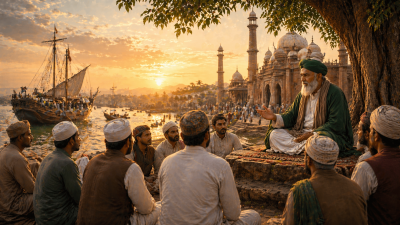
- Trade Routes: Arab traders had established commercial links with the Malabar Coast long before the birth of Islam. In the 7th century, these traders brought the faith to the coastal regions of Kerala.
- The First Mosque: The Cheraman Juma Mosque in Kodungallur, Kerala, built around 629 CE by Malik Deenar, is traditionally considered the first mosque in India.
- Military Conquest: The first major military entry was led by Muhammad bin Qasim, who conquered Sindh in 712 CE. This was followed centuries later by the Ghaznavids, Ghurids, and the establishment of the Delhi Sultanate.
- Sufi Influence: Unlike military conquest, the spiritual spread of Islam was facilitated by Sufi mystics who emphasized universal love, equality, and devotion, making the faith accessible to the Indian masses.
Core Tenets and Pillars of Islam
The Islamic faith is built upon five foundational pillars, known as Arkan-al-Islam, which guide the daily life of a practitioner.
- Shahada (Profession of Faith): The belief that “There is no god but Allah, and Muhammad is His messenger.”
- Salat (Prayer): Performing ritual prayers five times a day facing the Kaaba in Mecca.
- Zakat (Alms-giving): The mandatory donation of a portion of one’s wealth (usually 2.5%) to support the poor and needy.
- Sawm (Fasting): Abstaining from food and drink from dawn to sunset during the holy month of Ramadan.
- Hajj (Pilgrimage): The pilgrimage to the holy city of Mecca, which every Muslim is expected to perform at least once in their lifetime if physically and financially able.
Major Sects and Jurisprudence in the Indian Context
While Islam is monotheistic, it contains various schools of thought and sectarian divisions that influenced Indian socio-cultural history.
| Sect/School | Key Characteristics |
| Sunni | The largest group in India; follows the “Sunnah” (traditions) of the Prophet and the consensus of the community. |
| Shia | Believes in the leadership of the Prophet’s family, specifically Ali and his descendants (Imams). Significant presence in Lucknow and Hyderabad. |
| Sufism | The mystical dimension focusing on the inner search for God and shunning materialism. |
| Hanafi School | The dominant school of Sunni jurisprudence (Fiqh) in India, known for its emphasis on reason and community consensus. |
The Sufi Movement: Orders (Silsilas) and Cultural Impact
Sufism played a critical role in the “Indo-Islamic” synthesis. Sufi saints often lived in Khanqahs (hospices) and interacted with people of all faiths.
Major Sufi Orders in India
- Chisti Order: Founded by Khwaja Abu Ishaq Shami but established in India by Khwaja Moinuddin Chisti (Ajmer Sharif). Key saints include Nizamuddin Auliya and Salim Chisti. They used music (Sama) as a means to reach God.
- Suhrawardi Order: Founded by Sheikh Shihabuddin Suhrawardi. Unlike the Chistis, they accepted royal patronage and did not believe in poverty.
- Qadiri Order: Popularized by Sheikh Abdul Qadir Gilani. Dara Shikoh, the son of Shah Jahan, was a follower of this order.
- Naqshbandi Order: Established by Khwaja Bahauddin Naqshband; popularized in India by Khwaja Baqi Billah. It was more orthodox and opposed music and liberal reforms.
Indo-Islamic Architecture and Art
The arrival of Islam introduced new architectural techniques and aesthetics, blending Persian, Central Asian, and indigenous Indian styles.
- Key Features: Use of the Arcuate style (arch and dome), Minarets, Mortar as a cementing agent, and the avoidance of human figures in favor of Calligraphy, Arabesque (floral patterns), and Jali (lattice) work.
- Charbagh Style: The four-part garden layout introduced by the Mughals (e.g., Humayun’s Tomb, Taj Mahal).
- Pietra Dura: The technique of inlaying colored precious stones into white marble, seen extensively in Mughal monuments.
Festivals and Religious Observances
- Eid-ul-Fitr: Marks the end of the fasting month of Ramadan; celebrated with communal prayers and charity (Fitra).
- Eid-ul-Adha (Bakrid): Commemorates the sacrifice of Prophet Ibrahim; involves the ritual sacrifice of an animal.
- Milad-un-Nabi: Celebration of the birth anniversary of Prophet Muhammad.
- Muharram: Observed primarily by the Shia community to mourn the martyrdom of Hussain ibn Ali at the Battle of Karbala.
- Shab-e-Barat: The “Night of Records” or “Night of Fortune” where Muslims pray for the forgiveness of their deceased ancestors.
Significant Literature and Scholars
- Al-Biruni: Wrote Kitab-ul-Hind, providing a detailed account of Indian philosophy, religion, and science in the 11th century.
- Amir Khusrau: Known as the “Parrot of India” (Tuti-e-Hind), he was a Sufi musician and poet who pioneered the Qawwali genre and the Khayal style of music.
- Dara Shikoh: Translated the Upanishads into Persian under the title Sirr-e-Akbar (The Great Mystery), seeking common ground between Hinduism and Islam.
- Fatwa-e-Alamgiri: A comprehensive digest of Islamic law compiled under the patronage of Aurangzeb.
Factful Trivia for UPSC Prelims
- Ziyarat: The practice of visiting the shrines (Dargahs) of Sufi saints.
- The Concept of Wahdat-ul-Wajood: The “Unity of Being,” a Sufi philosophy popularized by Ibn Arabi, which bears striking resemblance to the Advaita philosophy of Hinduism.
- Din-i-Ilahi: A syncretic religion proposed by Akbar in 1582 CE, merging elements of Islam, Hinduism, Zoroastrianism, and Christianity.
- Introduction of Paper: The technology of paper manufacturing was brought to India during the Delhi Sultanate period.
- Islamic Lunar Calendar: Known as the Hijri Calendar, it began in 622 CE when the Prophet migrated from Mecca to Medina.