
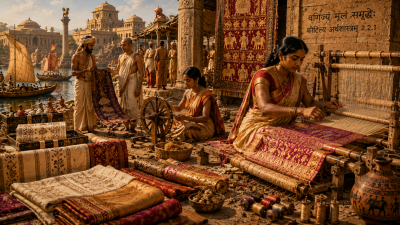
The Classical Period (c. 4th Century BCE – 8th Century CE), spanning from the Mauryan Empire to the early Medieval era, represents the “Golden Age” of Indian textiles. During this timeframe, textile production transitioned from a domestic craft to a highly organized state-controlled industry. Technical advancements in weaving, the expansion of the Silk Road, and the patronage of the Gupta and Kushan dynasties established India as the textile hub of the ancient world.
Mauryan Period: State Monopolies and Standardization
The Mauryan Era (322–185 BCE) introduced rigorous administrative control over textile production, as detailed in Chanakya’s Arthashastra.
- Sutradhyaksha (Superintendent of Weaving): A dedicated state official responsible for overseeing the spinning and weaving of cotton, silk, and wool.
- Employment of Marginalized Groups: The state employed widows, orphans, and differently-abled women in the royal weaving workshops, ensuring social welfare alongside industrial output.
- Regional Centers: Specific regions became famous for high-quality fabrics:
- Vanga (East Bengal): Known for fine white muslins.
- Kashi (Varanasi): Renowned for high-grade silks and cottons.
- Madurai: Emerged as a southern hub for fine cotton textiles.
- Introduction of Stitched Garments: While draping remained the norm, the contact with the Hellenistic world (Greeks) introduced basic stitching for tunics and cloaks used by the military.
Post-Mauryan and Kushan Influence: Central Asian Infusion
The Kushan Period (1st–3rd Century CE) revolutionized Indian attire through the introduction of tailored garments brought by Central Asian nomadic influences.
- Tailored Clothing: For the first time, statues (like the headless statue of Kanishka) depict the Chapkan (long tunic), trousers, and heavy quilted coats.
- Silk Road Expansion: India became a vital transit point for Chinese silk, but also began producing its own indigenous varieties of wild silk (Kausheya).
- Calico and Muslin: Roman accounts, such as the Periplus of the Erythraean Sea, highlight the massive demand for Indian “Ventus Textilis” (woven air) or Muslin in the Roman Empire.
Gupta Period: The Pinnacle of Aesthetic Sophistication
Under the Guptas (4th–6th Century CE), textiles became a medium for artistic expression, documented extensively in the Ajanta and Bagh murals.
- Advanced Patterns: Murals depict fabrics with intricate Hansalakshana (swan motifs), geometric circles, and floral trefoils.
- Pushpapatta: A technique of weaving flowers directly into the fabric, creating a three-dimensional floral effect.
- Diaphanous Fabrics: The elite wore extremely thin, transparent silks and muslins, often layered to create a play of light and shadow.
- Tie-and-Dye (Bandhani): References in contemporary literature (like the works of Kalidasa) suggest the early use of resist-dyeing techniques to create dotted patterns.
Early Medieval Transition: Regional Specialization
As the Classical era transitioned into the early Medieval period (6th–8th Century CE), the decline of central empires led to the rise of regional textile identities.
- Paithani and Silk Weaving: In the Deccan region under the Satavahanas and later the Chalukyas, gold-bordered silks began to emerge.
- Temple Patronage: The growth of the Bhakti movement led to the creation of “Temple Textiles”—fabrics specifically woven for deity idols and religious processions.
Comparative Analysis of Classical Garments
| Era | Primary Male Garments | Primary Female Garments | Key Fabric Feature |
| Mauryan | Antariya (Lower), Uttariya (Upper), Kayabandh (Sash). | Similar unstitched wraps with elaborate head-dresses. | Focus on thread count and purity. |
| Kushan | Chapkan (Tunic), Trouser, Heavy Boots. | Tunics and skirts influenced by Scythian styles. | Introduction of tailoring/stitching. |
| Gupta | Fine pleated Dhotis, Jeweled breastbands. | Stanapatta (Chest band), diaphanous sarees. | Extensive use of motifs (Swans, Lions). |
Important Facts for UPSC Prelims
- Kausheya: A term used in Classical Sanskrit texts to refer to indigenous Indian silk derived from cocoons.
- Dukula: A high-quality linen or silk often mentioned in the Mahabharata and Gupta-era literature as being as thin as a snake’s skin.
- Staple Exports: India exported “Calamo” (Cotton) and “Malabathrum” (Cinnamon leaf/textile dyes) to the Roman Empire in exchange for gold dinars.
- Ajanta Murals: These serve as the single most important visual archive for studying 5th-century textile drapes and patterns.
- Sreni (Guilds): Textile production was managed by powerful guilds that had their own seals, laws, and even private militias to protect trade routes.
Tech-Trivia: The ‘Charkha’ Mystery
Contrary to popular belief, the “Spinning Wheel” (Charkha) was not widely used in the Classical period; spinning was primarily done using the Takli (Hand Spindle). The horizontal spinning wheel likely entered India closer to the 11th–12th century, meaning all the legendary fine muslins of the Gupta era were produced using manual hand-spindles.
Last Modified: May 6, 2026