
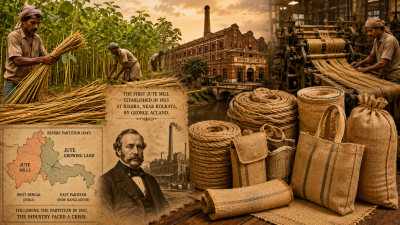
Jute, known as the “Golden Fibre” due to its color and high monetary value, has been an integral part of Indian heritage for centuries. Traditionally used in Bengal for making ropes and coarse fabrics, it gained commercial prominence during the British era. The first jute mill was established in 1855 at Rishra, near Kolkata, by George Acland. Following the partition in 1947, the industry faced a crisis as the majority of jute-growing land went to East Pakistan (now Bangladesh), while the processing mills remained in West Bengal, India.
Geographical Distribution and Cultivation
Jute is a rain-fed crop that thrives in the humid climate of the Ganges-Brahmaputra delta. It requires specific agro-climatic conditions for optimal growth and high-quality fiber production.
- Soil and Climate: It grows best in well-drained alluvial soil. It requires temperatures ranging from 24°C to 38°C and annual rainfall of at least 150 cm.
- Retting Process: This is a biological process where jute stems are submerged in slow-running water to loosen the fiber from the woody core.
- Leading Producers: West Bengal dominates production, followed by Bihar, Assam, Odisha, and Andhra Pradesh. India is currently the largest producer of raw jute and jute goods in the world.
Cultural and Artistic Significance
Under the Indian Art and Culture framework, jute is recognized for its versatility in weaving traditions. Beyond industrial sacks, it is used in creating handicrafts, floor coverings (satranjis), and decorative wall hangings.
- Traditional Weaves: In rural Bengal, jute was traditionally woven on handlooms to create chati (mats).
- Modern Innovations: Artisans now blend jute with cotton and silk to create “Jute-Georgette” or “Jute-Silk” sarees, enhancing the aesthetic appeal and softness of the otherwise coarse fiber.
- Natural Dyeing: Jute possesses high CO2 absorption and is highly receptive to natural dyes, making it a centerpiece for sustainable and eco-friendly Indian ethnic decor.
Economic Importance and Institutional Framework
The jute industry supports approximately 4 million farmers and 3.7 lakh industrial workers. It is a major contributor to India’s export earnings in the textile sector.
| Organization | Purpose |
| National Jute Board (NJB) | Statutory body under the Ministry of Textiles for the promotion and development of jute. |
| Jute Corporation of India (JCI) | Implements the Minimum Support Price (MSP) for jute farmers. |
| IJIRA | Indian Jute Industries’ Research Association; focuses on technical innovations. |
Government Initiatives and Regulatory Policies
The Government of India has implemented several measures to protect the industry from the competition of synthetic fibers and to promote environmental sustainability.
- Jute Packaging Materials Act (JPMA), 1987: This act mandates the compulsory use of jute packaging for certain percentages of foodgrains and sugar. Currently, 100% of foodgrains and 20% of sugar are required to be packed in diverse jute bags.
- Jute ICARE (Improved Cultivation and Advanced Retting Exercise): A scheme aimed at increasing the income of farmers by introducing modern agronomic practices and microbial retting.
- Golden Fibre Revolution: A term associated with the intensive push for jute production and technological upgradation in the sector.
Key Facts and Trivia for UPSC
- Biodegradability: Jute is 100% biodegradable and compostable, making it a superior alternative to plastic.
- Carbon Sequestration: One hectare of jute cultivation can absorb approximately 15 tonnes of CO2 and release 11 tonnes of oxygen in a single season.
- Major Varieties: The two main types of jute grown in India are White Jute (Corchorus capsularis) and Tossa Jute (Corchorus olitorius), with Tossa being superior in strength and luster.
- Export Destination: India exports jute products primarily to the USA, UK, Australia, and Saudi Arabia.
Comparison: Jute vs. Synthetic Fibers
| Feature | Jute Fiber | Synthetic (Polypropylene) |
| Origin | Plant-based (Natural) | Petroleum-based (Chemical) |
| Biodegradability | High | Non-biodegradable |
| Breathability | High (ideal for grains) | Low (causes moisture buildup) |
| Durability | High tensile strength | High, but prone to UV degradation |
| Environmental Impact | Carbon-negative | High carbon footprint |