
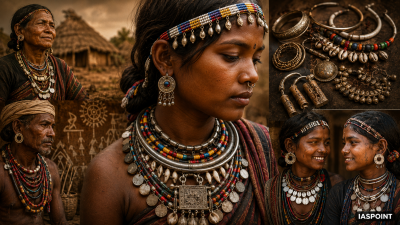
Tribal jewellery in India is more than mere adornment; it is a repository of indigenous history, social hierarchy, and spiritual protection. Unlike the refined gold-centric traditions of the urban elite, tribal ornaments are primarily crafted from locally available natural materials like base metals, wood, bone, shells, and beads. These pieces often function as amulets to ward off evil spirits or as markers of marital status and tribal affiliation.
Materiality and Symbolic Significance
The choice of materials in tribal jewellery is deeply rooted in the ecological surroundings of the specific tribe.
- Metals: Bell metal (Dhokra), brass, copper, and white metal (German silver) are common. Gold is rarely used, while silver is favored for its “cool” properties and value.
- Organic Materials: Berries, seeds, tiger claws, bird feathers, animal teeth, and lac are integrated into ornaments to draw strength from nature.
- Glass and Beads: Multi-colored beads, particularly in the Northeast, are used to denote the number of enemies defeated (historically) or the social standing of the wearer.
Regional Classification of Tribal Jewellery
| Region | Notable Tribes | Key Ornaments & Materials |
| Northeast India | Naga, Khasi, Mizo, Wancho | Multi-stranded bead necklaces, brass heads, boar tusks, and cane leg-bands. |
| Central India | Gond, Baiga, Bhil, Santhal | Bell metal (Dhokra) anklets, silver chokers (Hasli), and heavy brass bangles. |
| Western India | Rabari, Lambani, Toda | Massive silver earrings, bone/ivory armbands, and mirror-work neckpieces. |
| Himalayan Belt | Gaddi, Bakarwal, Bhutia | Turquoise and coral-encrusted silver amulets (Ghau), heavy silver chains. |
| Southern India | Toda, Kurumba | Bamboo hairpins, silver wire-work waistbands, and wild-seed necklaces. |
Iconic Tribal Jewellery Traditions
Naga Jewellery (Nagaland)
Naga ornaments are highly standardized according to the wearer’s achievements.
- The Naga Necklace: Traditionally made of carnelian, glass beads, and brass heads. The number of brass heads on a necklace historically signified the wearer’s prowess in battle.
- Boar Tusk Collars: Worn by warriors, these signify courage and strength.
- Materials: Shells (Moa), ivory, and goat hair dyed in red.
Dhokra Art (Odisha, West Bengal, Chhattisgarh)
- Technique: A non-ferrous metal casting using the Lost-Wax Casting (Cire Perdue) technique, which dates back to the Indus Valley Civilization.
- Ornaments: Dhokra jewellery features primitive motifs like suns, moons, and stylized flora. Common items include Pai-neri (foot ornaments) and heavy neck rings.
Lambani/Banjara Jewellery (Rajasthan and Karnataka)
- Aesthetics: Known for its vibrant, bohemian style, it utilizes silver, copper, and white metal.
- Key Items: The Puri (a heavy nose ring) and Waki (armlets). They are famous for coin jewellery, where silver coins from the British or Mughal era are strung into necklaces.
Toda Jewellery (Tamil Nadu)
- Nature-Inspired: The Toda tribe of the Nilgiris creates unique jewellery using silver wires and locally sourced seeds.
- Bamboo Craft: They are known for intricately carved bamboo hairpins and earrings that reflect the flora of the Western Ghats.
Tribal Ornaments by Anatomy
Head and Hair
- Khasi Hairpins: Large, elaborate silver pins used by the Khasi women of Meghalaya during the Nongkrem dance.
- Gond Hair Ornaments: Small brass clips and wooden pins often carved with bird motifs.
Neck and Torso
- Hasli: A rigid, torque-like silver or brass necklace worn by tribal women across North and Central India to protect the collarbone.
- Kanthi: Strands of seeds or beads, common among the Santhals and Mundas.
Arms and Legs
- Dhal Bangle: Massive ivory or bone bangles worn by Rabari women, covering the entire arm from wrist to shoulder.
- Khada: Heavy, hollow silver anklets filled with small stones to create a rhythmic sound during tribal dances.
Socio-Cultural Trivia for UPSC Prelims
- The Dhokra Connection: The “Dancing Girl” of Mohenjo-daro is the earliest known example of the Lost-Wax technique used by modern Dhokra artisans.
- Kanyadan and Wealth: In many tribal societies, jewellery represents the woman’s personal wealth (Stridhana) and is her primary source of financial security.
- Tattooing as Jewellery: For tribes like the Baigas and Apatanis, permanent tattoos (Godna) are considered the “only jewellery that stays after death,” serving as a spiritual ornament.
- Eco-Friendly Ornaments: The Bishnoi tribe of Rajasthan is known for minimalist jewellery that avoids any material that could harm the local ecosystem.
- The Gaddi ‘Chak’: A silver patera or head-ornament worn by Gaddi women of Himachal Pradesh, symbolizing the sun.
Contemporary Status and GI Tags
Traditional tribal jewellery is now being integrated into mainstream fashion through “Ethno-fusion” styles. Several tribal crafts have received or are in the process of receiving Geographical Indication (GI) tags to protect their heritage:
- Cuttack Silver Filigree (Odia-tribal influence).
- Bastaria Dhokra (Chhattisgarh).
- Adilabad Dhokra (Telangana).