
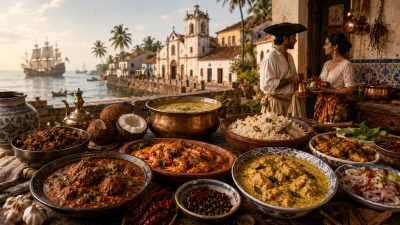
The Portuguese arrival in 1498, led by Vasco da Gama, marked the beginning of a profound “Columbian Exchange” that permanently altered the Indian palate. Unlike other colonial powers, the Portuguese actively encouraged intermarriage and cultural assimilation in their territories, particularly in Goa, Daman, Diu, and parts of Kerala. This led to a unique “Luso-Indian” culinary fusion that combined European techniques with local ingredients like coconut, kokum, and indigenous spices.
The Introduction of New World Crops
The most significant contribution of the Portuguese was the introduction of crops from South America and Mexico. These ingredients are now so integrated into Indian cooking that their foreign origins are often overlooked.
| Category | Introduced Crop | Impact on Indian Cuisine |
| Spices | Chili (Mirch) | Replaced black pepper as the primary source of heat in Indian curries. |
| Vegetables | Potato (Batata) | Became a pan-Indian staple; the word “Batata” is still used in Marathi and Konkani. |
| Vegetables | Tomato | Revolutionized the base of Indian gravies (Masalas). |
| Fruits | Pineapple (Ananas) | Introduced from Brazil; “Ananas” remains the name in most Indian languages. |
| Fruits | Cashew (Kaju) | Originally planted to prevent soil erosion; became a key ingredient in gravies and sweets. |
| Fruits | Guava (Amrud/Pery) | Introduced from tropical America. |
| Others | Papaya, Maize, Tobacco | Diversified the agricultural and dietary landscape of the subcontinent. |
Technical and Process Innovations
The Portuguese introduced specific culinary methods and food processing techniques that were previously absent in the Indian subcontinent.
- Vinha d’Alhos (The Origin of Vindaloo): The technique of preserving meat in wine vinegar (vinho) and garlic (alho). In India, palm vinegar replaced wine vinegar, and local spices were added, giving birth to the iconic “Vindaloo.”
- The Art of Baking (Pao): The Portuguese introduced the use of yeast and leavened bread. The Goan Pao (bread) became so popular that “Pav” is now a staple across Western and Central India (e.g., Pav Bhaji, Vada Pav).
- Refined Confectionery: They introduced the use of egg yolks and sugar in desserts, a departure from the milk-and-grain based sweets of ancient India.
- Distillation: While fermentation was known, the Portuguese refined the distillation of Cashew Feni and Coconut Feni, which are now GI-tagged products of Goa.
Regional Culinary Manifestations
The Portuguese influence was most concentrated in the coastal regions, creating distinct sub-cuisines.
Goan Catholic Cuisine
This is the purest form of Luso-Indian fusion. It utilizes heavy amounts of vinegar, pork (which was generally avoided in pre-Portuguese India), and coconut milk.
- Sorpotel: A rich, spicy pork stew made with liver and heart, flavored with vinegar and chilies.
- Xacuti: A complex curry involving roasted coconut and a high number of spices (up to 20).
- Bebinca: A multi-layered Goan dessert made of flour, sugar, ghee, and coconut milk, showcasing the Portuguese influence on egg-based sweets.
Kerala and the Malabar Coast
- Varieties of Cakes: The first Christmas cake in India is credited to Mambally Bapu in Thalassery (1883), continuing the baking legacy started by the Portuguese.
- Fruit Preserves: The Portuguese tradition of making jams and marmalades was adopted using local tropical fruits.
Bengal (Bandhur)
- Bandal Cheese: A smoky, salty cheese introduced by the Portuguese in the settlement of Bandel, West Bengal. It is one of the few indigenous varieties of processed cheese in India.
- Bakery Culture: The Portuguese influence contributed to the early development of the baking industry in Kolkata and Chittagong.
Fact Sheet for UPSC Prelims
- Vinegar: Before the Portuguese, Indian souring agents were primarily plant-based (Tamarind, Kokum, Lemon). The Portuguese introduced Palm Vinegar, made from toddy.
- The Potato Name: The word Alu is indigenous, but the Portuguese word Batata is strictly used for the New World potato in Western India.
- The Chili Trail: The Portuguese brought chilies to Guntur (Andhra Pradesh), which eventually became the largest chili market in Asia.
- Pav: The word “Pav” comes from the Portuguese word Pão meaning bread. It was traditionally kneaded with feet (Paon) in early bakeries, though this is a common folk etymology; the linguistic root is “Pão.”
- Introduction of Cabbages: Though some varieties were known, the European head-cabbage and cauliflower were popularized during the colonial era.
Socio-Cultural Impact
The Portuguese influence broke certain dietary taboos in the regions they occupied. They popularized the consumption of pork and beef among certain communities and introduced the concept of a “formal multi-course meal.” Their legacy is a testament to the “Creolization” of Indian food, where foreign ingredients were so successfully localized that they define the contemporary identity of Indian cuisine.
Last Modified: May 7, 2026