
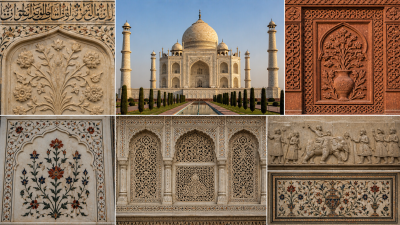
Mughal art is predominantly celebrated for its architecture and miniature paintings; however, sculpture occupied a unique, albeit secondary, niche. Unlike the preceding Sultanate period, which strictly adhered to the aniconic (non-image) nature of Islamic art, the Mughal era—particularly under Akbar and Jahangir—witnessed a fusion of Islamic calligraphy, Persian floral motifs, and Indigenous Indian stone-carving traditions. While freestanding human statues remained rare due to religious sensitivities, the era excelled in relief sculpture, decorative stone carving, and lapidary arts.
Characteristics of Mughal Sculptural Style
The Mughal sculptural aesthetic moved away from the robust, rhythmic forms of the Vijayanagara and Hoysala styles toward a more delicate, naturalistic, and geometric precision.
- Pietra Dura (Parchin Kari): A hallmark of the Shah Jahan era, this technique involved inlaying cut, polished, colored stones (such as lapis lazuli, jade, and jasper) into white marble to create floral and foliage reliefs.
- Jali Work (Latticed Stone Screens): Intricate perforated screens carved from single slabs of marble or red sandstone. These sculptures functioned as architectural “veils,” manipulating light and shadow.
- Naturalistic Floral Reliefs: Detailed carvings of lilies, poppies, and roses on the lower plinths of buildings, showcasing a high degree of botanical accuracy.
- Animal and Human Figurations: Though restricted, Akbar and Jahangir commissioned life-sized statues of elephants and hunting scenes, reflecting the influence of Hindu craftsmen.
Key Sculptural Centers and Masterpieces
Mughal sculpture was largely inseparable from its architectural setting. The primary centers were Agra, Delhi, and Fatehpur Sikri.
| Monument/Site | Key Sculptural Feature | Material Used |
| Fatehpur Sikri | The serpentine brackets of the Salim Chishti Tomb and the elephant statues at Hathi Pol. | White Marble / Red Sandstone |
| Itmad-ud-Daula (Agra) | Early and extensive use of Pietra Dura and delicate floral carvings. | White Marble |
| Taj Mahal (Agra) | “Cenotaph Screen” (Jali) and high-relief floral panels on the interior walls. | Makrana Marble |
| Red Fort (Delhi) | The “Scales of Justice” relief in the Diwan-i-Khas and flower-laden pillars. | Marble and Gold inlay |
| Agra Fort | Massive stone elephant statues (Hathi Pol) commissioned by Akbar. | Red Sandstone |
Diversification under Different Rulers
The evolution of sculpture under the Mughals can be categorized by the personal tastes of the Emperors.
Akbar: The Indo-Persian Synthesis
Akbar encouraged the integration of Hindu motifs. Sculptures during his time featured Chhatris, Guaj-mukhas (elephant motifs), and brackets inspired by temple architecture. The relief work at the Jodha Bai Palace in Fatehpur Sikri contains bell and chain motifs, a direct influence of temple sculpture.
Jahangir: Naturalism and Animalier Art
Jahangir’s obsession with nature led to highly realistic animal sculptures.
- The Hiran Minar (Sheikhupura): Built in memory of his favorite antelope, Mansraj, it features animal-centric motifs.
- Sculptural Portraits: Jahangir commissioned two life-size marble statues of the Rana of Mewar and his son, which were placed in the palace garden at Agra.
Shah Jahan: The Pinnacle of Pietra Dura
Under Shah Jahan, sculpture became “jewelry on a monumental scale.” The focus shifted from sandstone to marble. The relief work became shallower but more precise. The Peacock Throne (Takht-i-Taus), though a piece of furniture, was the ultimate masterpiece of Mughal sculptural and lapidary skill, featuring two peacocks encrusted with rubies, diamonds, and emeralds.
The Art of Jali and Reliefs
Mughal Jali work is considered “sculpture in negative space.” The complexity increased over time:
- Geometric Patterns: Common in the Akbari period (tomb of Humayun).
- Floral Arabesques: Perfected during the reign of Shah Jahan (Tomb of Salim Chishti and Taj Mahal).
- The “Tree of Life” Motif: A recurring theme where the central stem branches out into a perfectly symmetrical lattice.
Minor Sculptural Forms: Lapidary and Decorative Arts
Mughal sculpture extended to functional objects, often referred to as “Minor Arts”:
- Jade Carving: Mughal emperors were patrons of jade (Nephrite). The Jade Cup of Jahangir and the dagger hilts carved in the shape of horse or ram heads are prime examples of three-dimensional sculpture.
- Ivory Carving: Though limited, ivory was used for intricate boxes and handles, often featuring relief scenes of royal hunts.
Critical Facts for UPSC Aspirants
- Persian Influence: The concept of “Arabesque” (intertwining flowing lines) provided the blueprint for most Mughal relief sculptures.
- Religious Constraint: Due to the Islamic prohibition of “Idolatry,” Mughal sculpture avoided the depiction of deities, focusing instead on the beauty of the natural world and geometry.
- The Tassa technique: A method of carving where the design is raised from the surface, frequently used in the Red Fort’s marble panels.
- UNESCO Relevance: The sculptural elements within the Taj Mahal and Fatehpur Sikri are cited as “exceptional examples of a fusion of cultures” in their World Heritage citations.
- Decline: Sculptural activity saw a sharp decline under Aurangzeb, who favored austere architectural forms and discouraged figurative or overly ornate decorative arts.