
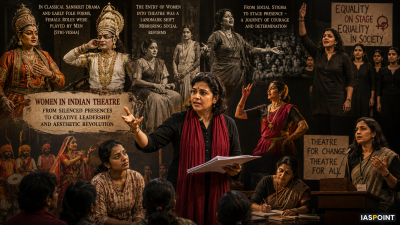
The history of women in Indian theatre is a narrative of transition from systemic exclusion and social stigma to creative leadership and aesthetic revolution. Historically, in classical Sanskrit drama and early folk forms like Kathakali or Yakshagana, female roles were played by men (known as Stri-vesha). The entry of women into theatre was a landmark shift that mirrored the broader social reforms and the struggle for gender equality in India.
Early Pioneers and the Parsi Stage
The late 19th and early 20th centuries marked the first professional appearance of women on the commercial stage. While initially met with social resistance, these pioneers paved the way for the professionalization of the craft.
- Binodini Dasi (Nati Binodini): A legendary figure in Bengali theatre, she was a disciple of Girish Chandra Ghosh. Despite her immense contribution to the Great National Theatre, she faced social ostracization. Her autobiography, Amar Katha, is a primary source for understanding the life of a female artist in the 19th century.
- The Parsi Theatre Era: Women like Mary Fenton (the first Caucasian woman to perform in Parsi theatre) and Munni Bai became superstars of the commercial Urdu/Gujarati stage. They were instrumental in popularizing the “Ghazal” and “Thumri” as theatrical elements.
- Jaddanbai: A multifaceted artist (and mother of actress Nargis), she was a singer, actress, and one of the first female music directors and producers in the transition from theatre to cinema.
The IPTA Movement and Social Realism
The 1940s saw a shift from commercialism to political activism through the Indian People’s Theatre Association (IPTA). Women became central to the “Theatre of Protest.”
- Tripti Mitra: A stalwart of Bengali theatre and a founding member of Bohurupee. Her performance in Nabanna and Raktakarabi redefined the portrayal of women from decorative figures to symbols of intellectual and social resistance.
- Dina Pathak: A key figure in the Gujarati IPTA movement, she used the folk form Bhavai to spread social messages and later became a mentor to many modern theatre practitioners.
- Zohra Sehgal: Originally a dancer with Uday Shankar, she joined Prithvi Theatre and IPTA, contributing to the “ensemble” style of acting and bringing a modernist physicality to Indian drama.
Women Directors and the Aesthetic Shift
In the post-independence era, women moved beyond acting into direction, playwriting, and scenography, introducing “Gynocriticism” and feminine perspectives to the stage.
- Vijaya Mehta: A pioneer of the Marathi experimental theatre, she blended traditional Indian forms with Western realism. Her production of Hayavadana and her work with the Rangayan group are considered benchmarks in modern Indian direction.
- Amal Allana: A former chairperson of the National School of Drama (NSD), she is known for her grand scenography and her focus on the psychological depth of female characters, notably in Himmat Mai (an adaptation of Brecht’s Mother Courage).
- Shanta Gandhi: A pioneer in reviving folk traditions, her production of Jhasma Odhan (using the Bhavai form) is a seminal work in the “Theatre of Roots” movement.
- Usha Ganguly: Through her group Rangakarmee, she brought Hindi theatre to Kolkata. Her plays like Rudali (based on Mahasweta Devi’s story) explored the intersection of gender, caste, and economic exploitation.
Key Figures and Their Specialized Contributions
| Personality | Primary Association | Major Contribution/Work |
| Anuradha Kapur | NSD / Scenography | Expert in spatial design and the visual language of theatre; authored Sita’s Kitchen. |
| B. Jayshree | Kannada Theatre / Spandana | Renowned for integrating folk music and ritualistic elements in modern Kannada plays. |
| Neelam Mansingh Chowdhry | Punjabi Theatre / The Company | Known for collaborating with traditional Naqqals to create a unique urban-folk hybrid aesthetic. |
| Maya Rao | Theatre of the Oppressed | Pioneer of “Performance Art” and activist theatre focusing on violence against women. |
| Kirti Jain | Direction / Education | Former Director of NSD; focused on the pedagogical aspects of theatre and historical narratives. |
Contemporary Themes in Women’s Theatre
Modern female playwrights and directors have shifted the focus toward “Personal is Political,” addressing previously silenced narratives.
- Body Politics: Exploring themes of reproductive rights, aging, and sexual identity.
- Reinterpreting Epics: Modern plays often retell the Ramayana or Mahabharata from the perspectives of Sita, Draupadi, or Urmila, challenging patriarchal interpretations.
- Solo Performances: The rise of “One-Woman Shows” (e.g., works by Jyoti Dogra or Sushma Deshpande) emphasizes the actor’s autonomy and minimalist storytelling.
Important Facts and Trivia for UPSC
- First Female Autobiography in Theatre: Amar Katha (My Story) by Binodini Dasi is the first comprehensive account of the 19th-century theatre world by a woman.
- The “Sutradhari” Concept: While the classical Sutradhar was traditionally male, modern directors like Shanta Gandhi and Vijaya Mehta re-envisioned the role to allow women to lead the narrative.
- Gubbi Veeranna Company: One of the few traditional companies in Karnataka that encouraged women to perform on stage during an era when it was socially taboo.
- Recognition: The Sangeet Natak Akademi Awards and the Amal Allana Award are prestigious honors that have significantly recognized female excellence in direction, acting, and lighting design.
- Nirbhaya (Play): Directed by Yaël Farber (with Indian performers like Sneha Jawale), this play marked a global moment for Indian activist theatre, addressing the 2012 Delhi gang-rape case through testimonial theatre.