
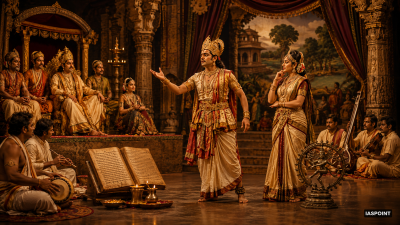
Sanskrit drama represents the pinnacle of ancient Indian literary achievement, flourishing primarily between the 1st and 10th centuries CE. Unlike folk theatre, Sanskrit drama was a highly stylized, courtly art form governed by the rigid aesthetic principles of the Natyashastra. It served as a sophisticated medium for exploring the intersection of Dharma (duty), Artha (material success), and Kama (pleasure).
Structural and Technical Foundations
The architecture of Sanskrit drama was defined by specific conventions that distinguished it from contemporary global traditions.
- Linguistic Diglossia: A unique feature where the social hierarchy was reflected in speech. High-status characters (Kings, Brahmins, Ministers) spoke in Sanskrit, while women, children, and the working classes spoke various forms of Prakrit (the vernacular).
- The Rasa Theory: The primary goal was to evoke a specific emotional state or Rasa in the audience. The eight original Rasas (Erotic, Comic, Pathetic, Furious, Heroic, Terrible, Odious, and Marvelous) were later expanded to include Shanta (Peace).
- Absence of Tragedy: Sanskrit plays traditionally conclude with a sense of harmony. The concept of a “tragic hero” dying in defeat is absent, as Indian aesthetics favored the eventual restoration of cosmic order.
- The Vidushaka: A recurring character, usually a Brahmin friend of the protagonist. Despite his high caste, he provides comic relief, speaks Prakrit, and often serves as a bridge between the hero and the audience.
The Dasharupaka: Ten Forms of Drama
Dhananjaya’s Dasharupaka (10th Century) classifies Sanskrit plays into ten distinct categories based on plot, hero, and sentiment. The two most significant for UPSC aspirants are:
| Type | Characteristics | Example |
| Nataka | Themes from mythology or history; noble hero; 5 to 10 acts. | Abhigyanashakuntalam |
| Prakarana | Plot is a creative invention of the author; middle-class hero. | Mrichchhakatika |
| Samavakara | Focuses on mythological battles; features many heroes. | Amritamanthana |
| Ihamriga | Plot involves the pursuit of a divine lady. | Rukminiharana |
| Prahasana | Farce or satirical play focusing on social eccentricities. | Mattavilasa Prahasana |
Prominent Playwrights and Masterpieces
The Classical Age of Indian Theatre is defined by a lineage of brilliant dramatists whose works are still studied for their poetic and structural brilliance.
Bhasa (3rd – 4th Century CE)
Often called the “father of Indian drama,” Bhasa predates Kalidasa. His plays were rediscovered in Kerala in 1912 by T. Ganapati Sastri.
- Swapnavasavadatta (The Vision of Vasavadatta): His most famous work, dealing with the love story of King Udayana.
- Urubhanga: Unique for being one of the few Sanskrit plays that approaches a tragic ending, depicting the death of Duryodhana.
Kalidasa (4th – 5th Century CE)
Regarded as the “Shakespeare of India,” his works represent the zenith of the Kavya (poetic) style during the Gupta Empire.
- Abhigyanashakuntalam: Tells the story of King Dushyanta and Shakuntala. It was the first Indian play to be translated into Western languages (by William Jones in 1789).
- Malavikagnimitram: Focuses on the love of King Agnimitra of the Shunga dynasty for Malavika.
- Vikramorvasiyam: Based on the Vedic legend of Pururavas and the nymph Urvashi.
Shudraka (Post-Gupta Era)
- Mrichchhakatika (The Little Clay Cart): A masterpiece of the Prakarana genre. It provides a vivid social picture of ancient Ujjain, featuring a virtuous Brahmin merchant (Charudatta) and a wealthy courtesan (Vasantasena).
Bhavabhuti (8th Century CE)
Considered an equal to Kalidasa, he was the court poet of King Yashovarman of Kannauj.
- Uttararamacharita: Focuses on the later life of Rama, specifically the abandonment of Sita. It is renowned for its mastery of the Karuna Rasa (Pathos).
- Malatimadhava: A romantic drama often compared to Romeo and Juliet, but with a happy ending.
Vishakhadatta
- Mudrarakshasa: A unique political thriller that lacks a female lead and traditional romance. It depicts the clever maneuvers of Chanakya to win over Rakshasa, the minister of the Nandas, for Chandragupta Maurya.
Theatrical Infrastructure and Staging
The Natyashastra provides meticulous details on the physical space of the theatre (Prekshagriha).
- Theatre Shapes: Three types were recognized—Rectangular (Vikrishta), Square (Chaturasra), and Triangular (Tryasra).
- Curtains (Yavanika): The term Yavanika suggests a possible Greek influence (Yavana), though the use of the curtain in Indian theatre was distinct from Greek practice.
- Minimalist Sets: Sanskrit drama relied heavily on Abhinaya (stylized gestures) and Vachika (speech) rather than elaborate physical scenery. The audience’s imagination was engaged through descriptive poetry.
Factors for the Decline of Sanskrit Drama
By the 10th-11th century, Sanskrit drama began to wane as a living tradition.
- Linguistic Shift: Sanskrit became increasingly confined to the priestly and royal elite, while the masses moved toward Apabhramsa and regional languages.
- Complex Conventions: Over-stylization and rigid adherence to rules made the genre less accessible.
- Rise of Folk Theatre: The emergence of vibrant, regional folk traditions like Yatras, Tamasha, and Bhavai catered more effectively to the common people.
- Foreign Invasions: The destabilization of royal courts led to a loss of the specialized patronage required for such large-scale productions.
Summary Trivia for Aspirants
- First Sanskrit Play Fragment: Attributed to Ashvaghosha (author of Buddhacharita), found in Turfan (Central Asia).
- The King-Playwright: King Harshavardhana of Kannauj wrote three famous plays: Ratnavali, Priyadarsika, and Nagananda.
- Pallava Contribution: King Mahendravarman I wrote Mattavilasa Prahasana, a satire on contemporary religious sects.
- First Translation: Abhigyanashakuntalam was translated into English by Sir William Jones in 1789, sparking global interest in Sanskrit literature.