
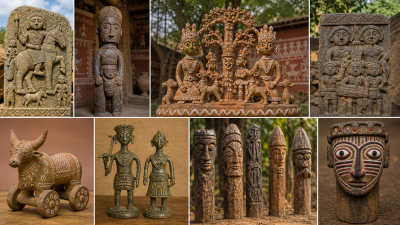
Tribal and Folk sculpture in India represents a continuous, “living tradition” that exists parallel to the classical “Margi” traditions. While classical sculpture follows the Shastras (canonical texts), tribal (Adivasi) and folk sculpture is guided by oral traditions, community memory, and local belief systems. These works are primarily functional, created for ritualistic, commemorative, or protective purposes rather than pure ornamentation. The art is characterized by spontaneity, simplification of form, and a deep-rooted connection to the natural and ancestral spirit worlds.
Key Materials and Techniques
The choice of material in tribal sculpture is dictated by local geography and the specific ritual requirements of the tribe.
- Terracotta: Used extensively for votive offerings. Figures are often handmade or wheel-turned and then joined.
- Metal (Dhokra): The “lost-wax” (Cire Perdue) casting method is the primary metalworking technique used by tribes in Central and Eastern India.
- Wood: Employed for ancestral pillars, memorial boards, and masks.
- Stone: Used primarily for megalithic memorials and boundary markers.
Regional Traditions and Iconic Examples
Indian tribal sculpture varies significantly across the subcontinent, with distinct stylistic markers for each major tribal belt.
| Tribe/Region | Primary Medium | Notable Sculptural Form |
| Bastar (Chhattisgarh) | Bell Metal (Dhokra) | Tall, lean figures of deities like Budha Deo and various animal totems. |
| Kondh (Odisha) | Metal/Terracotta | Intricate bronze icons used in rituals; terracotta pots with geometric animal reliefs. |
| Bhil (MP/Rajasthan) | Terracotta | Goda (votive horses) offered to the deity Baba Dev for wish-fulfillment. |
| Naga (Nagaland) | Wood | Elaborate “Morung” (bachelor’s dormitory) pillars and masks depicting headhunting lore. |
| Gond (Central India) | Wood/Stone | Mariya (memorial pillars) and detailed carvings on wooden doors and grain storage bins. |
| Warli (Maharashtra) | Clay/Wood | While famous for paintings, they create “Palghat” (fertility goddess) sculptures for weddings. |
Significant Tribal Sculptural Forms
Dhokra Art (The Lost-Wax Tradition)
Dhokra is one of the earliest known methods of metal casting, tracing its roots back to the “Dancing Girl” of Mohenjo-daro. It is practiced by the Ghadwa of Chhattisgarh and the Mariya Gonds.
- Process: A clay core is covered with wax threads, which is then encased in more clay. Molten metal replaces the wax, resulting in a unique, non-replicable sculpture.
- Themes: Tribal deities, elephants with howdahs, and scenes from daily life such as musicians and dancers.
Votive Terracotta Traditions
Terracotta serves as the “poor man’s sculpture” but carries immense spiritual weight.
- Ayyanar Horses (Tamil Nadu): Giant terracotta horses placed at the outskirts of villages to act as guardians.
- Bhil Votive Horses: Offered in sacred groves, these represent the “Vahana” (vehicle) of the gods.
- Bankura Horse (West Bengal): Originally a ritualistic folk object of the Rarh region, it is now a national symbol of Indian handicrafts, characterized by its erect ears and long neck.
Wood Carvings and Ancestral Pillars
- Mundas and Gonds: Erect wooden pillars (Khambas) to commemorate the dead. These pillars are carved with symbols of the deceased’s life, such as umbrellas (status), horses, or weapons.
- Naga Woodcraft: The Nagas carve massive beams in their communal houses. Common motifs include the hornbill, tiger, and human heads, symbolizing valor and fertility.
Ritualistic and Functional Iconography
Unlike classical idols, tribal sculptures are often “temporary” icons.
- Gramadevata Sculpture: Representations of village deities (like Shitala Devi or Manasa) are often crude, focus on specific features like eyes or weapons, and are frequently replaced.
- Masks: Used in folk dances like Chhau (West Bengal/Odisha) and Gambira. These masks are sculptures in themselves, meticulously molded from clay, paper-mâché, or wood to represent demons, gods, and animals.
Distinctions: Classical (Margi) vs. Folk/Tribal (Desi) Sculpture
For UPSC analysis, the distinction between these two streams is vital:
- Canon vs. Intuition: Classical sculpture follows the Silpa Shastras; Tribal sculpture follows the Reeti (local custom).
- Anatomy: Classical art strives for idealized anatomical proportions; Tribal art uses “primitive” or “abstracted” forms (e.g., elongated limbs or enlarged heads).
- Permanence: Classical temples were meant to last for millennia; many tribal sculptures (especially terracotta) are meant to return to the earth after the ritual.
Fact-File for UPSC Prelims
- The Ghadwas of Bastar: The name “Ghadwa” is derived from the word Ghadna (to craft/melt), specialized in bell-metal.
- Sanctal Symbols: In many tribal cultures, a simple unhewn stone (Shila) rubbed with vermilion serves as the primary sculptural representation of a deity.
- Geographical Indication (GI) Tags: Several tribal sculptural forms, including Bastar Iron Craft, Dhokra, and the Bankura Horse, have received GI status to protect the heritage.
- Museum of Mankind (Indira Gandhi Rashtriya Manav Sangrahalaya): Located in Bhopal, it is the premier institution for the preservation and display of open-air tribal sculptural habitats.