
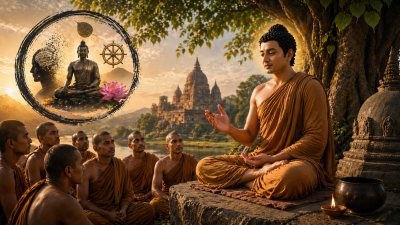
Buddhist philosophy, a heterodox (Nastika) school of Indian thought, emerged in the 6th century BCE as a challenge to the ritualistic Vedic orthodoxy. Founded by Siddhartha Gautama (The Buddha), it is characterized by pragmatism, psychological depth, and an emphasis on ethical living as the path to liberation (Nirvana). Unlike schools that focus on a permanent soul or creator, Buddhism centers on the impermanent nature of existence.
The Four Noble Truths (Arya Satyani)
The bedrock of Buddhist philosophy is the diagnosis of the human condition through four logical steps, mirroring a medical diagnosis.
- Dukkha (The Truth of Suffering): Life is inherently characterized by dissatisfaction and suffering, including birth, aging, sickness, and death.
- Samudaya (The Truth of the Cause): The root cause of suffering is Tanha (craving) and Avidya (ignorance).
- Nirodha (The Truth of Cessation): Suffering can be ended by overcoming craving and attachment.
- Magga (The Truth of the Path): The practical way to end suffering is the Eightfold Path.
The Eightfold Path (Astangika Marga)
This path provides a middle way (Madhyama Pratipada) between extreme self-indulgence and extreme self-mortification. It is categorized into three functional groups:
| Category | Component | Description |
| Pratya (Wisdom) | Right View (Samyak-dristi) | Understanding the Four Noble Truths. |
| Right Resolve (Samyak-sankalpa) | Intention of harmlessness and renunciation. | |
| Sila (Ethics) | Right Speech (Samyak-vac) | Abstaining from lying, gossip, and harsh words. |
| Right Action (Samyak-karmanta) | Avoiding killing, stealing, and sexual misconduct. | |
| Right Livelihood (Samyak-ajiva) | Earning a living without harming others. | |
| Samadhi (Meditation) | Right Effort (Samyak-vyayama) | Preventing unwholesome states of mind. |
| Right Mindfulness (Samyak-smriti) | Constant awareness of body and mind. | |
| Right Concentration (Samyak-samadhi) | Achieving deep meditative absorption. |
Core Metaphysical Doctrines
Buddhism introduces several radical philosophical concepts that distinguish it from other Indian schools.
- Pratityasamutpada (Dependent Origination): The doctrine that all phenomena arise in dependence upon causes and conditions. “When this exists, that comes to be.” This is explained through the Twelve Nidanas (links) starting from ignorance and ending in old age/death.
- Anicca (Impermanence): The belief that nothing in the universe is permanent; everything is in a constant state of flux (Kshanika-vada).
- Anatta (No-Self): The denial of a permanent, unchanging soul (Atman). Buddhism posits that the “self” is merely a collection of five aggregates (Skandhas): form, sensation, perception, mental formations, and consciousness.
- Nirvana: The ultimate goal representing the “blowing out” of the fires of greed, hatred, and delusion.
Major Schools of Buddhist Thought
As the philosophy evolved, several sub-schools emerged with differing interpretations of reality and the path to liberation.
Hinayana (Theravada)
- The “Lesser Vehicle,” focusing on individual liberation.
- Considers Buddha a historical figure and a great teacher.
- Uses Pali as the primary language of scriptures.
- Believes in the concept of the Arhat (one who attains Nirvana for themselves).
Mahayana
- The “Greater Vehicle,” emphasizing the liberation of all sentient beings.
- Deifies the Buddha and introduces the concept of Bodhisattvas (beings who delay their own Nirvana to help others).
- Uses Sanskrit as the primary language.
- Includes influential sub-philosophies like Madhyamaka (founded by Nagarjuna, emphasizing Sunyata or Emptiness) and Yogachara (emphasizing Consciousness-only).
Vajrayana
- The “Diamond Vehicle” or Tantric Buddhism.
- Emphasizes the use of mantras, mudras, and mandalas to achieve enlightenment quickly.
- Prevalent in Tibet, Bhutan, and Himalayan regions of India.
Key Philosophers and Contributions
- Nagarjuna: Developed the concept of Sunyata (Emptiness) and founded the Madhyamaka school. Often called the “Second Buddha.”
- Asanga and Vasubandhu: Brothers who founded the Yogachara (Vijnanavada) school, focusing on the mind as the primary reality.
- Dignaga and Dharmakirti: Pioneers of Buddhist logic (Pramana) and epistemology.
The Three Pitakas (Scriptures)
The primary teachings are organized into the Tripitaka (Three Baskets).
- Vinaya Pitaka: Rules of discipline for the monastic order (Sangha).
- Sutta Pitaka: Collections of the Buddha’s sermons and teachings.
- Abhidhamma Pitaka: Philosophical and psychological analysis of the teachings.
Historical Facts and Trivia for UPSC
- The Three Jewels (Triratna): Buddha (The Teacher), Dhamma (The Teaching), and Sangha (The Community).
- Upasampada: The ceremony of ordination into the Buddhist monastic order.
- Patimokkha: A set of rules in the Vinaya Pitaka recited fortnightly by monks for confession.
- Language: Buddha primarily taught in Magadhi/Pali to reach the masses, breaking the monopoly of Sanskrit.
- Council of Valabhi: While primarily associated with Jainism, Buddhist scholars like Gunamati and Sthiramati also flourished here.
- Universities: Ancient Buddhist universities like Nalanda, Vikramshila, and Odantapuri were global hubs for studying Buddhist logic and philosophy.