

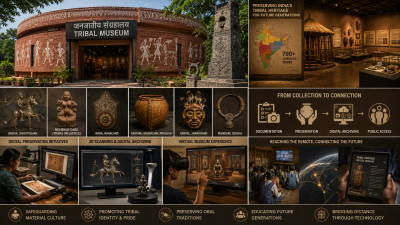
In the context of Indian Art, Culture, and Heritage, tribal museums serve as specialized repositories that move beyond mere “exhibition” to “active preservation.” These institutions are crucial for safeguarding the material culture of India’s 700+ Scheduled Tribes. In recent years, the shift toward Digital Preservation and Virtual Museums has addressed the challenges of physical decay and the geographical isolation of tribal heartlands.
Institutional Framework: Tribal Research Institutes (TRIs)
The Ministry of Tribal Affairs (MoTA) oversees the documentation of tribal life through a network of Tribal Research Institutes.
- Nodal Agency: Tribal Research Institutes (TRIs) are the primary bodies responsible for establishing and maintaining state-level tribal museums.
- National Tribal Research Institute (NTRI): Located in New Delhi, it serves as the apex body for tribal research and coordinates the digitization of tribal artifacts across India.
- Legislative Support: These efforts align with Article 29 of the Constitution, which mandates the protection of the distinct culture and language of minorities.
Major Physical Tribal Museums in India
| Museum Name | Location | Focus Area / Highlight |
| Museum of Mankind (Indira Gandhi Rashtriya Manav Sangrahalaya) | Bhopal, MP | India’s largest anthropological museum featuring open-air tribal habitat replicas. |
| Tribal Museum, Odisha | Bhubaneswar | Known as the “Museum of Tribal Arts and Artifacts,” showcasing the 62 tribes of Odisha. |
| Don Bosco Centre for Indigenous Cultures | Shillong, Meghalaya | A seven-story museum representing the diverse cultures of North-East India. |
| Tribal Museum, Gujarat | Saputara | Focuses on the Dangi tribes and their unique musical instruments and masks. |
| National Tribal Museum (Proposed) | New Delhi | Aimed at being a world-class venue for integrated tribal heritage display. |
Freedom Fighters’ Museums (Jan Jatiya Swatantrata Qila)
The Government of India is establishing 10 specialized museums dedicated to tribal freedom fighters to acknowledge their role in the Indian Independence movement.
- Birsa Munda Museum (Ranchi, Jharkhand): Located at the Old Central Jail where Birsa Munda breathed his last; it focuses on the Ulgulan movement.
- Rani Gaidinliu Museum (Manipur): Dedicated to the Naga spiritual and political leader who led a revolt against British rule.
- Alluri Sitarama Raju Museum (Andhra Pradesh): Highlights the Rampa Rebellion and the struggle of tribal groups in the Eastern Ghats.
- Other Locations: Museums are also being developed in Gujarat (Rajpipla), Madhya Pradesh (Chhindwara), Chhattisgarh (Raipur), Kerala (Kozhikode), Mizoram (Kulasib), and Telangana (Hyderabad).
Digital Preservation Strategies
Digital preservation ensures that intangible heritage—languages, songs, and oral histories—is recorded for posterity before it fades with the older generation.
The Digital Repository of Tribal Heritage
MoTA has launched a centralized portal to archive tribal assets.
- Scanning and 3D Modeling: Physical artifacts like Dokra art, Naga shawls, and tribal jewelry are being converted into 3D digital models for virtual study.
- Audio-Visual Archiving: Recording of folk songs, tribal dialects, and ritualistic dances to prevent “linguistic extinction.”
- GIS Mapping: Mapping of sacred groves (Sarnas) and tribal heritage sites using Geographic Information Systems for better conservation management.
Virtual Museums and Augmented Reality (AR)
- Virtual Tours: Allowing global access to tribal habitats without disturbing the ecological and social sanctity of tribal areas.
- Interactive Kiosks: Installed in urban centers to educate the public on tribal ethno-medicine, hunting techniques, and sustainable living.
Anthropological Survey of India (AnSI) and Documentation
AnSI plays a pivotal role in the scientific documentation of tribal physical and cultural traits.
- People of India Project: A massive documentation effort that includes the cultural profiles of almost all tribal communities.
- Zonal Anthropological Museums: Located in cities like Port Blair, Udaipur, and Nagpur, focusing on regional ethnographic data.
Key Challenges in Tribal Heritage Preservation
- Ephemeral Nature: Many tribal arts (like Warli or Saora murals) are made of mud and organic colors, which degrade quickly, making digital photography the only way to preserve them permanently.
- Intellectual Property Rights (IPR): Protecting tribal designs (like the GI-tagged Kotpad handloom) from commercial exploitation by external fashion houses.
- Community Participation: Ensuring that the “Right to Narrate” remains with the tribes themselves rather than external curators.
360° Fact Sheet for UPSC Prelims
- Janjatiya Gaurav Divas: Celebrated on November 15 (birth anniversary of Birsa Munda) to recognize tribal heritage and contributions.
- TRIFED and Marketing: While museums preserve history, TRIFED (Tribal Co-operative Marketing Development Federation of India) preserves the “living craft” by providing a market for the artifacts displayed in museums.
- The ‘Living Museum’ Concept: The IGRMS in Bhopal is unique because it invites tribal artisans to live on-site and build their traditional houses, which then become museum exhibits.
- Indigenous Knowledge Systems (IKS): Documentation now includes “Ethno-botany”—recording tribal knowledge of medicinal plants in a digital library to prevent bio-piracy.
- UNESCO’s Role: Digital preservation efforts often align with the UNESCO Convention for the Safeguarding of the Intangible Cultural Heritage (2003).
- PVTG Documentation: Specialized digital modules have been created for Particularly Vulnerable Tribal Groups like the Jarawas and Shompens to record their unique maritime and forest-dwelling skills without intrusive physical contact.