

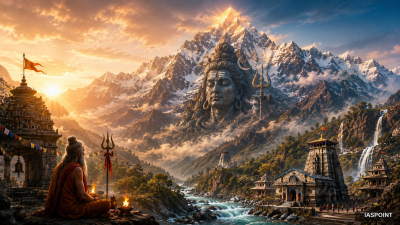
The Himalayas, stretching across the northern frontiers of India, are revered as Devabhumi (Land of the Gods). In Indian art, culture, and heritage, this mountain range is not merely a geographical barrier but a living spiritual entity, described in the Kumarasambhava by Kalidasa as the Manadanda (measuring rod) of the earth. The concept of Devabhumi integrates physical topography with metaphysical symbolism, making it a core component of India’s sacred geography.
Mythological and Scriptural Foundations
The sanctity of the Himalayas is deeply rooted in ancient Indian texts, which identify the mountains as the home of the divine and the source of life-sustaining forces.
- Abode of Shiva and Parvati: Mount Kailash is considered the eternal residence of Lord Shiva, while the Himalayas are personified as Himavat, the father of Goddess Parvati (Shailaputri).
- Puranic Description: The Puranas describe the Himalayas as the “King of Mountains” (Nagadhiraja), containing within them the seeds of all sacredness.
- The Descent of Ganga: The geography of the Himalayas is central to the myth of Gangavataran (the descent of the Ganges), where Shiva captures the river in his locks at Gangotri to break her fall.
Key Sacred Sites and Pilgrimage Circuits
The cultural landscape of the Himalayas is organized into specific circuits that pilgrims have traversed for millennia, fostering a sense of national cultural unity.
The Chardham of Uttarakhand
This is the most significant pilgrimage circuit in the central Himalayas, representing the four pillars of Hindu faith in the region:
- Yamunotri: Dedicated to Goddess Yamuna; marks the source of the river.
- Gangotri: Dedicated to Goddess Ganga; located near the Gaumukh glacier.
- Kedarnath: One of the 12 Jyotirlingas, dedicated to Lord Shiva as the Lord of Kedar Khand.
- Badrinath: Dedicated to Lord Vishnu (Badrinarayan); one of the four cardinal Mathas established by Adi Shankara.
The Panch Kedar and Panch Prayag
Beyond the main shrines, the landscape is dotted with specific clusters:
- Panch Kedar: Five temples dedicated to Shiva (Kedarnath, Tungnath, Rudranath, Madhyamaheshwar, and Kalpeshwar).
- Panch Prayag: Five sacred river confluences (Vishnuprayag, Nandaprayag, Karnaprayag, Rudraprayag, and Devprayag) where the Alaknanda meets other tributaries to eventually form the Ganga.
Table: Major Himalayan Tirthas and their Significance
| Site Name | Location/Region | Primary Deity/Significance |
| Mount Kailash | Tibet (Trans-Himalaya) | Axis Mundi; sacred to Hindus, Buddhists, Jains, and Bon. |
| Amarnath Cave | Jammu & Kashmir | Natural Ice Lingam; symbolizes the secret of immortality. |
| Hemkund Sahib | Uttarakhand | Highest Gurudwara; associated with Guru Gobind Singh’s penance. |
| Muktinath | Nepal Himalayas | One of the 108 Divya Desams; sacred to both Hindus and Buddhists. |
| Jwalamukhi | Himachal Pradesh | One of the 51 Shakti Peethas; eternal flame represents the Goddess. |
Architectural Heritage and Art
The “Devabhumi” status influenced unique architectural styles adapted to the mountainous terrain and heavy snowfall.
- Pahari School of Art: The Himalayan landscape provided the backdrop for the development of Basholi, Kangra, and Guler schools of painting, often depicting themes from the Gita Govinda and Ramayana amidst lush mountain scenery.
- Temple Styles:
- Katyuri Architecture: Characterized by stone shikharas (e.g., Jageshwar Dham).
- Pagoda and Pent-roof Styles: Found in Himachal Pradesh and Kashmir (e.g., Hidimba Devi Temple in Manali).
- Wooden Architecture: Extensive use of Deodar wood in intricate carvings of temples and community granaries.
Socio-Cultural and Ecological Significance
The Himalayas as Devabhumi facilitate a bridge between environmental conservation and religious duty.
- Sacred Groves and Lakes: Numerous high-altitude lakes like Mansarovar, Nainital, and Roopkund are protected through religious taboos, ensuring the preservation of fragile ecosystems.
- The Gaddi and Bhotia Traditions: The indigenous communities of the Himalayas have a cultural landscape defined by “transhumance,” where their seasonal migrations are timed with festivals of local deities (Gram Devtas).
- Buddhist Cultural Landscape: In regions like Ladakh, Lahaul-Spiti, and Sikkim, the Himalayas are seen as the land of “Beyul” (hidden valleys) sanctified by Padmasambhava, marked by monasteries (Gompas), Stupas, and Mani walls.
Fact File for UPSC Prelims
- Adi Shankara’s Contribution: He established the Jyotirmath at Joshimath, making the Himalayas the northern intellectual and spiritual capital of the Advaita Vedanta tradition.
- Valley of Flowers: Mythologically associated with the Gandhamadana mountain from where Hanuman collected the Sanjeevani herb.
- Kailash-Mansarovar Yatra: Managed by the Ministry of External Affairs, it is a unique example of “Trans-national Sacred Geography.”
- Nanda Devi Raj Jat: A massive pilgrimage/procession held every 12 years in Uttarakhand, celebrating the journey of Goddess Nanda Devi to her husband’s home in the high Himalayas.