
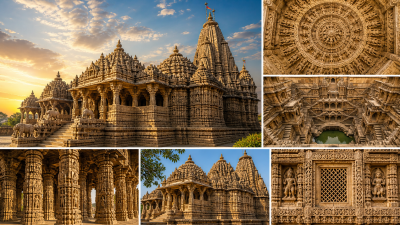
Māru-Gurjara architecture, also known as Solanki style, is a distinct category of Indian temple architecture that flourished in the states of Rajasthan and Gujarat between the 11th and 13th centuries CE. Developed under the patronage of the Solanki dynasty (the Chalukyas of Gujarat), this style is a sophisticated regional variant of the Nagara (North Indian) school. It is celebrated for its unparalleled intricacy in stone carving, the evolution of the stepwell (vav), and its seamless integration of Hindu and Jain architectural aesthetics.
Core Architectural Characteristics
The Māru-Gurjara style is distinguished from other Nagara variants by its extreme ornamentation and specific structural components.
- Materials: While sandstone was common, the style reached its peak with the use of Makrana marble, which allowed for the “paper-thin” carvings seen in Jain temples.
- The Jagati (Platform): Temples are built on high, heavily carved platforms.
- The Mandapa (Hall): Unlike the closed halls of the early Nagara style, these temples often feature an Open Mandapa (Sabha-mandapa) with ornate pillars.
- Toranas: Elaborate, free-standing or attached ceremonial arched gateways are a signature feature, often placed at the entrance of the mandapa.
- Ceilings: The interiors feature concentric, recessed, and coffered ceilings with hanging “pendants” or “lotus buds” (known as gajathalas).
The Structural Layout
A standard Māru-Gurjara temple consists of the following interconnected units:
| Component | Description |
| Garbhagriha | The inner sanctum housing the primary deity. |
| Gudha-mandapa | A closed hall immediately preceding the sanctum. |
| Sabha-mandapa | An open assembly hall, often octagonal in plan, used for social and religious gatherings. |
| Kunda | A stepped water tank, frequently integrated into the temple complex (e.g., Modhera). |
| Shikhara | The main tower, often surrounded by many smaller miniature towers called Urushringas. |
The Evolution of Stepwells (Vavs)
A unique facet of Māru-Gurjara architecture is the elevation of utilitarian water structures into spiritual and artistic monuments.
- Rani ki Vav (Patan): Built by Queen Udayamati in memory of Bhimdev I. It is a seven-storied subterranean structure designed as an inverted temple. It was recognized as a UNESCO World Heritage Site in 2014.
- Adalaj Vav: Known for its Indo-Islamic architectural fusion, featuring octagonal landings and intricate floral motifs.
Major Centers and Examples
Modhera Sun Temple (Gujarat)
Built by King Bhimdev I in 1026-27 CE, it is a masterpiece of the Solanki period.
- The Kunda: Known as the Surya Kunda, it contains 108 miniature shrines within its steps.
- Solar Alignment: The temple is designed such that during the equinoxes, the first rays of the sun fall directly on the idol in the sanctum.
- The Sabha-mandapa: A magnificent open hall with 52 intricately carved pillars representing the weeks of a year.
Dilwara Jain Temples (Mount Abu)
These represent the pinnacle of marble carving in India.
- Vimal Vasahi Temple: Dedicated to Lord Rishabhdev; noted for its circular ceiling with 16 Vidyadevis (Goddesses of Knowledge).
- Luna Vasahi Temple: Dedicated to Lord Neminath; famous for its “hanging” marble pendant in the central dome.
Rudra Mahalaya (Siddhpur)
Commissioned by Mularaja and completed by Jayasimha Siddharaja, it was once one of the largest Shiva temples in North India, though mostly in ruins today. It featured a multi-storied layout with eleven sub-shrines dedicated to the eleven Rudras.
Distinction Between Solanki and Other Nagara Styles
| Feature | Solanki (Māru-Gurjara) | Odisha (Kalinga) |
| Pillars | Highly carved, slender, with bracket figures. | Pillars are rare; walls are load-bearing. |
| Interior | Lavishly carved walls and ceilings. | Plain interiors; focus on exterior carvings. |
| Water Body | Integrated stepped tanks (Kundas). | Separate tanks or nearby rivers. |
| Shikhara | Features many smaller Urushringas. | Smooth curvilinear tower (Rekha Deula). |
Technical and Artistic Innovations
- Lathe-turned Pillars: While also seen in Hoysala art, the Māru-Gurjara pillars are famous for their “Ghatapallava” (pot and foliage) motifs and circular moldings.
- Kirtitorana: A specific type of celebratory arch found at Vadnagar and Modhera, marking the entrance to sacred precincts.
- Iconography: The exterior walls are divided into vertical bands (Rathas) depicting the Dikpalas (Guardians of the Directions), Apsaras, and various avatars of the deities.
Facts and Trivia for UPSC Prelims
- UNESCO Inscriptions: Both Rani ki Vav and the Sun Temple at Modhera (on the tentative list) are significant markers of this style.
- Contemporary with Ghaznavid Invasions: Interestingly, many of these grand structures were built or renovated shortly after the raids of Mahmud of Ghazni, demonstrating the resilience and economic power of the Solanki rulers.
- Jain Influence: The style was heavily influenced by the Jain philosophy of shravaka (patronage), leading to the construction of vast temple complexes like Palitana and Girnar.
- The “Paper” Carving: The marble carvings at Dilwara are so translucent that in certain light, the stone appears to be made of wax or parchment.