
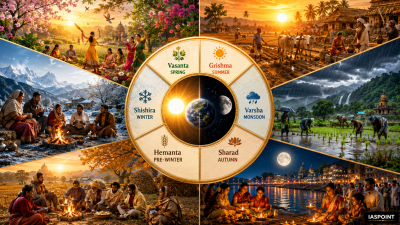
In Indian culture, the solar year is divided into six seasons known as Shada-Ritu, based on the Ratnakara and other ancient astronomical texts. Unlike the four-season model of the West, the Indian system provides a more granular observation of ecological and meteorological changes. Each Ritu spans approximately two months (Massas) and is intrinsically linked to the harvest cycles and religious festivities.
Classification of the Six Ritus
The seasons are categorized under two celestial movements: Uttarayan (Northern solstice) and Dakshinayan (Southern solstice).
| Season (Ritu) | Lunar Months (approx.) | Gregorian Months | Dominant Characteristics |
| Vasanta (Spring) | Chaitra & Vaisakha | March – April | Moderate climate, flowering of Mango and Palash. |
| Grishma (Summer) | Jyeshtha & Ashadha | May – June | Intense heat, drying of water bodies, ripening of fruits. |
| Varsha (Monsoon) | Shravana & Bhadrapada | July – August | High humidity, heavy rainfall, rejuvenation of soil. |
| Sharad (Autumn) | Ashvina & Kartika | Sept – October | Clear skies, end of monsoon, beginning of the harvest. |
| Hemanta (Pre-winter) | Margashirsha & Pausha | Nov – December | Mild cold, pleasant days, peak harvest time for Kharif. |
| Shishira (Winter) | Magha & Phalguna | Jan – February | Extreme cold, frost, preparation for the spring bloom. |
Harvest Festivals: The Socio-Economic Pulse
Harvest festivals in India are predominantly solar-based, marking the transition of the Sun or the completion of a crop cycle. They represent the “Thanksgiving” tradition of the Indian agrarian society.
Makar Sankranti and its Regional Variants
Observed in January, this marks the Sun’s entry into the zodiac sign of Capricorn (Makara) and the beginning of the harvest season for Rabi crops.
- Lohri (Punjab): Celebrated with bonfires; symbolizes the end of peak winter and the harvest of sugarcane and mustard.
- Pongal (Tamil Nadu): A four-day festival. The second day, Thai Pongal, involves boiling the first rice of the season.
- Bhogali Bihu (Assam): Also called Magh Bihu, characterized by community feasts in temporary huts called Mejis.
- Uttarayan (Gujarat): Famed for international kite flying competitions and the consumption of Undhiyu.
- Suggi Habba (Karnataka): Girls exchange “Ellu Bella” (sesame and jaggery) to promote harmony.
The Spring Harvest and Solar New Year
As the season shifts to Vasanta, various states celebrate the ripening of the winter crop and the onset of the new agricultural year.
- Baisakhi (Punjab): Marks the formation of the Khalsa Panth (1699) and the harvest of wheat.
- Vishu (Kerala): Features the Vishukkani (an auspicious sight including flowers, grains, and gold) to ensure a prosperous year.
- Poila Baisakh (West Bengal) & Bohag Bihu (Assam): Mark the beginning of the solar calendar and the arrival of the seeding season.
Monsoon and Post-Monsoon Harvests
- Onam (Kerala): Celebrated in the month of Chingam. Though linked to the legend of King Mahabali, it is primarily a harvest festival following the monsoon. Highlights include Vallam Kali (snake boat races) and Pookalam (floral carpets).
- Nuakhai (Odisha): Observed the day after Ganesh Chaturthi, it literally means “eating new rice.” The first grains of the season are offered to the presiding deity (e.g., Samaleswari in Sambalpur).
- Nabanna (Bengal): A traditional harvest festival where the new “Aman” paddy is celebrated with the preparation of rice cakes (Pitha).
Geographical and Cultural Trivia for Aspirants
- Ladakh Harvest Festival: Usually held in September, it is a confluence of Buddhist traditions, archery, and masked dances marking the end of the short Himalayan farming season.
- Wangala (Meghalaya): Known as the ‘100 Drums Festival’ of the Garo tribe, it marks the end of the agricultural year and honors the Sun God, Saljong.
- Tokhu Emong (Nagaland): The harvest festival of the Lotha Nagas, celebrated in November after the crops are gathered.
- The Concept of Ayanas: The year is divided into two Ayanas. Uttarayan (Makar to Mithuna Rashi) is considered the “Day of the Gods,” while Dakshinayan (Karka to Dhanu Rashi) is the “Night of the Gods.”
- Agrahayana: The month of Margashirsha was historically considered the first month of the year because it was the month of “Agra” (First) “Hayana” (Year/Harvest).
Impact of Ritus on Art and Literature
- Kalidasa’s Ritusamhara: A seminal Sanskrit text that provides a poetic description of the six seasons and their impact on human emotions and nature.
- Barahmasa: A popular genre in Indian folk and miniature painting (Pahari and Rajput schools) that depicts the twelve months of the year, often reflecting the specific Ritu and its associated festivals.
- Ragas and Seasons: Indian Classical Music associates specific Ragas with seasons, such as Raga Basant for Spring and Raga Megh Malhar for the Monsoon.