
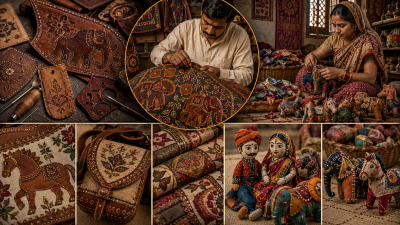
The integration of leather and toy-making traditions into Indian textiles reflects the multidisciplinary nature of ancient Indian guilds (Shrenis). While leather (Charmakarya) was historically considered a separate craft, its intersection with textiles emerged through embroidery and decorative appliqué. Similarly, the toy-making tradition (Khilona) often uses textile remnants, creating a sustainable circular economy within the weaving clusters.
Leather Craft in Indian Textiles: The Art of Ornamentation
Leather in Indian textiles is rarely used as a base fabric for weaving but is frequently integrated through surface ornamentation, specifically in footwear and accessories that complement traditional attire.
Major Leather-Textile Traditions
- Kashida-kari on Leather (Mojari/Jutti): In Rajasthan and Punjab, leather footwear is treated like fabric. Artisans use silk and cotton threads to perform Kashida (embroidery) directly onto the leather.
- Marwari Jutti: Often features Dabka (thin coiled wire) and Moti (beads) work similar to Zardosi textiles.
- Shantiniketan Leather (West Bengal): This involves the “Batik” process, usually reserved for textiles, applied to leather. It uses vegetable dyes and embossed patterns that mimic the floral motifs of Bengal’s Alpana art.
- Leather Puppet Craft (Tholu Bommalata): In Andhra Pradesh, translucent leather is painted with dyes. These puppets are often draped in miniature handloom textiles or painted to mimic the intricate patterns of Kalamkari textiles.
Key Technical Features of Leather-Textile Fusion
| Feature | Description |
| Embroidery Threads | Raw silk (Pat), cotton, and silver/gold metallic threads (Zari). |
| Joining Techniques | Aari (hook needle) work is the primary method used to quilt textile linings to leather bases. |
| Punching (Chidai) | Creating perforated patterns in leather that mimic the “Jali” or lattice-work seen in Chanderi weaving. |
Toy Crafts: The Textile Extension
Indian toy-making is intrinsically linked to the textile industry, as toys were traditionally made from waste fabric scraps (Chindi), cotton stuffing, and yarn.
Textile-Based Toy Clusters
- Channapatna Toys (Karnataka): While primarily wooden, the dolls are often dressed in miniature versions of traditional Mysore Silk sarees, showcasing the local weaving tradition.
- Kondapalli Toys (Andhra Pradesh): Known as Tella Poniki, these soft-wood toys are often accented with textile fragments to represent the costumes of deities and rural folk.
- Cloth Dolls of Gwalior (Madhya Pradesh): Created by the Battubai community, these dolls are masterclasses in miniature drapery, featuring perfectly scaled-down versions of Chanderi and Maheshwari sarees.
- Thanjavur Golu Dolls: These terracotta or wooden dolls are frequently adorned with real silk and Zari borders, reflecting the weaving excellence of the Thanjavur-Kumbakonam belt.
Material Synergy and Tooling
The relationship between these crafts is also visible in the tools used by weavers and craftsmen.
- Leather Buffers: Used in handlooms to soften the impact of the shuttle as it moves across the warp.
- Textile Padding: In toy making, “waste” cotton from spinning units is recycled as high-quality stuffing for soft toys and “Gudda-Guddi” (folk dolls).
Fact Sheet for UPSC Prelims
- GI Tags:
- Sikkim Leather: Unique for its integration of traditional Buddhist textile motifs.
- Kolhapuri Chappal: Notable for using braided leather cords that mimic textile weaving patterns.
- Channapatna Toys: The first Indian craft to receive a GI tag in the toy category.
- The “Kathi” Tradition: In Gujarat, the Kathi community produces leather belts and horse trappings heavily embroidered with “Heer” (floss silk), creating a seamless blend of leather and textile arts.
- Cultural Trivia: The Gudri or patchwork quilt tradition often incorporates leather scraps in nomadic communities to increase the durability of the textile.
Regional Distribution and Clusters
- Indore (Madhya Pradesh): Famous for leather-stuffed toys (animals like elephants and camels) covered in velvet or silk fabrics.
- Tilonia (Rajasthan): A modern hub where leather artisans and textile printers (Dabu/Bagru) collaborate to create contemporary accessories.
- Murshidabad (West Bengal): Historically famous for ivory-inlaid wooden toys dressed in the region’s premium Baluchari silks.
Environmental and Sustainable Aspects
- Upcycling: Textile-based toy making is a prime example of the “Zero Waste” philosophy in Indian heritage.
- Vegetable Tanning: The leather used in these textile-integrated crafts generally undergoes E.I. Tanning (East India Tanning), using bark and seeds, making the process eco-friendly and compatible with natural textile dyes.