
Dusshera, also known as Vijayadashami, is celebrated on the 10th day (Dashami) of the bright fortnight (Shukla Paksha) in the month of Ashvin. It marks the conclusion of the nine-day Navratri festival. In the Indian Luni-Solar rhythm, it signifies the transition from the monsoon to the autumn season (Sharad Ritu), a period historically associated with the resumption of military campaigns and agricultural prosperity.
Mythological Foundations and Divergent Narratives
The festival is a quintessential representation of the victory of Dharma over Adharma. Two primary narratives dominate the Indian landscape:
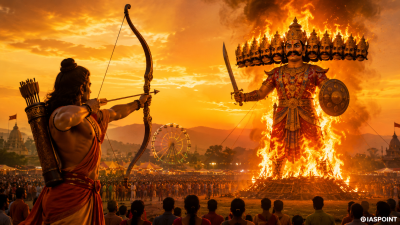
- The Ramayana Perspective: In Northern, Western, and Central India, Dusshera celebrates Lord Rama’s victory over the ten-headed demon king Ravana. The ten heads of Ravana symbolize ten negative attributes: Lust (Kama), Anger (Krodha), Delusion (Moha), Greed (Lobha), Pride (Mada), Envy (Matsarya), Selfishness (Swarth), Injustice (Anyaya), Cruelty (Amanavta), and Ego (Ahankara).
- The Devi Mahatmya Perspective: In Eastern and Southern India, it commemorates Goddess Durga’s victory over the buffalo demon Mahishasura after a nine-night battle. This day marks the immersion of the idol (Durga Visarjan), symbolizing the Goddess’s return to Mount Kailash.
Regional Variations and Ritualistic Diversity
The celebration of Dusshera varies significantly across geographical regions, showcasing the syncretic nature of Indian heritage.
| Region | Local Name | Distinctive Feature |
| Mysuru (Karnataka) | Nada Habba | Celebrated for over 400 years since the Vijayanagara Empire. Features a grand procession (Jumboo Savari) where Goddess Chamundeshwari is carried in a golden howdah atop an elephant. |
| Kullu (Himachal) | Kullu Dussehra | Starts on Dashami and lasts for seven days. It centers around Lord Raghunath (Rama) and the assembly of local village deities (Gram Devtas). It does not involve the burning of effigies. |
| Bastar (Chhattisgarh) | Bastar Dussehra | The world’s longest festival (75 days). It is dedicated to Goddess Danteshwari and involves unique tribal rituals like the worship of a wooden chariot, unrelated to the Ramayana. |
| West Bengal / Odisha | Bijoya Dashami | Marked by Sindoor Khela (women smearing vermilion) and the immersion of clay idols of Durga. It involves the exchange of Shubho Bijoya greetings. |
| Telangana | Saddula Bathukamma | Coincides with the end of Navratri. Women create floral mounds to worship the life-giving force of nature. |
| Tamil Nadu / Kerala | Ayudha Puja | Dedicated to worshipping the “tools of one’s trade,” including books, instruments, and machinery. In Kerala, it is the day of Vidyarambham (initiation into education). |
The Tradition of Ramlila
Ramlila is the dramatic folk re-enactment of the life of Rama, culminating on Dusshera.
- UNESCO Recognition: Ramlila was inscribed on the UNESCO Representative List of the Intangible Cultural Heritage of Humanity in 2008.
- Key Styles: The most famous is the Ramnagar Ramlila (Varanasi), which is performed across the Ganga and utilizes the entire city as a stage without modern lighting or microphones.
- The Effigy Ritual: In most parts of North India, massive effigies of Ravana, Kumbhakarna, and Meghanada filled with firecrackers are burnt to symbolize the destruction of evil.
Socio-Economic and Historical Significance
- Military History: Traditionally, Dusshera was considered an auspicious day for kings and warriors to worship their weapons (Shastra Puja) and set out on military expeditions, as it falls at the end of the rain-induced dormancy of armies.
- Aptapuja (Shami Vruksha): In Maharashtra and parts of Central India, people exchange leaves of the Banni or Apta tree, symbolizing gold, following the legend of Kautsa and King Raghu.
- The Vijayanagara Legacy: The Hampi ruins contain a Mahanavami Dibba, a massive stone platform used by the kings to witness the military parades and cultural festivities of Dusshera.
Key Facts for UPSC Prelims
- Kullu Dussehra Status: It was declared an International Festival by the Government of India due to its high tourist footfall and unique tribal-cultural integration.
- The Shami Tree: Mentioned in the Mahabharata, the Pandavas are said to have hidden their weapons in a Shami tree during their year of Agyatvas (incognito exile), retrieving them on the day of Vijayadashami to defeat the Kauravas.
- Vidyarambham: On this day, children are initiated into the world of letters by writing in sand or rice, usually dedicated to Goddess Saraswati.
- Kota Dussehra: Rajasthan’s Kota hosts one of the largest rural fairs in the country during this period, famous for its massive rural trade and craft displays.