
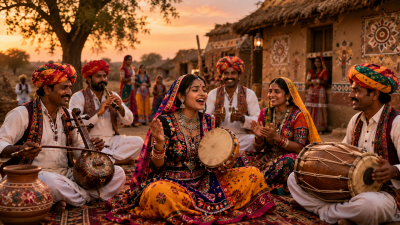
Indian folk music is a diverse tapestry of regional identities, reflecting the socio-cultural, religious, and seasonal life of the rural populace. Unlike classical music, which adheres to the strict Raga-Tala framework, folk music is characterized by its spontaneity, oral transmission, and deep connection to local dialects and traditions.
Northern India: Valor, Devotion, and Seasonality
The northern belt features music that ranges from heroic ballads to celebratory seasonal songs.
- Rasiya (Uttar Pradesh): Predominant in the Braj region, these songs celebrate the love between Radha and Krishna. It is often performed during the Holi festival.
- Pandavani (Chhattisgarh/Madhya Pradesh): A narrative folk ballad based on the adventures of the Pandavas from the Mahabharata. Teejan Bai is a world-renowned exponent.
- Sua (Chhattisgarh): Known as “Parrot Dance” music, performed by women during the harvest season.
- Alha (Madhya Pradesh/Bundelkhand): A heroic ballad singing the praise of the brothers Alha and Udal who fought against Prithviraj Chauhan.
- Heer-Ranjha (Punjab): A form of tragic romantic balladry popularized by the poet Waris Shah.
- Maand (Rajasthan): Developed in the royal courts, it sits on the boundary of classical and folk. It narrates the tales of Rajput valor and romance.
Western India: Desert Melodies and Communal Spirit
Music in Western India is often associated with nomadic communities and vibrant festivals.
- Manganiyars and Langas (Rajasthan): Professional hereditary musicians of the desert. The Manganiyars use the Kamaicha (bowed instrument), while Langas are known for the Sarangi.
- Garba and Dandiya Raas (Gujarat): Devotional and social music performed during Navratri, primarily dedicated to Goddess Amba.
- Powada (Maharashtra): A ballad style that narrates the life and bravery of Chhatrapati Shivaji Maharaj and other Maratha warriors.
- Lavani (Maharashtra): Known for its powerful rhythm (Dholki) and erotic or social themes; it is an integral part of the Tamasha theater.
- Dhalo (Goa): A slow-paced ritualistic folk song performed by women for the well-being of their families and the village.
Eastern India: Rivers, Mysticism, and Toil
The eastern traditions are heavily influenced by the landscape of rivers and the Bhakti-Sufi movements.
- Baul (West Bengal): A mystical tradition recognized by UNESCO. Bauls are wandering minstrels who seek the “Man of the Heart” through songs accompanied by the Ektara and Dubki.
- Bhatiali (West Bengal/Bangladesh): The music of the boatmen (Majhi). The lyrics usually reflect the flow of the river and the loneliness of the traveler.
- Bihu Geet (Assam): Songs of the spring festival (Rongali Bihu) celebrating fertility, nature, and youth.
- Zeliang (Nagaland): Folk songs of the Zeliang tribe that mimic the sounds of birds and animals.
- Sambalpuri (Odisha): Rhythmic music popular in western Odisha, often associated with the Dalkhai dance and the Mandal drum.
Southern India: Devotion and Occupational Rhythms
South Indian folk music is deeply rooted in temple rituals and agricultural cycles.
- Villu Pattu (Tamil Nadu): Literally “Bow Song.” The main instrument is a large bow struck with sticks. It narrates stories of local deities and social issues.
- Burra Katha (Andhra Pradesh/Telangana): A storytelling technique using a stringed instrument called Tambura and two small drums (Dakki).
- Theyyam (Kerala): Ritualistic music and dance where the performer is believed to be possessed by a deity. The percussion (Chenda) is vital.
- Dollu Kunitha (Karnataka): A high-energy drum-based folk music associated with the worship of Lord Beereshwara.
- Panihari (Rajasthan/Gujarat): Though listed here, these “water-carrier” songs are also found in the Deccan, reflecting the daily toil of women fetching water.
Table of State-wise Folk Music and Instruments
| State | Folk Music Genre | Primary Instrument | Significance/Theme |
| Kashmir | Wanwun | Hand-clapping/Dumbak | Wedding songs/Social gatherings |
| Himachal Pradesh | Jhuri | Flute | Extramarital love and social satire |
| Uttarakhand | Chhopati | Flute/Dhol | Question-answer style courtship |
| Sikkim | Ghau To | Flute/Drum | Narrative of the history of the land |
| Manipur | Khongjom Parba | Dholak/Cymbals | Ballads of the Anglo-Manipur War |
| Arunachal Pradesh | Ja-Jin-Ja | Local Percussion | Sung during marriage and social feasts |
| Jharkhand | Jhumair | Mandar/Nagara | Harvest and tea-garden community songs |
Functional Classification of Folk Music
- Agricultural/Occupational: Bhatiali (Boatmen), Kajri (Monsoon/Sowing), and Sua (Harvest).
- Narrative/Ballads: Pandavani (Mahabharata), Burra Katha (Regional History), and Villu Pattu (Mythology).
- Ritualistic/Devotional: Baul (Sufi-Bhakti), Abhang (Vitthal worship), and Sankirtan (Vaishnavism).
- Seasonal: Hori (Spring), Chaiti (Summer), and Barahmasa (Twelve months of longing).
Essential Trivia for UPSC Prelims
- UNESCO Recognition: Baul music of Bengal and the Kalbelia songs of Rajasthan are recognized under the UNESCO Representative List of the Intangible Cultural Heritage of Humanity.
- The Kamaicha: It is a rare string instrument made of mango wood with a large circular resonator covered in goat skin, exclusive to the Manganiyar community.
- Sankirtana: The ritual singing, drumming, and dancing of Manipur was inscribed on the UNESCO list in 2013.
- Mairong: The traditional drum used in the Khasi hills of Meghalaya for folk recitals.
- Oggu Katha: A traditional narrative form from Telangana involving the praise of Lord Mallikarjuna.