
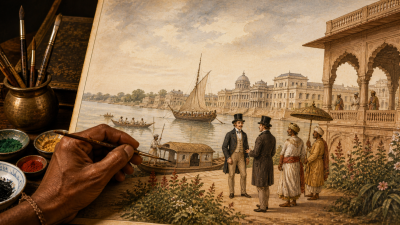
Company School of Painting, also known as Patna Qalam or Kampani Qalam, is a hybrid Indo-European style of art that emerged in India during the 18th and 19th centuries. As the Mughal Empire declined and British political hegemony grew via the East India Company, artists migrated from traditional centers like Delhi and Murshidabad to seeking patronage from Company officials. This school represents a visual bridge between traditional Indian miniature aesthetics and Western academic realism.
Core Characteristics and Stylistic Hybridity
The Company style is defined by its “naturalism,” departing from the stylized, poetic forms of Rajput and Mughal traditions to satisfy the European desire for scientific documentation.
- Perspective and Realism: Artists adopted Western techniques such as linear perspective, use of chiaroscuro (light and shadow) to create volume, and shading to provide a three-dimensional effect.
- Color Palette: A shift from the vibrant, opaque pigments of miniatures to soft, muted, and somber tones. The use of sepia and watercolors became standard.
- Media and Material: While traditional Vasli (layered paper) was used initially, there was a significant transition to European industrial paper, vellum, and occasionally mica (specifically in Patna and Banaras).
- Scientific Accuracy: Botany and zoology were treated with taxonomic precision, mimicking the style of European scientific journals.
Major Centers of Company Art
Although it spread across British-controlled territories, specific regional “Qalams” developed unique identifiers.
| Center | Distinctive Features | Notable Artists |
| Patna | The most influential center; focused on “Bazaar” scenes and common laborers. | Sewak Ram, Hulas Lal |
| Delhi | Specialized in architectural renderings and ivory miniatures of monuments. | Mazhar Ali Khan, Ghulam Ali Khan |
| Calcutta | Heavily focused on Natural History (Flora and Fauna) for the Botanical Gardens. | Sheikh Zain-ud-Din, Bhawani Das |
| Madras/Tanjore | Included depictions of castes, festivals, and “Occupations.” | Unknown local Raju/Naidu artists |
| Lucknow | Blended Awadhi courtly elegance with European landscape techniques. | Local artists influenced by Tilly Kettle |
Primary Themes and Subject Matter
The thematic range of Company Painting was dictated by the colonial interest in ethnography and the exoticism of India.
- Natural History: Detailed paintings of Indian birds, animals, and plants (e.g., the “Impey Album” commissioned by Lady Impey).
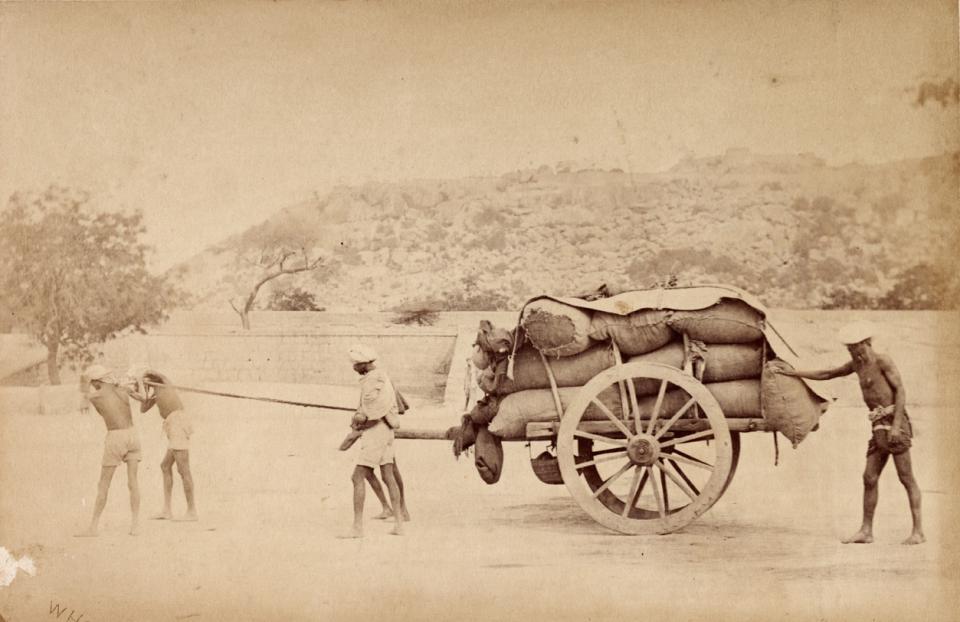
- The “People of India”: Portraits of different castes, trades, and professions—such as water-carriers (Bhistis), weavers, and snake charmers.
- Architecture and Landscapes: Topographical views of monuments like the Taj Mahal, Qutub Minar, and ghats of Varanasi.
- Festivals and Customs: Visual records of “Hookah” smoking, Sati, Hook-swinging festivals, and royal processions.
Significant Artists and Commissions
The Company School flourished through specific, large-scale commissions that are now primary historical sources.
- The Fraser Album: Commissioned by William and James Baillie Fraser, it contains some of the finest depictions of villagers, soldiers, and Mughal aristocrats in the Delhi region.
- The Impey Album: A collection of 328 paintings of birds and animals commissioned by Mary, Lady Impey, mostly executed by artists from Murshidabad like Sheikh Zain-ud-Din.
- Mazhar Ali Khan: Famous for his 5-meter long panorama of Delhi (The Dehli Panorama), providing a bird’s-eye view of the city in 1846.
Decline and the Rise of Photography
The school faced a rapid decline by the mid-19th century due to two primary factors:
- Photography: The introduction of the camera in the 1840s provided a faster and more “accurate” means of documentation for British officials.
- Art Schools: The establishment of Government Schools of Art (in Calcutta, Madras, and Bombay) shifted the focus from traditional apprenticeships to formal Western academic training.
Fact Sheet for UPSC Prelims
- Terminology: The term “Company School” was first coined by Mildred and W.G. Archer in the mid-20th century to describe this genre.
- Mica Paintings: Particularly popular in Patna and Murshidabad, these small paintings on transparent mica sheets were sold as souvenirs to European travelers.
- Bazaar Paintings: A sub-genre of the Company School sold in marketplaces, often depicting Hindu deities or local scenes in a simplified, mass-produced style.
- Transition Period: It serves as the precursor to the modern Indian art movement and the Bengal School, which later rose as a nationalist reaction against this “hybrid” style.
- Feringhee Paintings: Another colloquial name used by locals, as “Feringhee” referred to Europeans.
Trivia: The “Ivory” Connection
In Delhi, Company artists specialized in painting on tiny oval-shaped discs of ivory. These were often set into jewelry, boxes, or furniture and were highly prized by British officers as portable mementos of Indian architecture, specifically featuring the “Red Fort” or “Jama Masjid.”
Last Modified: May 5, 2026