
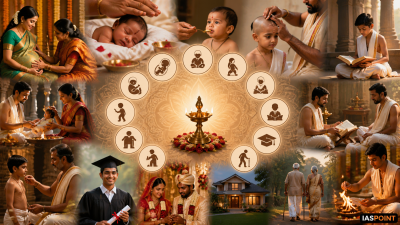
In Indian culture, Samskaras are the transformative rites of passage intended to purify the individual and mark significant transitions in the human life cycle. Derived from the Sanskrit root Sam-kr (to refine or polish), these rituals aim to integrate the individual into the social fabric while balancing the physical, mental, and spiritual dimensions of life. While different texts like the Gautama Dharmasutra mention up to 40 Samskaras, the Shodasha Samskaras (16 Rites) mentioned in the Grihya Sutras are the most widely recognized.
The 16 Shodasha Samskaras: A Life-Cycle Overview
The 16 rituals are traditionally divided into four main stages of life: Prenatal, Childhood, Educational, and Adult/Post-life.
| Stage | Samskara | Significance |
| Prenatal | 1. Garbhadhana | Conception; the intent to bring a healthy soul into the world. |
| 2. Pumsavana | Performed in the 3rd month to ensure the health of the fetus. | |
| 3. Simantonnayana | “Parting the hair”; performed for the mental health of the mother. | |
| Childhood | 4. Jatakarma | Performed at birth; the father touches the baby with honey and ghee. |
| 5. Namakarana | Naming ceremony, usually held on the 11th or 12th day. | |
| 6. Nishkramana | The child’s first outing to see the sun and moon (4th month). | |
| 7. Annaprashana | First intake of solid food (usually rice) in the 6th month. | |
| 8. Chudakarana | The first tonsure or haircut (Mundan) to symbolize purity. | |
| 9. Karnavedha | Piercing of the ears; believed to have acupuncture health benefits. | |
| Educational | 10. Vidyarambha | Introduction to the alphabet and basic learning. |
| 11. Upanayana | The sacred thread ceremony; the “second birth” (Dvija). | |
| 12. Vedarambha | The beginning of formal Vedic and philosophical studies. | |
| 13. Keshanta | The first shaving of the beard for boys (Godana). | |
| 14. Samavartana | Graduation ceremony marking the end of the student phase. | |
| Adult/Final | 15. Vivaha | Marriage; entering the householder stage (Grihastha). |
| 16. Antyeshti | Funeral rites; the final sacrifice of the body to the elements. |
Analysis of Primary Rites of Passage
The Upanayana Samskara (Sacred Thread)
This is arguably the most significant social ritual for the “Twice-born” (Dvija) castes—Brahmins, Kshatriyas, and Vaishyas.
- The Yajnopavita: The initiate is invested with a sacred thread consisting of three strands, representing the three debts (Rinas): to the Sages, the Ancestors, and the Gods.
- Gayatri Mantra: The teacher (Guru) initiates the student into the Gayatri Mantra, marking the start of a life governed by discipline (Dharma).
- Social Threshold: It signifies the transition from the domestic sphere of the mother to the disciplined educational sphere of the Guru.
The Vivaha Samskara (Marriage)
Viewed as the most important of all Samskaras for the continuation of society.
- Religious Obligation: Marriage is not a contract but a spiritual union necessary to perform Yajnas and to continue the lineage (Pitra Rina).
- The Saptapadi: The core ritual where the couple takes seven steps around the sacred fire, each step representing a specific vow like food, strength, wealth, happiness, progeny, seasons, and friendship.
The Antyeshti Samskara (Funeral Rites)
This final rite signifies the return of the physical body to the five elements (Pancha Mahabhuta).
- Cremation: Most Hindu traditions practice cremation to release the soul from the physical body, though infants and ascetics (Sanyasis) are typically buried.
- The Kapala Kriya: A ritual during cremation where the skull is pierced to symbolize the release of the vital breath.
- Shraddha: Post-funeral rites performed to ensure the smooth journey of the departed soul (Preta) to the realm of the ancestors (Pitra).
Life-Cycle Rituals in Other Indian Traditions
Indian culture is a mosaic of diverse faiths, each with distinct life-cycle markers that emphasize community belonging.
Islamic Rituals
- Azan: Immediately after birth, the call to prayer is whispered into the baby’s right ear.
- Aqiqah: The naming ceremony and animal sacrifice (usually on the 7th day), where the child’s hair is weighed and its equivalent in silver is given to charity.
- Khatna: Circumcision, a significant milestone for male children.
- Nikah: The wedding contract, which is a civil agreement between parties.
Sikh Rituals
- Janam Naam Karan: The naming of a child in the presence of the Guru Granth Sahib. The first letter of the Hukamnama (random verse) dictates the first letter of the child’s name.
- Amrit Sanchar: The Sikh baptism or initiation into the Khalsa, established by Guru Gobind Singh.
- Anand Karaj: The marriage ceremony focused on the four Laavan (hymns).
Parsi (Zoroastrian) Rituals
- Navjote: The initiation ceremony for children (usually between 7 and 11) where they are invested with the sacred shirt (Sudreh) and thread (Kusti).
- Marriage: Known as Lagan, it involves the binding of the couple’s hands with thread.
- Tower of Silence (Dakham): The traditional funerary practice of exposing the dead to elements and birds of prey to avoid polluting fire or earth.
Socio-Cultural Significance of Samskaras
- Standardization of Conduct: Samskaras provide a uniform code of behavior for individuals at various stages of life.
- Psychological Preparation: Each ritual prepares the individual mentally for new responsibilities (e.g., the move from student to householder).
- Social Cohesion: These ceremonies act as communal gatherings, reinforcing kinship ties and social hierarchies.
- Health and Hygiene: Rites like Karnavedha (ear piercing) and Mundan (tonsure) often had underlying traditional health rationales.
Facts and Trivia for UPSC Aspirants
- Dvija Concept: Only those who undergo the Upanayana ceremony are considered “twice-born.” Traditionally, Shudras and women were excluded from this specific rite in the later Vedic period, though some ancient texts suggest women (Upadhyayas) once underwent it.
- Gautama Dharmasutra: This text provides a broader list of 40 Samskaras, which include seasonal sacrifices and various daily obligations (Pancha Mahayajnas).
- Ashrama-Samskara Link: Samskaras act as the “gateways” between the four Ashramas: Brahmacharya, Grihastha, Vanaprastha, and Sanyasa.
- The Number 16: The standardization to 16 Samskaras became prominent during the medieval period to simplify the extensive Vedic list for the common householder.
- Mundan in Modern Context: The Chudakarana or Mundan ceremony is still widely practiced across almost all Hindu castes and even some Indian Muslim communities as a mark of hygiene and spiritual renewal.