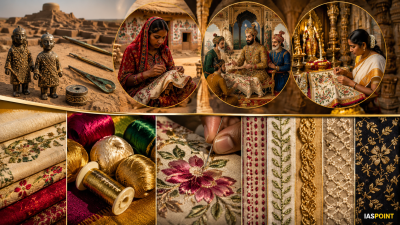
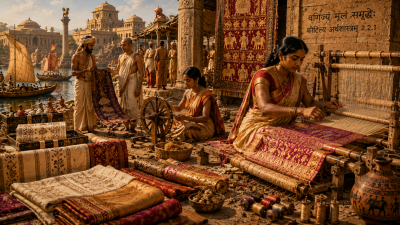
Embroidery in India, known as Shilpashastra or Kashida, dates back to the Indus Valley Civilization, where bronze needles and figurines wearing patterned shawls were discovered. Over millennia, the...
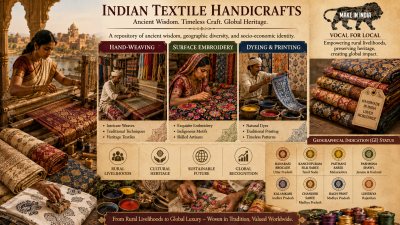
Indian textile handicrafts represent a repository of ancient wisdom, geographic diversity, and socio-economic identity. These crafts are categorized into three primary domains: Hand-weaving, Surface Embroidery, and Dyeing &...
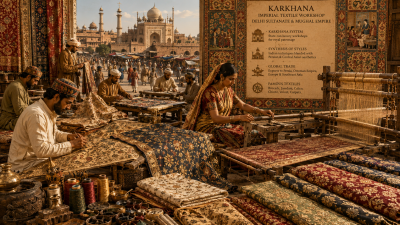
The Medieval period (c. 12th – 18th Century CE) marked a transformative era for Indian textiles, characterized by the synthesis of indigenous techniques with Persian, Central Asian, and...
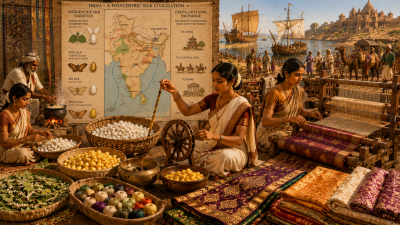
The evolution of silk in India is a saga of indigenous biological diversity and cross-cultural exchange. Unlike the monopolistic "Seres" (Chinese) silk tradition, India developed a unique polycentric...
The Classical Period (c. 4th Century BCE – 8th Century CE), spanning from the Mauryan Empire to the early Medieval era, represents the "Golden Age" of Indian textiles....
On Labour Day 2025, the Ministry of Social Justice and Empowerment (MoSJE) signed a Letter of Agreement with the United Nations Development Programme (UNDP). This landmark initiative aims...
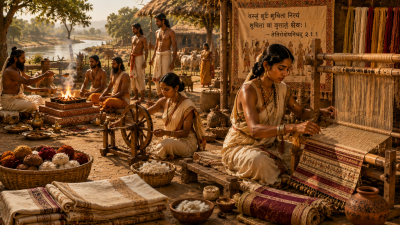
The Vedic Period (c. 1500–600 BCE) witnessed the transition from the pastoral lifestyle of the Early Vedic (Rig Vedic) era to the settled, agrarian, and urbanizing society of...
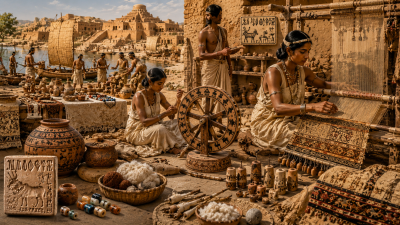
The Harappan Civilization (c. 3300–1300 BCE) represents the earliest known evidence of organized textile production in the Indian subcontinent. The mastery over spinning and weaving was not merely...
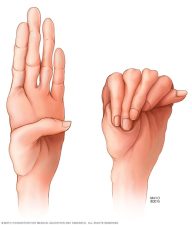
Marfan Syndrome is a genetic disorder that impacts connective tissue. This condition can lead to health challenges, particularly affecting the heart, eyes, bones, and joints. First described by...
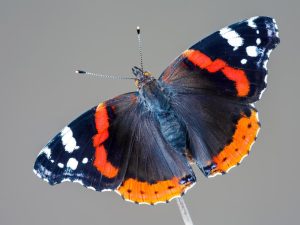
India recorded milestone in its biodiversity documentation with the sighting of the European Red Admiral butterfly (Vanessa atalanta) in Himachal Pradesh. This species was observed near Dharamshala, marking...