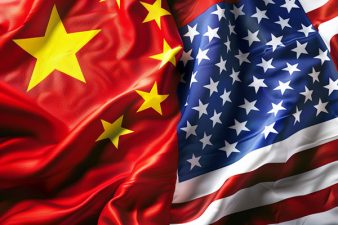
The ongoing trade war between the United States and China has escalated . Recently, the US imposed tariffs of 145 per cent on Chinese imports. China retaliated with...
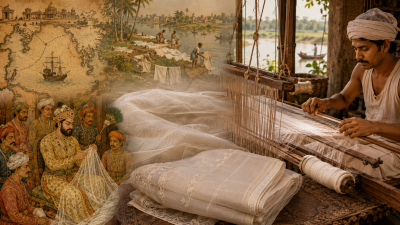
Muslin, a fine and lightweight cotton fabric of plain weave, represents the zenith of Indian textile craftsmanship. Historically known as Malmal, its origins are deeply rooted in the...
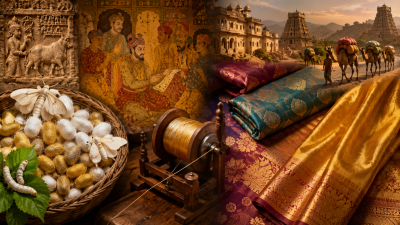
India is the second-largest producer of silk globally and holds the unique distinction of being the only country that produces all five commercial varieties of silk. Evidence of...
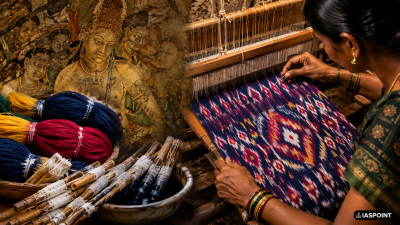
Ikat, derived from the Malay-Indonesian word mangikat (meaning to tie or bind), is an ancient resist-dyeing technique where the patterns are created by dyeing the yarns before they...
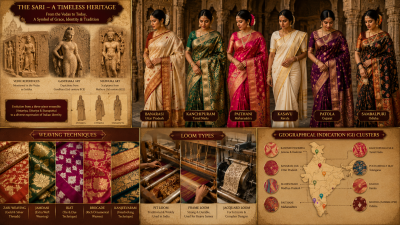
The Sari (derived from the Sanskrit Sattika) represents one of the world's oldest continuously worn garments. Historically mentioned in the Vedas and depicted in Gandhara and Mathura art,...
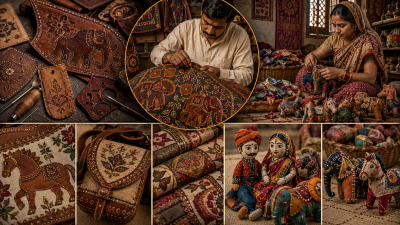
The integration of leather and toy-making traditions into Indian textiles reflects the multidisciplinary nature of ancient Indian guilds (Shrenis). While leather (Charmakarya) was historically considered a separate craft,...
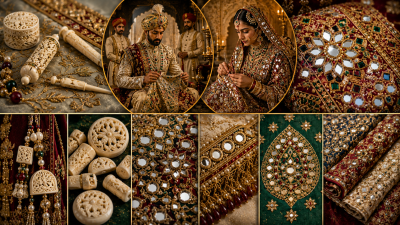
The integration of glass and ivory into Indian textiles represents the pinnacle of luxury and ornamentation in the Indian subcontinent. Historically, these materials served as markers of social...
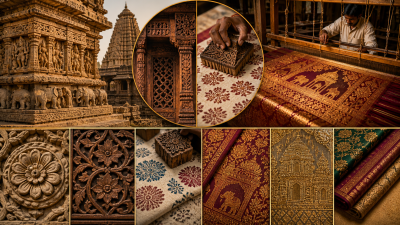
Indian textile traditions have long been intertwined with secondary crafts like stone and wood, creating a symbiotic relationship between architecture and fabric. Historically, motifs found in 11th-century temple...
The International Thermonuclear Experimental Reactor (ITER) is a groundbreaking project aimed at demonstrating nuclear fusion as a sustainable energy source. Recently, ITER achieved milestone with the completion of...
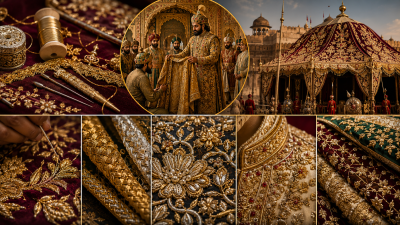
The integration of metals into textiles, known as Zardozi or Zari work, represents the pinnacle of luxury in Indian heritage. While the use of gold and silver threads...