
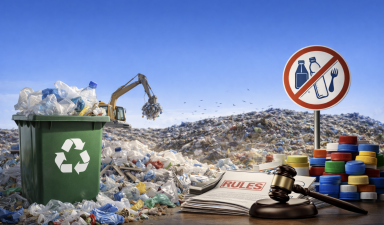
India’s Plastic Waste Management Rules were updated in 2026 to strengthen recycling and reuse mandates. The rules aim to reduce plastic pollution by making producers responsible for the lifecycle of their plastic products. However, challenges remain in enforcing collection and recycling targets. The government has introduced new requirements for recycled content in plastic packaging but allows flexibility in meeting targets, raising concerns about effectiveness.
Evolution of Plastic Waste Management Rules
First introduced in 2016, these rules have undergone several amendments. The key feature is the Extended Producer Responsibility (EPR) policy launched in 2022. Under EPR, producers, importers, and brand owners must collect and recycle plastic waste proportional to their market share. Targets rose from 35% in 2021-22 to 100% by 2024-25. The 2026 amendments add minimum recycled content requirements for plastic packaging.
New Recycling and Reuse Mandates
From 2026, rigid plastic packaging must contain at least 30% recycled material, increasing to 60% by 2028-29. Similar reuse obligations exist. However, companies can carry forward unmet targets for up to three years, making deadlines flexible. This may dilute the urgency to meet environmental goals.
Implementation Challenges and Market Mechanisms
Data shows only 50-60% of plastic waste obligations are currently met. No strict targets exist post-2025 for collection. The government’s reliance on trading certificates allows companies to buy credits instead of physically recycling plastic. This market-based approach risks weakening the core aim of reducing plastic pollution.
Implications for Environmental Policy
The focus has shifted from enforcing collection to encouraging recycled content use. Without robust monitoring and stricter penalties, the effectiveness of the EPR regime is uncertain. The amendments reflect a balance between environmental concerns and industry feasibility but may fall short of curbing plastic waste.
Topics for Prelims:
Extended Producer Responsibility (EPR)
- Policy holding producers responsible for post-consumer waste.
- Targets set for collection and recycling of plastic waste.
- Introduced in India in 2022 under Plastic Waste Management Rules.
- Targets increase annually to reach 100% by 2024-25.
- Includes penalties for non-compliance but with flexible deadlines.
Plastic Waste Management Rules 2026
- Amendments focus on recycled content in packaging.
- Rigid plastic packaging must have 30% recycled material by 2026.
- Targets rise to 60% recycled content by 2028-29.
- Allows carry-forward of unmet targets for three years.
- Introduces trading certificates for compliance flexibility.
Plastic Pollution Challenges
- Plastic is widely used due to low cost and versatility.
- Hard to incentivise collection and reuse due to diversity of plastics.
- Current recycling rates in India hover around 50-60% of obligations.
- Improper disposal leads to land, river, and ocean pollution.
- Market mechanisms may undermine environmental goals.
Questions for Mains:
- Critically discuss the effectiveness of Extended Producer Responsibility (EPR) in managing plastic waste in India and suggest improvements. [GS-III-Economic Development]
- Analyse the challenges in implementing plastic waste management policies in developing economies and examine the role of market-based instruments like trading certificates. [GS-III-Environment & Disaster Management]
- Estimate the impact of plastic pollution on India’s water bodies and point out policy measures that can strengthen waste collection and recycling. [GS-III-Environment & Disaster Management]
- Examine the balance between environmental sustainability and industrial feasibility in the Plastic Waste Management Rules 2026 and discuss its implications for circular economy initiatives in India. [GS-III-Economic Development]
Answer Hints:
1. Critically discuss the effectiveness of Extended Producer Responsibility (EPR) in managing plastic waste in India and suggest improvements. [GS-III-Economic Development]
- EPR concept – Producer accountability for post-consumer plastic waste collection and recycling.
- Targets – Gradual increase from 35% (2021-22) to 100% (2024-25) but actual compliance only 50-60%.
- Amendments in 2026 – Introduction of recycled content mandates and reuse obligations.
- Implementation gaps – Flexible deadlines, carry-forward provisions dilute urgency.
- Market-based mechanisms (trading certificates) may weaken physical recycling efforts.
- Improvements – Stricter enforcement, realistic but firm deadlines, better monitoring, incentivize actual recycling over credit trading, public awareness, infrastructure support.
2. Analyse the challenges in implementing plastic waste management policies in developing economies and examine the role of market-based instruments like trading certificates. [GS-III-Environment & Disaster Management]
- Diverse plastic types and widespread informal waste sector complicate collection and recycling.
- Low recycling infrastructure and technology gaps hinder effective waste processing.
- Enforcement challenges due to limited monitoring and weak penalties.
- Market-based instruments like trading certificates offer flexibility but risk enabling non-physical compliance.
- Risk of commodification of environmental responsibility, potentially undermining pollution reduction goals.
- Need for balance – Market tools to incentivize recycling but coupled with strict verification and transparency.
3. Estimate the impact of plastic pollution on India’s water bodies and point out policy measures that can strengthen waste collection and recycling. [GS-III-Environment & Disaster Management]
- Plastic waste contaminates rivers, lakes, and oceans harming aquatic life and biodiversity.
- Microplastics enter food chains, affecting human health and ecosystem balance.
- Blockage of waterways causes flooding and sanitation issues.
- Policy measures – Strengthen EPR enforcement, improve waste segregation at source, expand recycling infrastructure.
- Promote use of recycled content and reuse mandates to reduce virgin plastic demand.
- Community engagement, awareness campaigns, and incentives for informal waste collectors.
4. Examine the balance between environmental sustainability and industrial feasibility in the Plastic Waste Management Rules 2026 and discuss its implications for circular economy initiatives in India. [GS-III-Economic Development]
- Rules mandate minimum recycled content (30% by 2026, 60% by 2028-29) balancing environment and industry capacity.
- Carry-forward and flexible compliance provisions ease industrial burden but may weaken environmental goals.
- Trading certificates introduce market flexibility but risk reducing physical recycling efforts.
- Encourages circular economy by promoting reuse and recycled materials in packaging.
- Challenges remain in scaling recycling infrastructure and ensuring genuine compliance.
- Implications – Potential to boost circular economy if enforcement improves; otherwise, risk of greenwashing and ineffective waste reduction.