
Daily Activities

UPSC Prelims Current Affairs

UPSC Mains Current Affairs

Current Affairs

Project 18 Indian Navy Destroyer

Project 18 Indian Navy Destroyer

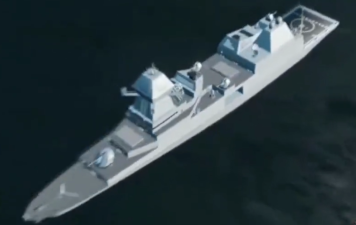
The Indian Navy Warship Design Bureau is actively designing the Project 18 next-generation guided-missile destroyer to counter evolving maritime threats in the Indo-Pacific. Evolving into a cruiser-class initiative, this warship features an estimated displacement of 11,000 to 13,000 tonnes at full load and an overall length of approximately 180 meters. This makes it twice as large as the current frontline Visakhapatnam-class destroyers. Final contracts for construction are targeted by 2028, with delivery expected within five to ten years after contract signing. The project aligns with the Atmanirbhar Bharat initiative, aiming for 75 percent indigenous content.

Key Specifications and Structural Dimensions

The design profile elevates the vessel into a heavy surface combatant category, often classified internationally as a cruiser due to exceeding the 10,000-tonne threshold.

  • Displacement: 11,000 to 13,000 tonnes.
  • Length: Approximately 180 meters.
  • Crew Efficiency: Extensive automation reduces manpower requirements by 25 to 30 percent compared to existing operational platforms.
  • Aviation Support: Enclosed helicopter hangar and flight deck capable of operating two multi-role helicopters or autonomous unmanned systems.

Propulsion and Technological Frameworks

Project 18 integrates a futuristic power and propulsion architecture to sustain long-range deployments and high-energy combat systems.

Integrated Electric Propulsion

The vessel will utilize an Integrated Electric Propulsion system. This configuration optimizes power generation, allowing the ship to drive its propellers while simultaneously feeding high-power equipment. It minimizes the acoustic signature of the ship, making it harder for submarines to detect. The high energy output is critical for operating future Directed Energy Weapons, including 50 to 100 kW shipborne laser weapons designed to neutralize drone swarms.

Multi-Domain Command Architecture

The warship functions as a central command hub for network-centric warfare. It is designed to manage and coordinate diverse assets within carrier battle groups, including:

  • Unmanned Aerial Vehicles (UAVs)
  • Unmanned Surface Vessels (USVs)
  • Extra-Large Unmanned Underwater Vehicles (XLUUVs)

Radar and Sensor Suite

The platform relies entirely on indigenous radar infrastructure for comprehensive 360-degree situational awareness, replacing foreign radar systems used in older ship classes.

  • Primary Sensor: S-band Active Electronically Scanned Array (AESA) multi-function radar developed by the Defence Research and Development Organisation (DRDO) and Bharat Electronics Limited (BEL).
  • Tracking Capability: Simultaneously tracks aerial, surface, and subsurface threats at ranges exceeding 500 kilometers.
  • Superstructure Integration: Features a low-observable, stealth-focused mast structure with four large AESA radar panels integrated directly into the superstructure to minimize radar cross-section.

Weapon Loadout and Vertical Launch System

Project 18 will rank among the most heavily armed surface combatants in Asia, featuring a massive increase in missile capacity compared to current Indian destroyers.

ParameterVisakhapatnam-Class (Project 15B)Project 18 (Next-Gen Destroyer)
Displacement~7,450 tonnes11,000 – 13,000 tonnes
Total VLS Cells48 cellsUp to 144 cells
Primary RadarEL/M-2248 MF-STAR (Israel)Indigenous S-band DRDO AESA Radar
Midship LaunchersSlant launchers for BrahMosUniversal VLS + Midship slant launchers
Layered Defense and Strike Configurations

The 144 Vertical Launch System cells are organized into distinct defensive and offensive zones:

  • Stern Section (32 Cells): Dedicated to the under-development Palash Guided Long-Range Surface-to-Air Missile (PGLRSAM) under Project Kusha, offering air and anti-ballistic missile defense at ranges of 250 to 350 kilometers.
  • Offensive Strike (48 Cells): Allocated for BrahMos Extended-Range supersonic cruise missiles, Long-Range Land Attack Cruise Missiles (LR-LACM), and the future BrahMos-II hypersonic cruise missile.
  • Close-in Defense (64 Cells): Reserved for Vertical Launch Short Range Surface-to-Air Missiles (VL-SRSAM) to intercept low-flying anti-ship missiles and aerial threats.
  • Subsurface Warfare: Equipped with the Supersonic Missile Assisted Release of Torpedo (SMART) system and Maareech Advanced Torpedo Defence System.

Strategic Imperatives in the Indo-Pacific

The induction of Project 18 vessels is a core component of India’s long-term naval force strategy, which targets a fleet size of 170 to 175 warships by 2035. The expanding naval footprint of regional competitors in the Indian Ocean requires heavy surface combatants capable of sustained blue-water operations. These ships ensure sea lane security, provide credible maritime deterrence, and offer multi-mission flexibility across anti-air, anti-surface, and anti-submarine warfare domains.

IASPOINT Booster Facts for UPSC

  • Precursor Classes: India’s indigenous destroyer evolution progressed from Project 15 (Delhi-class) to Project 15A (Kolkata-class) and the current Project 15B (Visakhapatnam-class). Project 18 marks the shift from standard destroyers to cruiser-sized surface combatants.
  • Warship Design Bureau (WDB): Formerly known as the Directorate of Naval Design, this is the internal body of the Indian Navy responsible for designing all indigenous warships, including the INS Vikrant.
  • Project Kusha: India’s indigenous long-range air defense system developed by DRDO, aiming to provide a layered tri-service air defense umbrella comparable to the S-400 or Iron Dome, components of which will be integrated onto Project 18.
  • Universal Vertical Launcher Module (UVLM): An indigenous modular launch system designed to accommodate various missile types (anti-ship, land-attack, air-defense) interchangeably within the same structural framework.
Last Modified: June 10, 2026

Leave a Reply

Your email address will not be published. Required fields are marked *

Archives