
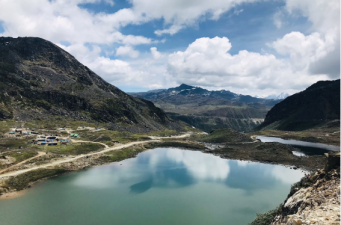
Sugor Tso is a high-altitude lake system in the Upper Siang district of Arunachal Pradesh. Located in the Eastern Himalayan region, it is an important freshwater feature in a remote mountainous landscape. The lake system supports local water needs, small-scale livelihoods and the surrounding ecological balance. Its setting reflects the fragile hydrology and geology of the Eastern Himalayas, where steep slopes, heavy rainfall and alpine conditions shape natural water bodies.
Geographical Location
Sugor Tso lies in the upper reaches of the Siang River basin. It is situated in rugged terrain with deep valleys and high relief. The lake system is part of a sensitive Himalayan environment known for dense vegetation at lower elevations and alpine conditions at higher altitudes. Such locations often form through natural depressions created by geological and erosional processes.
Dual Lake Structure
Sugor Tso is not a single lake. It consists of two connected water bodies:
- Upper Sugor Tso
- Sugor Tso
These lakes are fed by the Sugor stream, which gives the system its name. The hydrological connection between the two lakes makes it a linked freshwater system rather than an isolated water body.
Ecological and Livelihood Importance
Sugor Tso is for nearby villages such as Bidak and Gelemo. In remote mountain regions, lakes and streams are often the main source of water for domestic use, livestock and small-scale farming. The lake system also supports local biodiversity by sustaining vegetation and providing habitat for high-altitude flora and fauna. Its importance extends to tribal communities, including the Monpa, Tagin and Adi, for whom natural water bodies are closely tied to livelihood and cultural identity.
Accessibility and Conservation Relevance
Access to Sugor Tso is difficult because of its remote location, rugged terrain and limited infrastructure. Travel often requires long road journeys, trekking and local guidance. The lake’s relative isolation has helped preserve its natural condition. At the same time, its sensitivity to environmental change makes conservation important for the wider Himalayan ecosystem.
Last Modified: April 25, 2026