
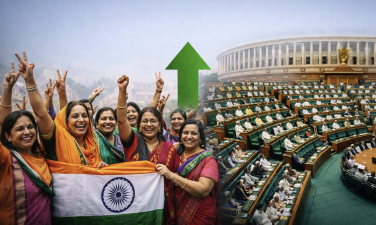
The Government of India in 2026 has proposed increasing Lok Sabha seats from 543 to 816. This is to implement the Women’s Reservation Act, 2023, which reserves 33% seats for women in Parliament and state assemblies. The plan aims to maintain existing seat proportions based on the 2011 Census, not the current census. Legal and constitutional challenges are expected due to this move.
Constitutional Provisions on Seat Allocation
Article 81 of the Constitution of India mandates equal representation by population in Lok Sabha seats. It ensures states get seats in proportion to their population and constituencies have roughly equal population sizes. Small states with populations under 6 million get special consideration. Article 82 requires seat allocation and constituency boundaries to be redrawn after every census.
Delimitation Freeze and Its Impact
Delimitation, or redrawing of seats, has been frozen since 1976 to 2026 by constitutional amendments. This freeze was to protect states with stable populations, mainly in the south, from losing seats to fast-growing northern states. The freeze means seat allocation still reflects the 1971 census for inter-state distribution and 2001 census for intra-state delimitation.
Government’s Proposal and Legal Challenges
The government proposes a Delimitation Commission to use 2011 Census data to increase Lok Sabha seats by 50%, reserving 273 seats for women. This may require amending Article 81, especially the one person, one vote, one value principle. Any changes could face legal scrutiny for violating the right to equality and the Constitution’s basic structure. Increasing Lok Sabha strength beyond 550 also needs constitutional amendment.
Future Steps and Political Consensus
If the delimitation freeze is not extended, Parliament can pass a Delimitation Act. The Commission will then redefine constituencies using 2011 data. Political consensus is crucial, especially to address concerns of southern states fearing loss of representation. The government may introduce compensatory measures to balance regional interests.
Topics for Prelims:
Women’s Reservation Act, 2023
- Reserves 33% seats for women in Lok Sabha and state assemblies.
- Linked to delimitation based on census data.
- Requires increase in total seats for implementation.
- Part of the Nari Shakti Vandan Adhiniyam.
- Faces legal and constitutional challenges.
Delimitation and Census
- Delimitation adjusts seat allocation and boundaries after each census.
- Currently frozen till first census after 2026.
- Last inter-state delimitation based on 1971 census.
- Last intra-state delimitation done on 2001 census.
- Freeze protects states with stable populations.
Constitutional Articles 81 and 82
- Article 81 governs seat allocation in Lok Sabha.
- Ensures equal representation by population.
- Allows special provisions for small states.
- Article 82 mandates delimitation after each census.
- Amendments needed to increase Lok Sabha seats beyond 550.
Questions for Mains:
- Discuss in the light of the Constitution of India the challenges in implementing the Women’s Reservation Act, 2023 in Lok Sabha. [GS-II-Constitution of India & Polity]
- Analyse the impact of delimitation freeze on political representation of state of Indias and its implications for federalism. [GS-II-Constitution of India & Polity]
- With suitable examples, examine the principle of ‘one person, one vote, one value’ and its relevance in the context of reservation policies in India. [GS-II-Constitution of India & Polity]
- Critically discuss the role of census data in democratic representation and the challenges posed by delayed delimitation exercises in India. [GS-I-World & Physical Geography]
Answer Hints:
1. Discuss in the light of the Constitution of India the challenges in implementing the Women’s Reservation Act, 2023 in Lok Sabha. [GS-II-Constitution of India & Polity]
- The Act mandates 33% reservation for women in Lok Sabha and state Assemblies, requiring increase in total seats from 543 to 816.
- Implementation depends on delimitation based on census data, currently frozen till after 2026, creating procedural hurdles.
- Article 81’s one person, one vote, one value principle restricts arbitrary increase in seats and demands proportionate allocation by population.
- Amendments to Article 81 needed to increase Lok Sabha strength beyond 550, which is constitutionally capped.
- Legal challenges likely on grounds of violating equality (Article 14) and basic structure doctrine if principle of equal representation is diluted.
- Political consensus is difficult due to regional concerns, especially from southern states fearing loss of representation.
2. Analyse the impact of delimitation freeze on political representation of states of India and its implications for federalism. [GS-II-Constitution of India & Polity]
- Delimitation freeze (1976 to post-2026) maintained seat allocation based on 1971 census for inter-state distribution.
- Freeze protects states with stable or declining populations (mostly southern states) from losing seats to fast-growing northern states.
- Results in unequal representation as population growth varies widely, violating one person, one vote principle.
- Distorts federal balance by preserving political power of some states disproportionately.
- Delays adjustment of constituencies affect democratic fairness and responsiveness to demographic changes.
- Freeze reflects political compromise but raises questions on equitable representation and federal equity.
3. With suitable examples, examine the principle of ‘one person, one vote, one value’ and its relevance in the context of reservation policies in India. [GS-II-Constitution of India & Polity]
- ‘One person, one vote, one value’ (Article 81) mandates equal weightage to each vote via proportionate seat allocation by population.
- Ensures fairness and equality in democratic representation across constituencies and states.
- Reservation policies (e.g., Women’s Reservation Act) may require deviation from strict equality to ensure social justice and representation.
- Example – Women’s quota proposes reservation of 33% seats, potentially increasing total seats to maintain equality among voters.
- Legal challenge arises if reservation distorts equal value of votes or seat allocation disproportionate to population.
- Constitution balances equality with affirmative action under Article 14’s reasonable classification principle permitting positive discrimination.
4. Critically discuss the role of census data in democratic representation and the challenges posed by delayed delimitation exercises in India. [GS-I-World & Physical Geography]
- Census provides population data essential for equitable allocation of seats in Parliament and state Assemblies per Articles 81 and 82.
- Delimitation uses census to redraw constituency boundaries ensuring equal population distribution per seat.
- Delayed delimitation (freeze till after 2026) causes outdated representation not reflecting current demographic realities.
- Population shifts, urbanization, and growth disparities distort voter equality and political influence.
- Delimitation delay hampers responsiveness of democracy, affecting resource allocation and governance.
- Challenges include political resistance, regional disparities, and logistical complexities in conducting delimitation based on latest census.