

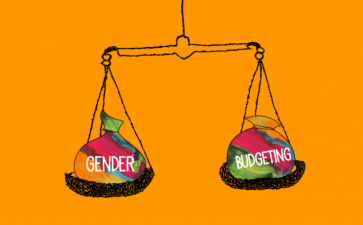
Gender Budgeting is a fiscal strategy that applies a gender lens to the entire budgetary process. It is not a separate budget for women, but an exercise to dissect the government’s budget to establish its gender-differential impact and translate gender commitments into budgetary allocations.
Global and National Milestones
Australia (1984)
Introduced the world’s first formal government gender budget initiative.
Beijing Platform for Action (1995)
The United Nations Fourth World Conference on Women explicitly called for a gender perspective to be integrated into all budgetary processes.
National Institute of Public Finance and Policy (2001)
The Ministry of Women and Child Development (MWCD) commissioned NIPFP to conduct a study on gender budgeting, which laid the analytical foundation for India.
Introduction in India (FY 2005-06)
India formally introduced Gender Budgeting in the Union Budget 2005-06 by presenting its first Gender Budget Statement (GBS).
Institutional Framework and Statutory Mechanisms
The implementation of Gender Budgeting in India relies on specific institutional architectures to ensure that public spending addresses gender institutional gaps.
Gender Budget Cells (GBCs)
In 2007, the Ministry of Finance mandated the setting up of Gender Budget Cells within all central ministries and departments. These cells are tasked with reviewing public expenditure, assessing the gender-responsiveness of policies, and formulating indicators for women’s development.
The Nodal Ministry
The Ministry of Women and Child Development (MWCD) acts as the nodal agency for capacity building, inter-ministerial coordination, and standardizing tools for gender financial auditing.
Public Financial Management System (PFMS)
The PFMS digital platform tracks the real-time flow of funds allocated under gender-responsive schemes to prevent resource diversion and ensure end-stage utilization.
Structure of the Gender Budget Statement (Statement 13)
The Gender Budget Statement is presented annually alongside the Union Budget documents as Statement 13 (formerly Statement 20). It is divided strictly into two distinct parts based on the quantum of allocation dedicated to women.
Part A: 100% Women-Specific Schemes
This section comprises schemes where 100% of the financial allocation is targeted exclusively for the welfare, development, or empowerment of women and girls.
Pradhan Mantri Matru Vandana Yojana (PMMVY)
A conditional cash transfer scheme providing maternity benefits to pregnant and lactating mothers.
SAMARTHYA (Under Mission Shakti)
Includes sub-schemes like Pradhan Mantri Matru Vandana Yojana, Hubs for Empowerment of Women (HEW), and Creche facilities.
SAMBAL (Under Mission Shakti)
Focuses on safety and security components like One Stop Centres (OSC), Women Helplines, and Beti Bachao Beti Padhao (BBBP).
Sukanya Samriddhi Yojana
A small savings scheme aimed at the financial security of the girl child.
Part B: Pro-Women Schemes (At Least 30% Allocation)
This section includes composite, gender-neutral schemes where at least 30% of the total financial outlay is specifically earmarked for women or benefits women directly.
Mahatma Gandhi National Rural Employment Guarantee Scheme (MGNREGS)
A legal mandate dictates that at least one-third (33%) of the beneficiaries must be women; historically, actual female participation exceeds 50%.
Pradhan Mantri Awas Yojana (PMAY)
Mandates that the title of the house built must be registered in the name of the female head of the household or under joint ownership.
Pradhan Mantri Mudra Yojana (PMMY)
A micro-finance credit delivery scheme where over 65% of the total loan accounts are sanctioned to women entrepreneurs under the Shishu, Kishor, and Tarun categories.
Deendayal Antyodaya Yojana – National Rural Livelihoods Mission (DAY-NRLM)
Organizes rural poor women into self-sustainable Self-Help Groups (SHGs) to promote financial inclusion.
Comprehensive Matrix of Gender-Responsive Schemes
| Central Ministry | Scheme Name | Statement 13 Classification | Core Deliverable and Macro Target |
| Ministry of Women and Child Development | Mission Shakti (Samarthya & Sambal) | Part A (100%) | Institutional support for women’s safety, security, and digital credit access. |
| Ministry of Health and Family Welfare | Janani Suraksha Yojana (JSY) | Part A (100%) | Reducing Maternal Mortality Ratio (MMR) via institutional deliveries. |
| Ministry of Petroleum and Natural Gas | Pradhan Mantri Ujjwala Yojana (PMUY) | Part A (100%) | Providing clean LPG connections to BPL households in the name of the woman. |
| Ministry of Rural Development | MGNREGS | Part B (Minimum 30%) | Providing rural wage employment and enhancing female labor force participation. |
| Ministry of Housing and Urban Affairs | PMAY-Urban | Part B (Minimum 30%) | Asset ownership transfer and urban housing security for women. |
| Ministry of Finance | Stand-Up India Scheme | Part B (Minimum 30%) | Mandatory bank loans between ₹10 lakh and ₹1 crore to at least one woman borrower per branch. |
Macroeconomic Rationale and Socio-Economic Impact
Gender Budgeting serves as a structural tool to address systemic gender disparities that drag down the macroeconomic potential of the Indian Economy.
Boosting Female Labor Force Participation Rate (FLFPR)
India’s FLFPR historically lags behind global averages. Targeted gender spending on safe urban transport, working women’s hostels, and child-care infrastructure lowers the structural barriers preventing women from entering the formal workforce.
Addressing the Care Economy and Time Poverty
Women bear a disproportionate burden of unpaid care and domestic work. Schemes like PM Ujjwala Yojana (reducing time spent collecting firewood) and Jal Jeevan Mission (reducing time spent fetching drinking water) directly alleviate “time poverty,” allowing women to engage in income-generating activities or education.
Financial and Asset Formalization
By linking sub-schemes like Mudra loans and PMAY asset registries directly to female identities, the gender budget drives financial inclusion and corrects the historic asset ownership imbalance in rural and urban India.
Critical Vulnerabilities and Implementation Challenges
Despite over two decades of implementation, the efficacy of the Gender Budgeting framework faces operational and structural bottlenecks.
Conceptual Misclassifications
Departments frequently classify generic expenditures as gender-budgeted items through arbitrary assumptions. For instance, classifying standard capital infrastructure like building a highway or public park into Part B by assuming a flat 30% utilization by female citizens weakens the precision of the GBS.
Revenue Concentration
The bulk of the Gender Budget allocation remains heavily concentrated across a few nodal ministries (Rural Development, Agriculture, Health, and Women & Child Development). Crucial ministries like Ministry of Power, Ministry of New and Renewable Energy, and Ministry of Commerce often present minimal or zero gender-differential allocations.
Output to Outcome Realization Lag
While the statement tracks financial outlays perfectly, it lacks automated mechanisms to verify physical outcomes, such as whether a gas cylinder provided under PMUY is consistently refilled or if a woman co-owning a house exercises true financial agency.
Budgetary Innovations and Secondary Frameworks
The principles of Gender Budgeting have catalyzed secondary targeted budgeting frameworks within India’s public financial management matrix.
Child Budgeting
A supplementary budget statement (Statement 12) introduced to isolate and audit public outlays directed at children below 18 years for nutrition (POSHAN Abhiyaan), education (Samagra Shiksha), and safety.
Scheduled Caste Component (SCC) and Scheduled Tribe Component (STC)
Analogous to gender budgeting, these components mandate that ministries allocate specific percentages of their plan funds for schemes directly benefiting SC and ST populations to ensure intersectional equity.
Fiscal Trivia for UPSC Prelims
The Five Per Cent Target
When first introduced in FY 2005-06, the Gender Budget accounted for roughly 2.8% of the total expenditure of the Union Government. Over recent fiscal cycles, it has consistently hovered between 4.5% and 6% of the total Union Budget.
State-Level Pioneers
Kerala, Karnataka, Rajasthan, and Odisha were among the earliest states to institutionalize gender budgeting at the sub-national level, creating mandatory state-level Gender Budget Statements.
The “Pink” Economy Multiplier
International Monetary Fund (IMF) research indicates that closing the gender employment gap can expand India’s Gross Domestic Product (GDP) by an estimated 27%.
Object Head 42
In government accounting terminology, allocations made under specified Object Heads for “Grants for social security and empowerment” are rigorously scanned by Gender Budget Cells to evaluate direct beneficiary disbursements.
Last Modified: May 21, 2026