
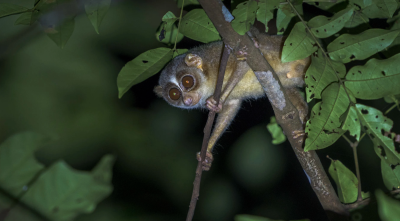
The grey slender loris is a small nocturnal primate found only in southern India and Sri Lanka. It is known for its large eyes, silent movement and unusual ecological role in controlling insects. Despite its scientific importance and cultural presence in local folklore, the species faces multiple threats, including hunting, habitat loss and road mortality. Recent conservation efforts in Kerala and Tamil Nadu are focusing on habitat restoration, monitoring and public awareness.
Species Profile
The grey slender loris measures about 25 cm and weighs less than 400 g. It has no tail, a flexible spine and long limbs that help it move through tree canopies. Its opposable thumbs allow it to cling for long periods. It is a nocturnal hunter of crickets, grasshoppers, lizards and small birds. It is also known for consuming toxic insects after licking secretions from glands near its elbows, a rare adaptation among primates.
Habitat and Distribution
The species occurs in a range of habitats, from wet evergreen forests in Wayanad to dry scrublands in Tamil Nadu. It is found in parts of Kerala, Tamil Nadu and adjoining hill tracts. Its survival depends on continuous canopy cover, which allows safe movement at night. Fragmentation of forests, unregulated tourism and loss of tree cover have reduced habitat connectivity.
Threats and Protection
The grey slender loris is hunted for body parts falsely believed to cure eye ailments and ward off evil. It is also trapped for the illegal pet trade and roadside displays. Other threats include electrocution from power lines and road kills. The species is protected under Schedule I of the Wild Life (Protection) Act, 1972, and is listed as Near Threatened by the IUCN. Local population studies suggest numbers remain in some pockets, but wider estimates are limited.
Conservation Efforts
In Tamil Nadu, forest teams are mapping canopy corridors and planting native trees in reserve forests such as Kadavur. Kerala and Tamil Nadu are also strengthening monitoring and habitat restoration. Conservationists have called for nocturnal wildlife surveys, stricter enforcement against illegal capture and awareness campaigns that use folklore to support protection of the species.
Last Modified: April 25, 2026