
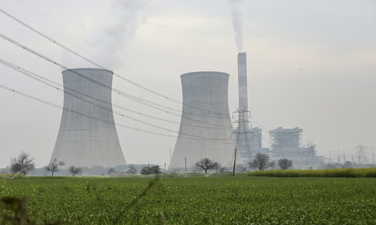
India’s steel sector is facing renewed scrutiny over sulphur dioxide emissions, weak monitoring, and the absence of national standards for several plant stacks. A recent health impact assessment has brought into light the Bokaro SAIL steel facility in Jharkhand as a major case study, linking industrial pollution to adverse health outcomes, productivity losses, and large economic costs. The findings also underline a broader regulatory gap in one of India’s most polluting industrial sectors.
Bokaro Plant Health Impact
The assessment estimates that emissions from the Bokaro plant are associated each year with:
- around 270 low birthweight births
- around 280 preterm births
- about 25 new child asthma cases
- nearly 170 adult deaths linked to PM2.5 and nitrogen dioxide exposure
- about 290 asthma-related emergency room visits
It also estimates roughly 123,000 work absence days annually due to pollution-related illness.
Economic Burden and Industrial Emissions
The annual economic cost linked to the plant’s emissions is estimated at nearly US$80 million, or about Rs 640 crore. The report notes that the facility uses coal and coke, and that only two of six ducts for sinter stacks have electrostatic precipitators. The remaining ducts reportedly rely on older cyclone dust collectors, which are less effective in controlling emissions.
Regulatory Gaps in Steel Sector
The steel industry is classified by the Central Pollution Control Board as one of 17 highly polluting industries. Yet India still lacks national SO2 emission standards for several steel plant stacks, including sinter plants, mill zones, and refractory material plants. Continuous Emission Monitoring Systems were mandated in 2014 for major polluting industries, but implementation remains incomplete, with concerns over calibration, offline units, and limited public access to data.
National Relevance and Policy Concerns
India’s steel capacity is projected to rise sharply by 2030, while the country already holds a large share of coal-based steelmaking capacity under development globally. The case of Bokaro is being seen as representative of a wider problem – weak pollution control, limited transparency, and insufficient preparation for cleaner industrial growth.
Last Modified: April 28, 2026