
The Indian Space Research Organisation (ISRO) completed high-resolution Land Use and Land Cover (LULC) mapping for India on 26 April 2026, which is National Panchayati Raj Day. The mapping covers all Indian villages using satellite data at a scale of 1:10,000.
Land Use And Land Cover Mapping
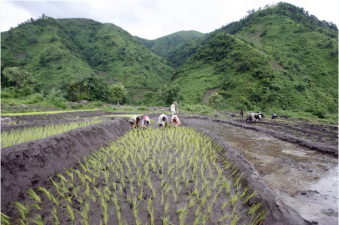
Land Use and Land Cover mapping records the physical use of land and the type of surface cover present on the ground. A scale of 1:10,000 means 1 centimetre on the map represents 100 metres on the ground. This scale allows separation of features such as paddy fields, ponds, built-up areas, and roads.
Village-Level Geospatial Coverage
India had 649,481 villages in the 2011 Census, and the satellite-based mapping covers each of them. The data includes details up to the smallest village units and is intended for use in decentralised planning at the Gram Panchayat level.
Grammanchitra Portal And Panchayat Planning
The satellite data has been integrated as an information layer on the Grammanchitra web portal of the Ministry of Panchayati Raj. Grammanchitra is a village map portal used for spatial planning and for preparing Gram Panchayat Development Plans (GPDPs).
Uses Of Geospatial Data
- Geospatial data is used in rural development planning at the Gram Panchayat level.
- Geospatial data is used in disaster management for location-based assessment and response planning.
- Geospatial data is used in urban planning for land-use analysis and infrastructure mapping.
- Geospatial data is used in environmental monitoring for tracking land cover changes.
ISRO and the Ministry of Panchayati Raj have used satellite-based geospatial data for village mapping and planning support. Gram Panchayat Development Plans are prepared at the local self-government level under the Panchayati Raj system.
Last Modified: April 27, 2026