
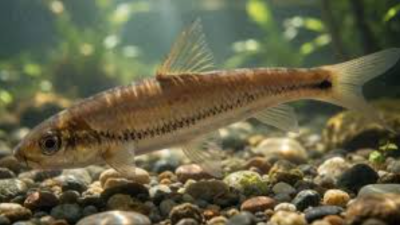
A team of scientists recently discovered a new freshwater fish species, Eechathalakenda incognita, in the upper reaches of the Periyar River within the Periyar Tiger Reserve in Kerala. Published in the journal Systematics and Biodiversity, the study successfully resolves a 70-year-old taxonomic confusion with its sole close relative, Eechathalakenda ophicephala (the Channa barb). The research team used advanced mitochondrial DNA sequencing alongside physical evaluations to confirm the species as distinct. This breakthrough identifies Eechathalakenda incognita as the ninth point-endemic fish species found exclusively inside the Periyar Tiger Reserve, emphasizing the reserve’s status as a critical sanctuary for freshwater fish conservation in Asia.
Taxonomic Overview and Evolutionary Riddle
The genus Eechathalakenda has historically remained an enigmatic and poorly documented lineage within the freshwater ecosystems of the Southern Western Ghats.
Genus History
The genus Eechathalakenda was originally established in 1999 to house a solitary, elusive fish species first described in 1941 from the Pamba River. For over 80 years, its exact evolutionary position was heavily debated, with taxonomists often categorizing it as incertae sedis (of uncertain taxonomic placement) or placing it tentatively under different subfamilies.
Definitive Placement
By mapping the complete mitochondrial genome of the new species using multi-gene phylogenetic analysis, researchers firmly placed the entire genus within the cyprinid subfamily Torinae. This placement provides a definitive evolutionary classification for this ancient fish lineage.
Morphological Variations and Genetic Distance
While Eechathalakenda incognita looks similar to Eechathalakenda ophicephala at first glance, key structural variations and genetic markers separate the two species.
Scale Infrastructure
The new species features distinct circular scales near its upper body. In contrast, Eechathalakenda ophicephala possesses distinct rhomboid-shaped scales.
Pigmentation Patterns
Eechathalakenda incognita features a bold, distinct dark horizontal lateral stripe running along its flank, which differentiates it from the more diffuse, faint markings seen on its congener.
Fin and Skeletal Layout
The newly described fish exhibits a different count of pectoral-fin rays and holds specific variations in the shape of its supraneural bones (small bones that provide structural support to the dorsal fin). It also displays more lateral-line scales and extra rows of scales between the dorsal fin and the lateral line.
Genetic Variation
Analysis of the mitochondrial cytochrome c oxidase subunit I (COI) gene demonstrates a raw genetic distance of 4.9% to 5.3% between the two populations. This variation provides clear biological justification for declaring it a unique species.
Micro-Habitat and Conservation Vulnerability
Both species are high-altitude freshwater specialists with narrow distribution ranges, making them highly vulnerable to extinction.
Restricted Altitudinal Isolation
Eechathalakenda incognita is isolated to specific fast-flowing, rocky streams over 900 meters above sea level within the Periyar River system. Meanwhile, Eechathalakenda ophicephala is strictly confined to the headwaters of the Pamba River at elevations exceeding 1,000 meters above sea level.
Environmental Threats
The restricted nature of these habitats means localized threats pose immediate risks. The species are highly vulnerable to habitat degradation, temperature changes from climate shifts, pollution, siltation, and potential competition from invasive non-native fish species.
Comparative Profile of Eechathalakenda Species
| Diagnostic Feature | Eechathalakenda incognita | Eechathalakenda ophicephala |
| Geographic Range | Periyar Tiger Reserve streams (>900m) | Pamba River headwaters (>1000m) |
| Upper Body Scale Shape | Circular | Rhomboid |
| Lateral Line Markings | Bold, dark horizontal stripe | Diffuse, faint markings |
| Anatomical Markers | Extra lateral-line scale rows; distinct supraneural bones | Fewer lateral-line scale rows; base supraneural bones |
IASPOINT Booster Facts for UPSC
- Point-Endemic Definition: A point-endemic species refers to an organism that is entirely restricted to a single, localized geographic spot in the world. Eechathalakenda incognita is the ninth such fish species identified within the Periyar Tiger Reserve.
- Etymology of Genus: The term Eechathalakenda originates from the local language, where kenda means carp. The specific name incognita translates to “unknown,” highlighting its long-running anonymity in scientific records.
- Periyar Tiger Reserve: Located in the Cardamom Hills and Pandalam Hills of the southern Western Ghats, Kerala, it functions as a major catchment area for two key rivers: the Periyar and the Pamba.
- Mitochondrial DNA Barcoding: This method uses a short genetic sequence from mitochondrial DNA to identify a species. Because mitochondrial DNA features a high mutation rate and lacks introns, it serves as an effective tool for distinguishing between closely related or cryptic species.