
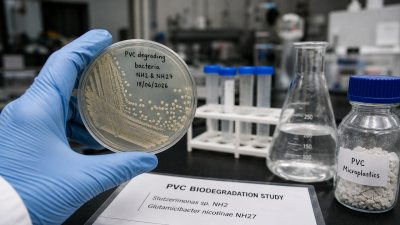
On 18 June 2026 researchers reported bacterial strains capable of degrading polyvinyl chloride (PVC) microplastics under controlled laboratory conditions.
Key findings
- Study and source: Reported in Microbial Cell Factories (18 June 2026); research team included scientists from Cairo University.
- Identified strains: Stutzerimonas sp. NH2 and Glutamicibacter nicotinae NH27.
- Degradation metrics: Stutzerimonas sp. NH2 reduced PVC microplastic weight by >23%; a consortium of both strains achieved ~27% weight reduction in experiments.
- Isolation site: Strains isolated from soil with long-term plastic contamination.
Evidence and experimental details
- Physical evidence: Microscopy revealed cracks and grooves on PVC surfaces after treatment.
- Chemical evidence: Analytical signatures of PVC showed changes consistent with polymer alteration.
- Experimental scope: Results pertain to PVC microplastics under laboratory conditions; enzymatic pathways remain to be elucidated.
IASPOINT Booster Facts
- PVC (polyvinyl chloride): A chlorine-containing vinyl polymer widely classified as a thermoplastic; chlorine and additives increase resistance to biodegradation.
- Microplastics: Defined as plastic particles <5 mm; metrics in biodegradation studies commonly use percentage weight-loss.
- Novelty: Study provides first reported evidence linking Stutzerimonas sp. NH2 and Glutamicibacter nicotinae NH27 to PVC microplastic degradation.