
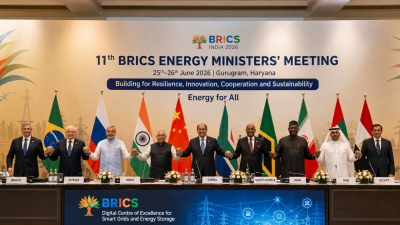
India chaired the 11th BRICS Energy Ministers’ Meeting recently in Gurugram. The meeting adopted a Joint Communiqué, the BRICS Guiding Principles on Smart Grids and Energy Storage, and launched the BRICS Digital Centre of Excellence for Smart Grids and Energy Storage to promote cooperation on resilient, low‑carbon power systems.
Background and immediate significance
What is current
The two‑day meeting (under India’s 2026 chairship) worked on the theme “Energy for All”. Ministers adopted a joint communiqué and guiding principles for smart grids and storage. The BRICS Digital Centre of Excellence was launched as a voluntary platform for knowledge sharing, capacity building, policy exchange and pilot initiatives.
Why it matters for governance and foreign policy
- Energy security: Multilateral collaboration on grids, storage and hydrogen can reduce supply risks and enhance system resilience.
- Technology diplomacy: The Centre creates a forum for common standards, regulatory dialogue and joint R&D across BRICS.
- Strategic supply chains: India’s push aims to diversify green‑technology supply chains and reduce concentrated dependence on single sources.
Key outcomes and institutional measures
- BRICS Digital Centre of Excellence: A voluntary platform for capacity building, pilot projects, policy exchange and technical assistance among BRICS members.
- Guiding Principles: Agreed principles for smart grids and energy storage emphasising resilience, interoperability, standards and data governance.
- Joint Communiqué: Collective commitment to cooperation in energy security, sustainability, innovation, resilient infrastructure and capacity building; respect for national circumstances.
- Hydrogen cooperation: A BRICS Joint Report on Hydrogen Value Chains is being finalised to align standards and identify cooperation areas.
India’s transition targets, instruments and international role
- Installed capacity: India’s power capacity is nearing 540 GW, with over half from non‑fossil sources.
- Storage target: Target of over 400 GWh energy storage capacity by 2032 to manage variability from renewables.
- Nuclear goal: Aim for 100 GW nuclear capacity by 2047 to provide firm low‑carbon baseload.
- International initiatives: Leadership in the International Solar Alliance and the Global Biofuels Alliance complements domestic policy.
- Domestic institutions: Implementation will require coordinated action by ministries, Central Electricity Authority, Bureau of Energy Efficiency, ISOs and state utilities.
Technical and policy dimensions addressed
- Smart grids: Digital controls, demand response, distribution automation and cybersecurity standards are priority items.
- Energy storage: Technology mix includes battery storage, pumped hydro, thermal storage and emerging chemistries; lifecycle, recycling and standards matter.
- Hydrogen: Focus on value chains, certification, green/blue hydrogen distinction and cross‑border trade norms.
- Standards & interoperability: Common protocols for data, safety and grid interconnection reduce integration costs and support piloting.
Economic, social and environmental implications
- Economic: Domestic manufacturing of grid and storage equipment can create jobs, attract investment and reduce import dependence.
- Social: Improved grid resilience supports reliable access for households, industry and health services; capacity building addresses skills gaps.
- Environmental: Greater storage and smart operation enable higher renewable integration, lowering emissions while managing land and resource impacts.
Challenges and implementation requirements
| Challenge | Policy / Institutional Response |
|---|---|
| Technology dependence and supply‑chain concentration | Promote diversified sourcing, pooled procurement, joint R&D and manufacturing partnerships among BRICS. |
| Financing large‑scale storage and grid upgrades | Blend public finance, multilateral funding, green bonds and private capital; de‑risk projects through guarantees and viability gap funding. |
| Standards, certification and interoperability | Harmonise technical standards, adopt common testing protocols and create certification bodies or mutual recognition frameworks. |
| Workforce and institutional capacity | Scale training programmes, exchange secondments through the Digital Centre, and strengthen system operators and regulators. |
| Geopolitical friction | Maintain respect for national circumstances; use BRICS framework for technical cooperation while managing strategic suppliers diplomatically. |
Practical steps and policy measures
- Pilot projects: Use the Digital Centre to host BRICS pilot demonstrations for grid‑scale storage, microgrids and cross‑border hydrogen logistics.
- Standardisation agenda: Fast‑track common standards for storage safety, battery recycling and hydrogen certification.
- Finance mobilisation: Coordinate BRICS development banks and national instruments to provide concessional and commercial finance for shared projects.
- Regulatory reform: Update electricity market rules for storage participation, ancillary services remuneration and aggregator frameworks.
- Capacity building: Technical training, regulatory exchanges and joint R&D funding through the Digital Centre.
Strategic outlook for BRICS cooperation
Continued BRICS collaboration can lower costs of transition through shared R&D, pooled procurement and harmonised regulation. Respect for national pathways allows varied approaches—some members emphasise rapid renewables, others nuclear or gas. The Digital Centre provides an operational forum to convert high‑level commitments into technical programmes across members.
Model Questions
1. Examine the significance of the 11th BRICS Energy Ministers’ Meeting for international energy cooperation and India’s foreign policy objectives. [GS-II: International Relations]
Answer: The meeting institutionalises technical cooperation on smart grids, storage and hydrogen through a Digital Centre and guiding principles. For India it advances energy diplomacy, diversifies green‑technology supply chains, and builds forums for standards and joint R&D. Multilateral engagement reduces import risks, attracts investment into domestic manufacturing, and positions India as a convenor of practical South‑South energy collaboration while respecting national energy pathways.
2. Assess the potential role of the BRICS Digital Centre of Excellence for Smart Grids and Energy Storage in promoting technological self‑reliance and energy security. [GS-III: Science & Technology]
Answer: The Centre offers knowledge transfer, pilot projects and policy exchange to harmonise standards and scale tested solutions. It can coordinate joint R&D, pooled procurement and certification regimes that lower import dependence and costs. By enabling shared testing facilities and training, it supports domestic manufacturing and skills. Outcomes depend on sustained funding, IP arrangements, standard convergence and willingness to implement joint pilot results.
3. Analyse India’s energy transition strategy as articulated at the BRICS meeting, noting key pillars and implementation challenges. [GS-III: Economic Development]
Answer: India’s strategy rests on large renewable capacity, grid modernisation, 400 GWh storage by 2032 and 100 GW nuclear by 2047, supported by international alliances. Pillars include smart grids, storage deployment, standards and finance mobilisation. Challenges are technology gaps, supply‑chain concentration, financing, regulatory reform and workforce readiness. Addressing these requires coordinated policy, public‑private finance, standards harmonisation and capacity building.
4. How do the BRICS Guiding Principles on Smart Grids and Energy Storage, together with collaborative platforms, address resilience and supply‑chain diversification? [GS-III: Science & Technology]
Answer: The Guiding Principles set a framework for interoperability, data governance, safety and resilience, enabling interoperable systems across members. The Digital Centre fosters pilot projects, mutual recognition of standards and joint procurement, which can diversify suppliers and reduce concentrated dependencies. Technical cooperation supports alternative supply sources and domestic manufacturing, but success requires alignment on standards, financing instruments and coordinated procurement policies.
Last Modified: July 8, 2026