
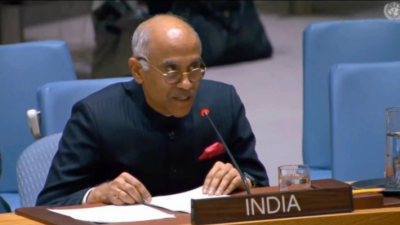
India has opposed the creation of a two-tier system of permanent membership in a reformed United Nations Security Council (UNSC) and has supported a compromise proposal by the G4 group to defer veto powers for new permanent members for 15 years. The position was set out during Intergovernmental Negotiations on UNSC reform, where India argued that meaningful reform must correct both the Council’s composition and the veto imbalance.
India’s Stand on Reform
India said that expanding only the non-permanent category would not address the structural inequity in the UNSC. It stressed that any reform without expansion in the permanent category, along with veto rights, would preserve the existing imbalance. India also rejected the idea of creating new permanent members without veto powers, calling it an institutionalisation of inequality.
G4 Compromise Proposal
The G4 group, comprising India, Brazil, Germany and Japan, has proposed that newly inducted permanent members should not use veto powers until a review is held after 15 years. India backed this approach as a practical way to break the long-standing deadlock in negotiations. The proposal seeks to show flexibility while keeping the issue of veto open for future decision.
Why India Seeks Reform
India said the current UNSC structure, designed more than 80 years ago, no longer reflects present-day geopolitical realities. It noted that the 1965 reform only expanded non-permanent membership and increased the relative power of the existing veto-wielding members. India also supported the African position that new permanent members should have veto powers as long as the veto exists.
Negotiation Challenges Ahead
India pointed out that past efforts to limit veto use have not stopped repeated vetoes in the Council. It also referred to informal effective veto practices that block outcomes such as press statements and sanctions decisions. India called for text-based negotiations, clear timelines and concrete milestones to achieve a more representative and effective UNSC.
Last Modified: April 27, 2026