
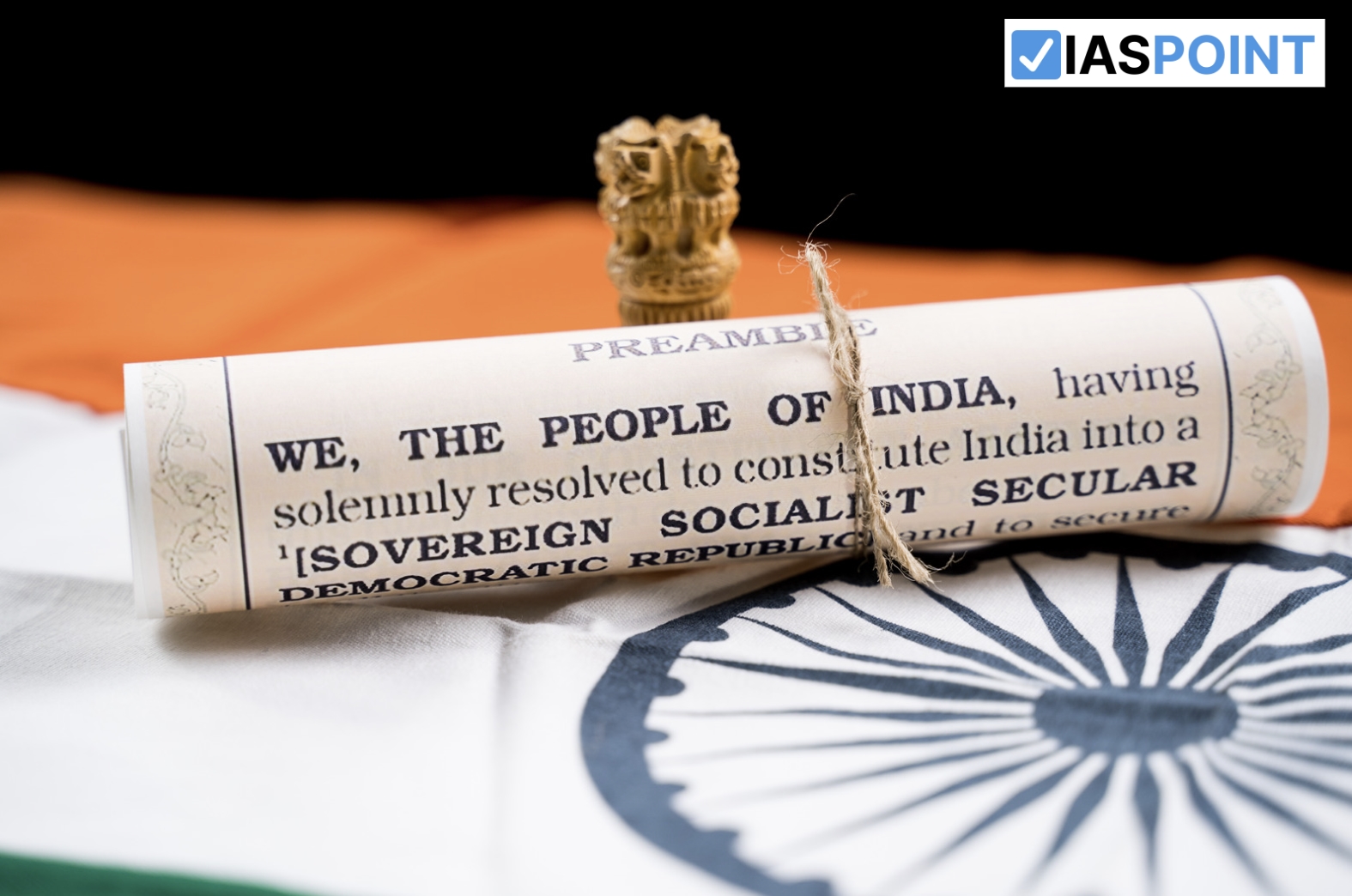

No federal scheme can work effectively unless the Union and the States and/or the States among themselves cooperate and co-ordinate with each other. To promote cooperation and coordination among the Union’s federal units, the relevance of Article 263 becomes more important. Article 263 of the Indian Constitution empowers the President to establish an Inter-State Council at any time if it appears to the President that the establishment of such a council would serve the public interest.
The Council could be charged with the duty of:
(a) inquiring into and advising upon disputes which may have arisen between State;
(b) investigating and discussing subjects in which some or all of the States, or the Union and one or more of the States, have a common interest; or
(c) making recommendations upon any such subject and, in particular, recommendations for the better coordination of policy and action with respect to that subject.
An Inter-State Council was established in 1990 but it met for the first time in 1996. It consists of the Prime Minister as its chairman and all the chief ministers, six cabinet rank ministers nominated by the Prime Minister and four other cabinet rank ministers of the Union Council of Ministers as permanent invitees. Under the State Reorganization Act, 195, five zonal Councils were set up. Besides this, North-Eastern Council had been set up under the North-Eastern Council Act, 1971. We may, however, state that article 263 has vast potential which has not yet been fully utilized for resolving various problems concerning more than one State. It is important to state the recommendations of the Punchhi Commission in this regard which Commission recommends that in resolving problems and coordinating policy and action, the Union as well as the States should more effectively utilize the forum of Inter-State Council. This will be in tune with the spirit of cooperative federalism which lays emphasis on proper understanding and mutual confidence and resolution of problems of common interest expeditiously.
Bureaucracy in India: Role
From the negative connotation of ‘bureaucracy’, independent India gave the name of ‘civil’ or ‘public’ services. There is a substantial change in the nature of ‘officials’ from strict rigidity to humane view of administrators’the emphasis is not on ‘order-like activities, but on service to the people. And yet it is difficult to ignore the role of public services (as distinguished from the military services) in the field of administration of the country. Broadly, there are separate services for the Centre as well as the States. In each such service, the system of service is hierarchical, tied to rules and regulations and remains impersonal and apolitical in functioning.
The top officials, at the Union level, are recommended for appointment by the Union Public Service Commission and others, by subordinate service commission while at the State level, this task is done by the state commissions. The public servants are bound by service and discipline rules, retiring after attaining the retiring age. The civil service, in India, plays an important role in administration. Its role can be summed up as:
(i) obtaining decisions on policy matters;
(ii) assisting in the formulation of policies;
(iii) governing in accordance with the prescribed rules and regulations;
(iv) implementation of policies, programmes and schemes in accordance with the prescribed rules and regulation;
(iv) implementation of the laws;
(v) preparing rules and regulations for the smooth conduct of the functioning of the government;
(vi) managing the finances;
(vii) promoting socio-economic development of the country;
(viii) maintaining law and order;
(ix) providing the required information to the political executive;
(x) coordinating the governmental activities;
(xi) evaluating, supervising and controlling the business of the government;
(xii) administering rule of law and justice. With the BJP led NDA government in power (2014) as guided by ‘the minimum government and maximum governance’ mantra, the Modi government has made the civil services citizen-friendly, stating that every member of the service is required to: (i) maintain and promote principles of merit, fairness and impartiality while discharging duties (ii) maintain accountability and transparency, responsiveness to the public, particularly to the weaker sections; (iii) maintain courtesy and polite behavior with the public; (iv) maintain discipline in discharging duties; (v) be liable in implementing the lawful orders duly communicated to them; (vi) maintain confidentiality in the performance of duties as required by law; (vii) commit to the Constitution and uphold the supremacy and democratic values; (viii) take decisions solely in public interest and use public resources efficiently, effectively and economically; (ix) maintain high ethical standards, dignity and honesty; (x) make choices, take decisions, and make recommendations on merit alone; (xi) do not misuse position; (xii) refrain from doing anything which is contrary to the law, rules and regulations and established practices; and (xii) discriminate against none. (Gazettee notification of August 6, 2014)


