
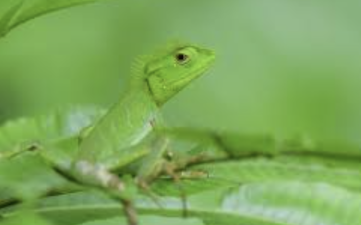
A new species of Asian grass lizard has been discovered in Assam’s Manas Biosphere landscape, adding to the reptile diversity of northeast India. The species, named Takydromus ultapanensis, was identified from the Ultapani Reserve Forest in Kokrajhar district and formally described through a combination of morphological study and genetic sequencing. The finding strengthens the view that northeast India remains one of the country’s least-explored biodiversity regions.
Discovery and Identification
Researchers from Sikkim University and collaborating institutions examined the lizard’s body structure, scale patterns, and head features. Genetic analysis further confirmed that it is distinct from other known members of the genus Takydromus. The species was described in the journal Zootaxa.
Habitat and Distribution
The lizard was found in lowland semi-evergreen forest, waterlogged grasslands, and fern-rich patches inside the Manas Reserve Forest landscape. It was seen basking on fern bushes in small open areas with seasonal water channels. So far, it has been recorded only from Ultapani Reserve Forest, indicating a highly restricted distribution.
Scientific Significance
The discovery raises the number of Takydromus species reported from northeast India to five. It also suggests that ecological barriers such as the Brahmaputra river may have contributed to the isolation and evolution of separate lineages in the region. The species shows genetic divergence from related Indian and Southeast Asian grass lizards.
Conservation Importance
Because Takydromus ultapanensis is known from a single forest range, it may be vulnerable to habitat disturbance. The finding marks the need for wider surveys across northeast India and adjoining regions. It also reinforces Manas as an important site not only for large mammals, but also for lesser-known and evolutionarily important reptiles.
Last Modified: April 28, 2026