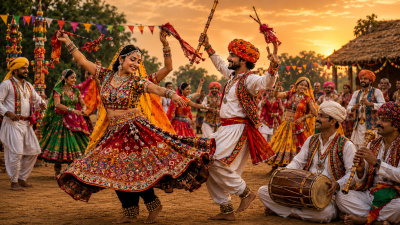
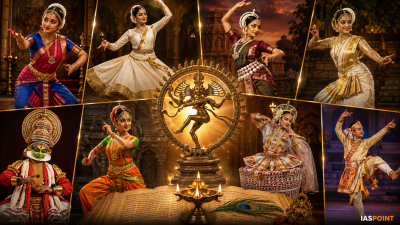
Unlike classical dances, which are governed by the strict tenets of the Natyashastra, Indian folk dances are spontaneous, ethnic, and regional expressions of joy. They are primarily performed...
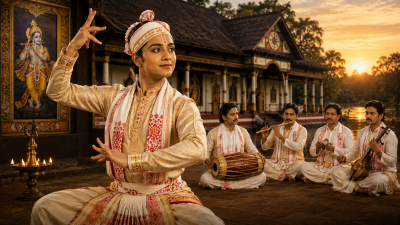
Sattriya is a classical dance form originating from the northeastern state of Assam. It was introduced in the 15th century CE by the great Vaishnavite saint and reformer,...
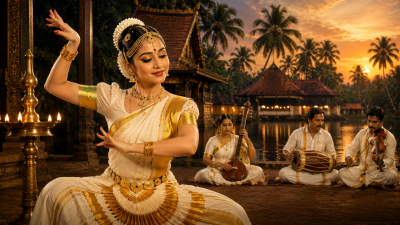
Mohiniyattam, literally translated as the "Dance of the Enchantress," is a classical dance form from Kerala. It derives its name from 'Mohini,' the female avatar of Lord Vishnu,...
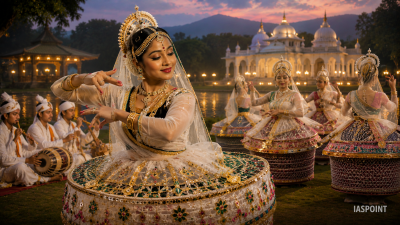
Manipuri dance, specifically the Raas Leela, originates from the northeastern state of Manipur and is deeply embedded in the religious fabric of the Meitei community. Unlike other classical...
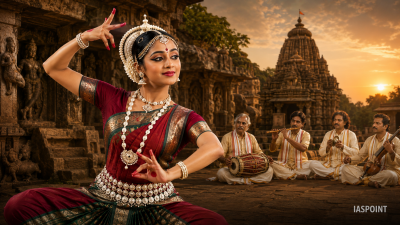
Odissi, originating from the state of Odisha, is one of the eight classical dance forms of India. It is considered the oldest surviving dance form based on archaeological...
Kuchipudi is a classical dance form that originated in the Krishna district of Andhra Pradesh. It takes its name from the village of Kuchelapuram (also known as Kuchipudi)....
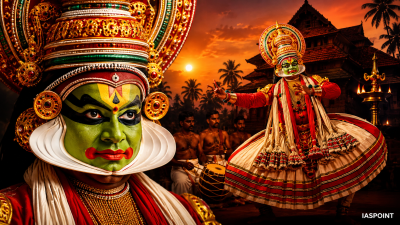
Kathakali is a highly stylized classical dance-drama from Kerala, characterized by its "total theater" approach that combines dance, music, poetry, and drama. The name is derived from Katha...
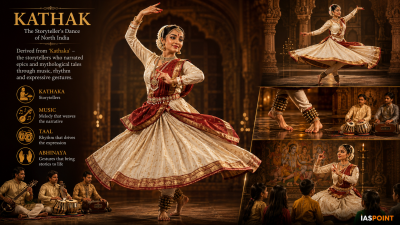
Kathak is the premier classical dance form of North India, predominantly practiced in Uttar Pradesh, Rajasthan, and Delhi. The name is derived from the Sanskrit word Kathaka (storyteller),...
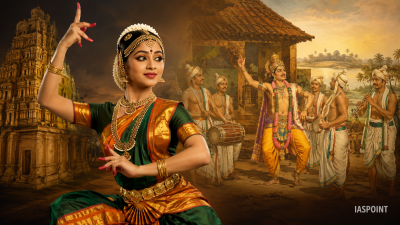
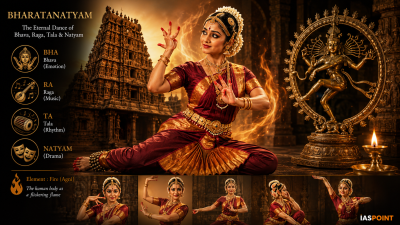
Bharatanatyam is the oldest among all classical dance forms in India, originating in the temples of Tamil Nadu. Its name is conventionally derived from the conjunction of Bha...
Indian classical dances are governed by the principles of the Natya Shastra and are recognized by the Sangeet Natak Akademi (India's National Academy for Music, Dance, and Drama)....