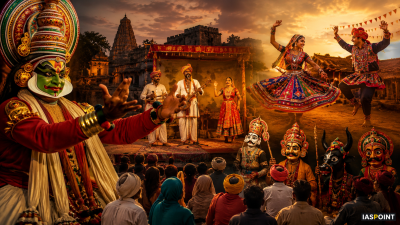
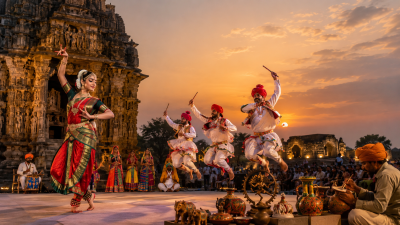
Indian folk theatre represents the transition from the classical Sanskrit tradition to a more vibrant, regional, and accessible form of expression. Emerging primarily during the medieval period (15th–19th...
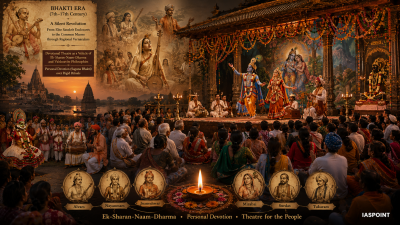
The Bhakti era (7th–17th century) marked a "silent revolution" in Indian cultural history, transitioning theatre from elite Sanskrit enclosures to the common masses through regional vernaculars. Devotional theatre...
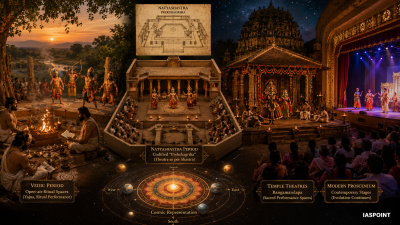
The evolution of the Indian theatre stage is a journey from the open-air ritual spaces of the Vedic period to the highly codified "Prekshagriha" described in the Natyashastra,...
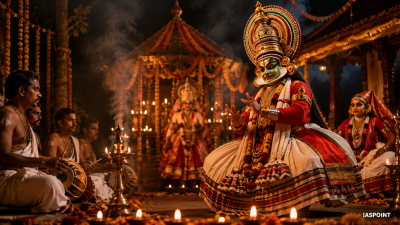
Ritual theatre in India represents the transitional phase between pure religious liturgy and formalized drama. Under the Indian Theatre unit of Art and Culture, these forms are categorized...
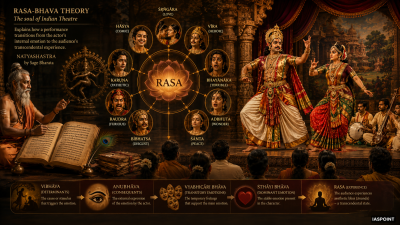
The aesthetic foundation of Indian classical theatre is built upon the Rasa-Bhava theory, primarily detailed in the Natyashastra by Sage Bharata. This system explains how a performance transitions...
The "Golden Age" of Indian drama was shaped by several legendary playwrights whose works moved from religious ritualism to sophisticated literary expressions of human emotion, politics, and social...
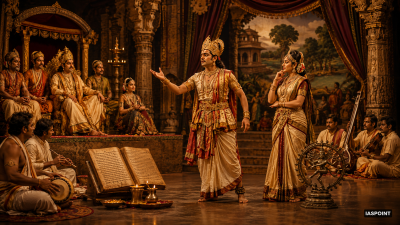
Sanskrit drama represents the pinnacle of ancient Indian literary achievement, flourishing primarily between the 1st and 10th centuries CE. Unlike folk theatre, Sanskrit drama was a highly stylized,...
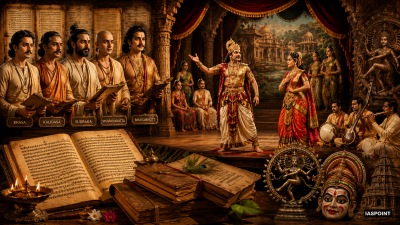
The origins of Indian drama are deeply rooted in a blend of religious ritualism, Vedic literature, and mythological narratives. Unlike many Western dramatic traditions, Indian theatre (Natya) was...
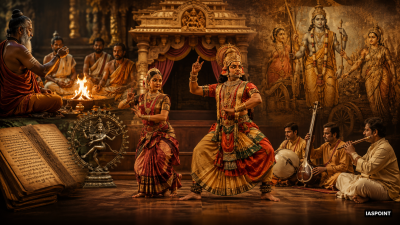
Indian dance festivals serve as a vital link between ancient temple traditions and modern performing arts. Under the patronage of the Ministry of Culture, the Sangeet Natak Akademi,...
The UNESCO Representative List of the Intangible Cultural Heritage of Humanity was established to ensure better protection of important intangible cultural heritages worldwide and the awareness of their...