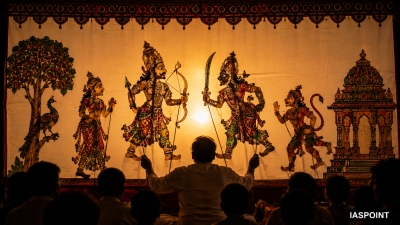
Shadow puppetry is an ancient theatrical form that utilizes the principles of light, shadow, and translucency. In this style, flat figures are cut out of leather, treated to...
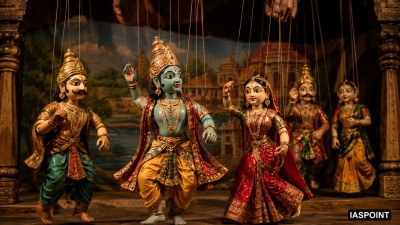
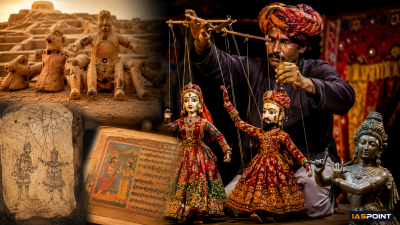
String puppetry, traditionally known as Sutragraha Vidya, is one of the most sophisticated forms of traditional Indian theater. It involves puppets carved from wood and manipulated using strings...
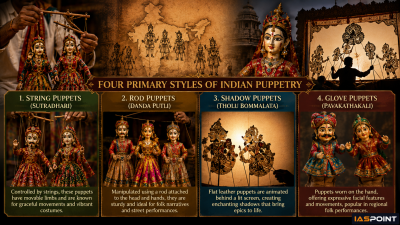
The Indian Puppetry Unit categorizes the traditional art form into four primary styles based on their physical manipulation, structural design, and regional aesthetics. Each style represents a unique...
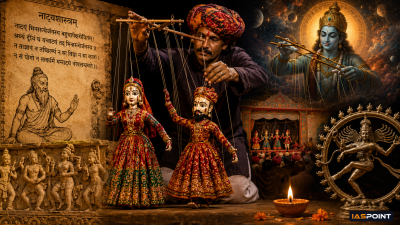
The theoretical framework of Indian puppetry is deeply rooted in ancient Indian aesthetics and philosophy. It is not merely considered a folk art but is viewed as a...
The art of puppetry in India, known as Puttalika or Marionette, traces its roots back to the Harappan civilization. Archaeological excavations at Mohenjo-daro and Harappa have unearthed terracotta...
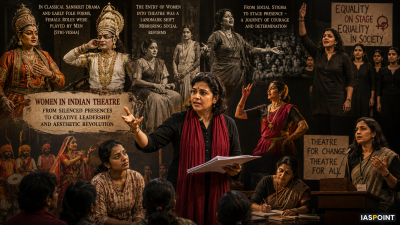
The history of women in Indian theatre is a narrative of transition from systemic exclusion and social stigma to creative leadership and aesthetic revolution. Historically, in classical Sanskrit...
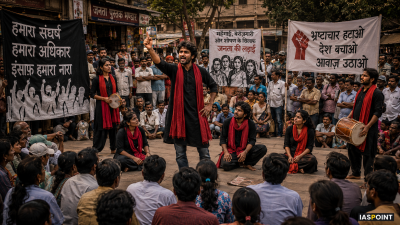
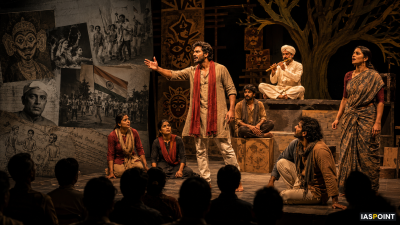
Street Theatre, often referred to as Nukkad Natak, is a form of theatrical performance characterized by the absence of a formal stage, ticket sales, or elaborate lighting. It...
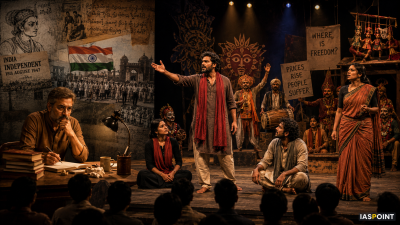
Modern Indian playwriting represents a shift from classical Sanskrit dictates and Parsi commercialism toward a "theatre of engagement." It emerged as a synthesis of Western realistic structures and...
Modern Indian theatre represents a departure from both the stylized classical Sanskrit drama and the commercial "Masala" format of Parsi theatre. It emerged as an intellectual response to...
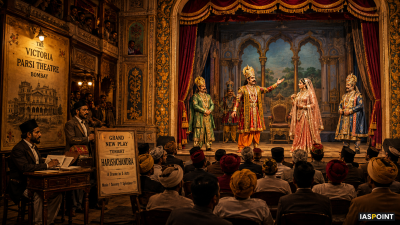
Parsi Theatre represents the first successful "Commercial Theatre" in India, acting as a bridge between the traditional folk forms and the modern proscenium stage. Emerging in the 19th...