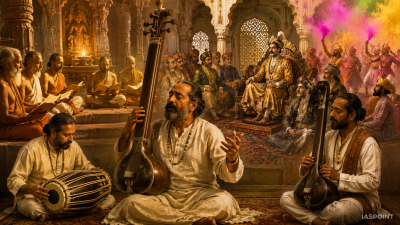
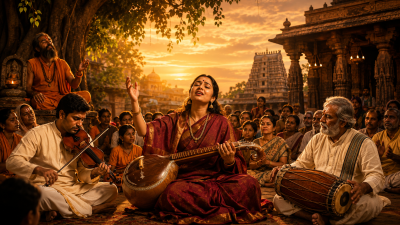
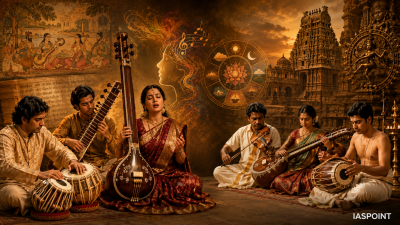
Dhrupad is the oldest surviving form of Hindustani classical music, tracing its roots to the Vedic period through the chanting of Samaveda. Its name is derived from the...
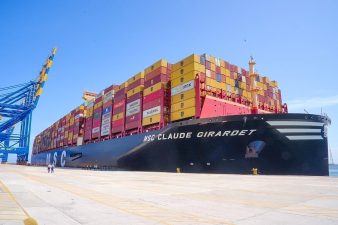
The Vizhinjam International Seaport, inaugurated by Prime Minister Narendra Modi, marks development in India's maritime infrastructure. Located just 11 nautical miles from the international shipping channel, this port...
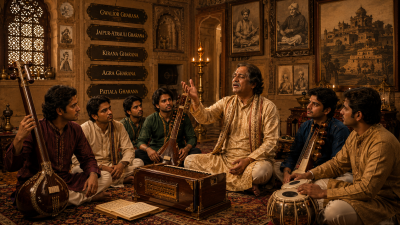
The Gharana system is a unique socio-cultural organization in Indian Classical Music (Hindustani branch) where a specific lineage of learners adheres to a particular musical style. Derived from...
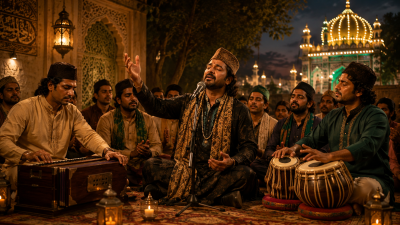
Sufi music in the Indian subcontinent represents a profound synthesis of Islamic mysticism and indigenous musical traditions. Emerging prominently during the Delhi Sultanate (13th century), it served as...
The Bhakti movement, spanning from the 7th to the 17th century, acted as a catalyst for the democratization of Indian music. By shifting the focus from rigid Vedic...
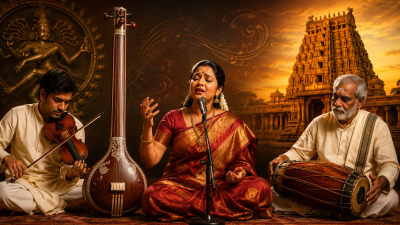
Carnatic music (Karnātaka Saṃgīta) is the classical music tradition of South India, prevalent in Andhra Pradesh, Telangana, Karnataka, Kerala, and Tamil Nadu. Unlike Hindustani music, which underwent significant...
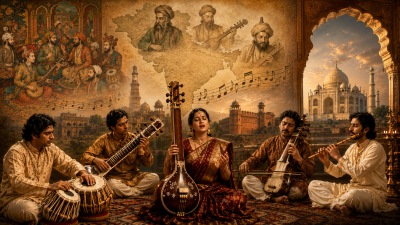
Hindustani Classical Music is the traditional music of Northern India, Pakistan, Bangladesh, and parts of Nepal. It emerged as a distinct system from the common fountainhead of Indian...
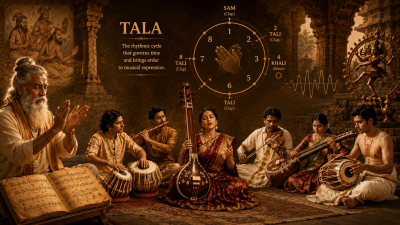
In the study of Indian Art, Culture, and Heritage, Tala (or Taal) represents the rhythmic framework that regulates the temporal aspect of music. While Raga provides the melodic...
In the landscape of Indian Art, Culture, and Heritage, the Raga (or Rag) represents the most unique and complex contribution to world music. Derived from the Sanskrit root...
In move on Labour Day 2025, ten major worker groups from India, Sri Lanka, Bangladesh, and Nepal signed the Polluters’ Pay Pact in New Delhi. This agreement urges...