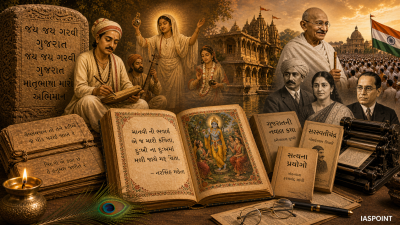
Gujarati literature, an essential component of the Indo-Aryan linguistic family, evolved from Gurjar Apabhramsa. Its development is broadly classified into the Medieval period (11th–18th century) dominated by devotional...
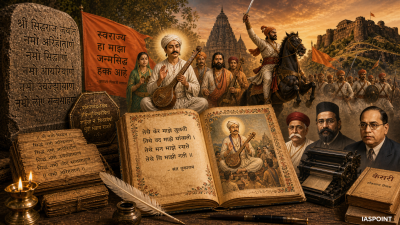
Marathi literature, belonging to the Indo-Aryan family, evolved from Maharashtri Prakrit and Apabhramsa. Its journey is categorized into the early Yadava period, the era of the Bhakti saints,...
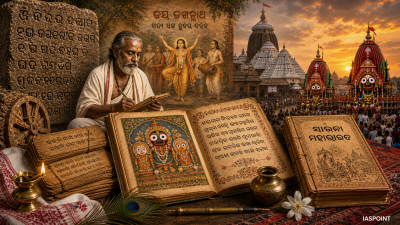
Odia is one of the six Classical Languages of India, a status granted due to its ancient roots, independent tradition, and extensive body of recorded literature spanning over...
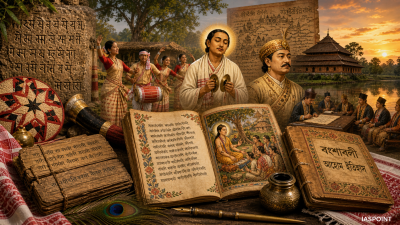
Assamese literature, recognized as a Classical Language in 2024, has a history spanning over a thousand years. It evolved from the Magadhi Apabhramsha and is characterized by its...
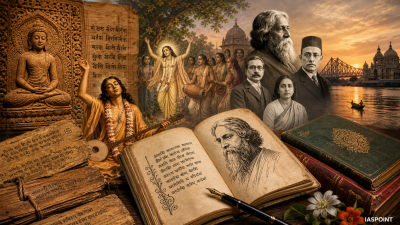
Bengali literature, one of the most prolific and globally recognized literary traditions of India, evolved from the Magadhi Apabhramsha. It is characterized by a seamless transition from mystic...
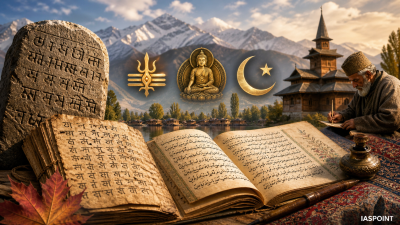
Kashmiri literature, written in the Sharada and later Perso-Arabic scripts, is a unique blend of Vedic philosophy, Buddhist traditions, and Islamic Sufism. Its evolution is characterized by the...
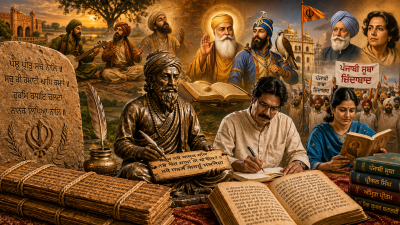
Punjabi literature, primarily written in the Gurmukhi script, is an integral part of India’s cultural heritage. It has evolved through distinct phases: the early mystical and Sufi traditions,...
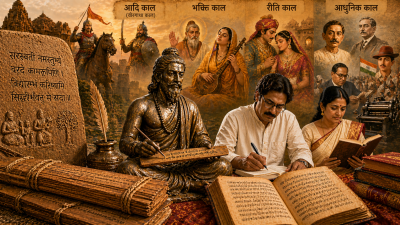
Hindi literature is a cornerstone of Indian Art, Culture, and Heritage, tracing its roots from the Sanskrit and Apabhramsha traditions. It is broadly categorized into four chronological stages:...
Malayalam, a member of the Dravidian language family, was officially granted Classical Language status by the Government of India in 2013. Its literary journey is characterized by a...
Kannada literature, one of the oldest living languages in India, boasts a rich heritage spanning over 1,500 years. Recognized as a Classical Language by the Government of India...