
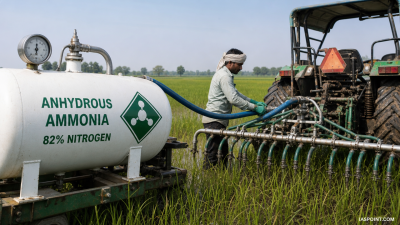
On 23 July 2026 the Union Ministry of Agriculture and Farmers Welfare approved manufacture and agricultural use of anhydrous ammonia for a three‑year period to reduce dependence on imported urea. The decision complements National Green Hydrogen Mission measures to procure green ammonia and initiate domestic green urea production.
What is new
Key facts: manufacture and use of anhydrous ammonia authorised for three years; anhydrous ammonia contains 82% nitrogen; India’s urea production ~30.67 million tonnes with nearly 10 million tonnes imported annually; Department of Fertilizers issued an EoI for green urea plants and held a pre‑EoI meeting in Noida; NGHM roadmap targets procurement of 7.24 lakh metric tonnes of green ammonia annually; SECI will act as procurer under a differential subsidy framework.
Why it matters
- Fiscal and food security: Large urea imports and heavy subsidies expose the exchequer to price and supply shocks.
- Technology and safety: Direct use of pressurised anhydrous ammonia requires new infrastructure and training.
- Environment: Green ammonia/green urea can lower manufacturing emissions compared with grey feedstocks.
Economic and fiscal dimensions
Domestic urea output is approximately 30–31 million tonnes while imports meet nearly 10 million tonnes of demand. Subsidised urea encourages high application rates and creates a persistent fiscal burden. Import dependence transmits global gas and geopolitical price volatility to the domestic subsidy bill. Adoption of more concentrated nitrogen forms may reduce volume imported and transport costs, but will require upfront capital for storage, logistics and subsidies during transition.
Technical, safety and application profile
| Dimension | Urea | Anhydrous ammonia |
|---|---|---|
| Physical state | Solid prill/crystal | Compressed gas |
| Nitrogen content | ~46% | ~82% |
| Storage & transport | Bagged/bulk, standard handling | Pressurised tanks, sealed systems, specialised tankers |
| Application | Broadcast, drills, foliar mixes | Sub‑surface injection using pressurised applicators |
| Safety risks | Low immediate hazard | Severe burn and inhalation hazard if mishandled |
Adoption requires sealed storage terminals, tractor‑mounted injection units, trained operators, emergency response protocols and regulatory standards for handling and transport. Sub‑surface injection is essential to prevent volatilisation and ensure nitrogen use efficiency.
Policy, institutional framework and financial mechanics
| Stakeholder | Role |
|---|---|
| Department of Fertilizers | Regulator, subsidy manager, issues EoI for green urea plants |
| Ministry of New and Renewable Energy (MNRE) | Policy support for green hydrogen and green ammonia under NGHM |
| Solar Energy Corporation of India (SECI) | Offtaker and procurement agency; supplies green ammonia at grey prices |
| Fertiliser manufacturers | Convert feedstock to urea; receive green ammonia at price parity |
| Industry developers / CCUS projects | Supply green hydrogen/ammonia and captured CO2 for green urea |
Financial mechanism: SECI will procure green ammonia and supply it to fertiliser units at market‑linked grey ammonia prices; the Department of Fertilizers covers the difference. Long‑term offtake contracts (up to ten years) are proposed to provide revenue certainty to developers. The EoI and pre‑EoI consultations aim to operationalise green urea plants while protecting domestic manufacturers from immediate cost shock.
Environmental and soil health considerations
Continuous and excessive urea use disturbs NPK balance, causes soil acidification, reduces soil organic carbon and increases nitrate contamination of groundwater. Conventional urea manufacture uses grey hydrogen and carries a high carbon footprint. Green urea, made using green hydrogen and captured CO2, reduces manufacturing emissions. ICAR recommended ammonium sulphate as a temporary alternative in paddy to supply nitrogen plus sulphur and to relieve pressure on urea inventories.
Implementation challenges
| Challenge | Implication |
|---|---|
| Infrastructure deficit | Absence of pressurised storage, dedicated tankers and injection machinery limits immediate scale |
| Safety and training | Risk of burns and inhalation incidents unless operators and farmers are trained |
| Cost and fiscal strain | Differential subsidy eases transition but increases short‑term fiscal outlay |
| Farmer heterogeneity | Smallholders lack access to mechanised applicators; phased adoption required |
| Supply chain risks | Green hydrogen scale‑up timelines determine green ammonia costs |
Way forward
- Phased deployment: Begin with mechanised, large‑farm regions and industrial clusters. Pilot demonstration sites to refine protocols.
- Infrastructure investment: Establish regional pressurised storage hubs, certified transport fleets and manufacturing incentives for injection equipment.
- Capacity building: Train cooperative staff, extension officers and machinery operators in safe handling and emergency response.
- Financial roadmap: Use differential subsidy temporarily while scaling green hydrogen capacity to lower green ammonia costs and phase down subsidies.
- Soil restoration: Promote balanced fertiliser use, integrated nutrient management, organic inputs and precision application to protect soil health.
- Regulatory standards: Issue safety and handling standards for anhydrous ammonia, ensure licensing for storage and transport, and mandate MSDS and PPE use.
- Monitoring and evaluation: Track adoption, environmental indicators and fiscal cost to adjust policy instruments.
Model Questions
1. Examine the structural challenges of India’s fertiliser subsidy regime and assess how alternatives such as anhydrous ammonia can optimise fiscal outlays while maintaining agricultural productivity. [GS-III: Economic Development]
Rational answer: India produces ~30.67 mt urea but imports ~10 mt, creating subsidy exposure to global prices. Urea’s heavy subsidy distorts use and burdens the exchequer. Anhydrous ammonia (82% N) can reduce transported volume and logistics costs versus urea (46% N). Fiscal optimisation requires phased adoption, infrastructure investment, targeted subsidies, and measures to protect smallholders while ensuring nitrogen use efficiency and productivity.
2. Discuss the technical and safety prerequisites for the direct agricultural use of anhydrous ammonia and compare its chemical profile with conventional urea. [GS-III: Science & Technology]
Rational answer: Anhydrous ammonia is a compressed gas with ~82% N; urea is a solid with ~46% N. Safe use needs sealed pressurised storage, tanker fleets, tractor‑mounted injection applicators, sub‑surface injection protocols, PPE, emergency response and operator training. Regulatory standards for transport and handling are essential. Without this infrastructure and capacity, on‑farm adoption risks severe burns and inhalation incidents.
3. Analyse the institutional and financial framework proposed to support transition to green urea, focusing on the differential subsidy mechanism. [GS-II: Governance]
Rational answer: The National Green Hydrogen Mission targets procurement of 7.24 lakh tonnes of green ammonia. SECI procures green ammonia and supplies it at grey ammonia prices; the Department of Fertilizers covers the price gap. EoIs for green urea plants and long‑term contracts (up to 10 years) provide revenue certainty. The mechanism balances adoption incentives with fiscal feasibility but requires scaling green hydrogen to reduce subsidy dependence.
4. Evaluate environmental impacts of prolonged chemical fertiliser use and explain how green urea production and ammonium sulphate as a temporary substitute align with sustainable agriculture. [GS-III: Environment & DM]
Rational answer: Excessive urea use leads to soil acidification, organic carbon decline and nitrate leaching to groundwater; grey hydrogen‑based urea raises manufacturing emissions. Green urea lowers carbon intensity by using green hydrogen and captured CO2. Ammonium sulphate supplies nitrogen and sulphur, addressing nutrient gaps and easing urea demand temporarily. Sustainable practice requires balanced fertiliser use, organic amendments and precision application.
Last Modified: July 27, 2026