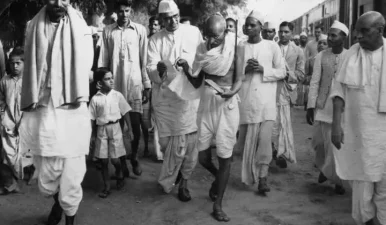
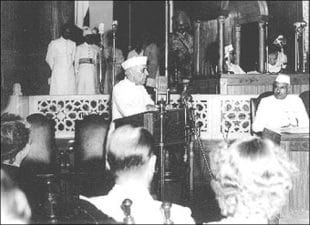
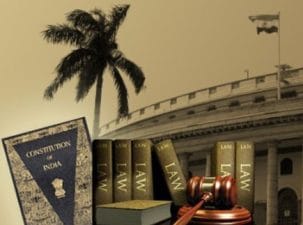
"The growth and the development of the national movement in India went a long way to develop certain values and ethos, which contributed a lot to the constitution-making...
(i) The Act of 1947 gave freedom to India; (ii) The country was partitioned into two dominions: India and Pakistan; (iii) The paramountcy was abolished: the princely states...
During 1858 ' 1947, the British Parliament passed and enacted numerous legislations for India. The chief features of these acts can be stated, briefly, as under : The...
The English East India Company, established on the new year eve in 1600, was granted permission to trade with the eastern countries by Queen Elizabeth I, herself a...
Polity and governance are interrelated in any system of administration, especially in countries like India, which seek to establish and promote democracy. Polity, without governance, is a people...
The Regulating Act of 1773 was legislative measure by the British Parliament. It aimed to control the East India Company's operations in India. This act marked a very...
Articles 294 to 300 of Part XII of the Constitution of India outline the rights, liabilities, and responsibilities of the Union and State governments regarding property, contracts, and...
The Constitution of India incorporates several features from other countries' constitutions. Notable borrowed elements include: Government of India Act, 1935: Federal scheme, emergency provisions, and the office of...
Doctrines are fundamental principles or rules in law. They guide the interpretation and application of legal frameworks. In the Indian context, these doctrines help resolve conflicts between legislative...
The Supreme Court of India plays important role in upholding the Constitution and protecting fundamental rights. Over the years, it has delivered numerous landmark judgments that have shaped...