
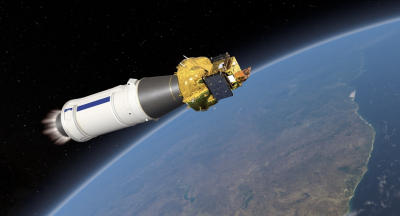
The Solar wind Magnetosphere Ionosphere Link Explorer (SMILE) mission, a landmark collaboration between the European Space Agency (ESA) and the Chinese Academy of Sciences (CAS), is scheduled for launch in mid-May 2026. Initially slated for 9 April 2026, the mission was rescheduled to 19 May 2026 following technical adjustments to the Vega-C launch vehicle. The spacecraft will be deployed from the Guiana Space Centre in Kourou, French Guiana, into a highly elliptical Earth orbit.
Objectives of the SMILE Mission
The primary scientific goal of SMILE is to observe the global interaction between the solar wind and Earth’s magnetosphere. This interaction is the fundamental driver of space weather, which can disrupt satellite operations, telecommunications, and power grids on Earth. By capturing the first-ever global X-ray images of the magnetosphere, the mission aims to track how solar particles penetrate the Earth’s magnetic shield and trigger geomagnetic storms.
Key Scientific Instruments
- Soft X-ray Imager (SXI): Developed by the UK Space Agency and other European partners, it will image the magnetopause and polar cusps using solar wind charge exchange.
- Ultraviolet Imager (UVI): An ESA-led instrument designed to provide continuous 45-hour observations of the northern auroral oval.
- Light Ion Analyser (LIA): A CAS-built instrument to measure the properties of solar wind ions in situ.
- Magnetometer (MAG): Designed to monitor the local magnetic field environment around the spacecraft.
Technical Specifications and Orbit
The 2,300 kg satellite will operate in a highly elliptical polar orbit with an apogee of approximately 121,000 km. This trajectory allows the spacecraft to spend nearly 80% of its 50-hour orbital period at high altitudes, providing a wide-field view of Earth’s magnetic boundaries. The mission forms a key part of ESA’s Cosmic Vision 2015–2025 programme and represents the first time ESA and China have jointly selected, designed, and operated a full-scale space science mission. The mission builds upon the heritage of the Double Star collaboration, aiming to solve long-standing queries regarding the substorm cycle and the relationship between Coronal Mass Ejections (CMEs) and magnetic storms.
Last Modified: April 27, 2026