
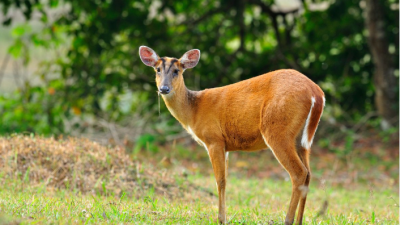
Amchang Wildlife Sanctuary is a protected area on the eastern fringe of Guwahati in Assam. Covering 78.64 sq. km, it was declared a wildlife sanctuary by the Assam Government on 19 June 2004. Located under the East Kamrup Forest Division, it is one of the key green spaces near the rapidly expanding city and supports rich biodiversity despite increasing urban pressure.
Location and Significance
Amchang lies about 15 km from Guwahati Railway Station and can be approached from the Narengi-Bonda side or from Sonapur. Its proximity to the Brahmaputra basin and the city makes it important both as a wildlife habitat and as a natural buffer against urban expansion. The sanctuary is valued for recreation, ecological balance and conservation.
Flora and Habitat
The sanctuary is mainly covered by deciduous forest, with grasslands in some areas. This mixed habitat supports a range of species and provides shelter for wildlife in a landscape increasingly affected by city growth. The forest ecosystem remains important for maintaining local biodiversity in the Guwahati region.
Wildlife Diversity
Amchang is known for mammals such as the Chinese pangolin, slow loris, Assamese macaque, rhesus macaque, capped langur, hoolock gibbon, leopard, elephant, wild pig, sambar, barking deer and porcupine. Reptiles include python, Indian cobra and monitor lizard. The sanctuary also supports many birds, including lesser adjutant stork, greater adjutant stork, white-backed vulture, slender-billed vulture, lesser pied hornbill and green imperial pigeon.
Conservation Concerns and Tourism
The sanctuary faces pressure from the continuous expansion of Guwahati’s city limits. Local communities, the Assam Forest Department and other government bodies have supported conservation efforts to protect this natural heritage. The best time to visit is from October to April, when weather conditions are more suitable for wildlife observation and travel.
Last Modified: April 27, 2026